
Degenerative Thoracolumbar
When Imaging Is Not Enough: Diagnostic Selective Nerve Root Blocks and Surgical Decision-Making
- Zealand University Hospital, Køge, Denmark
- Zealand University Hospital, K√∏ge, Denmark
Abstract
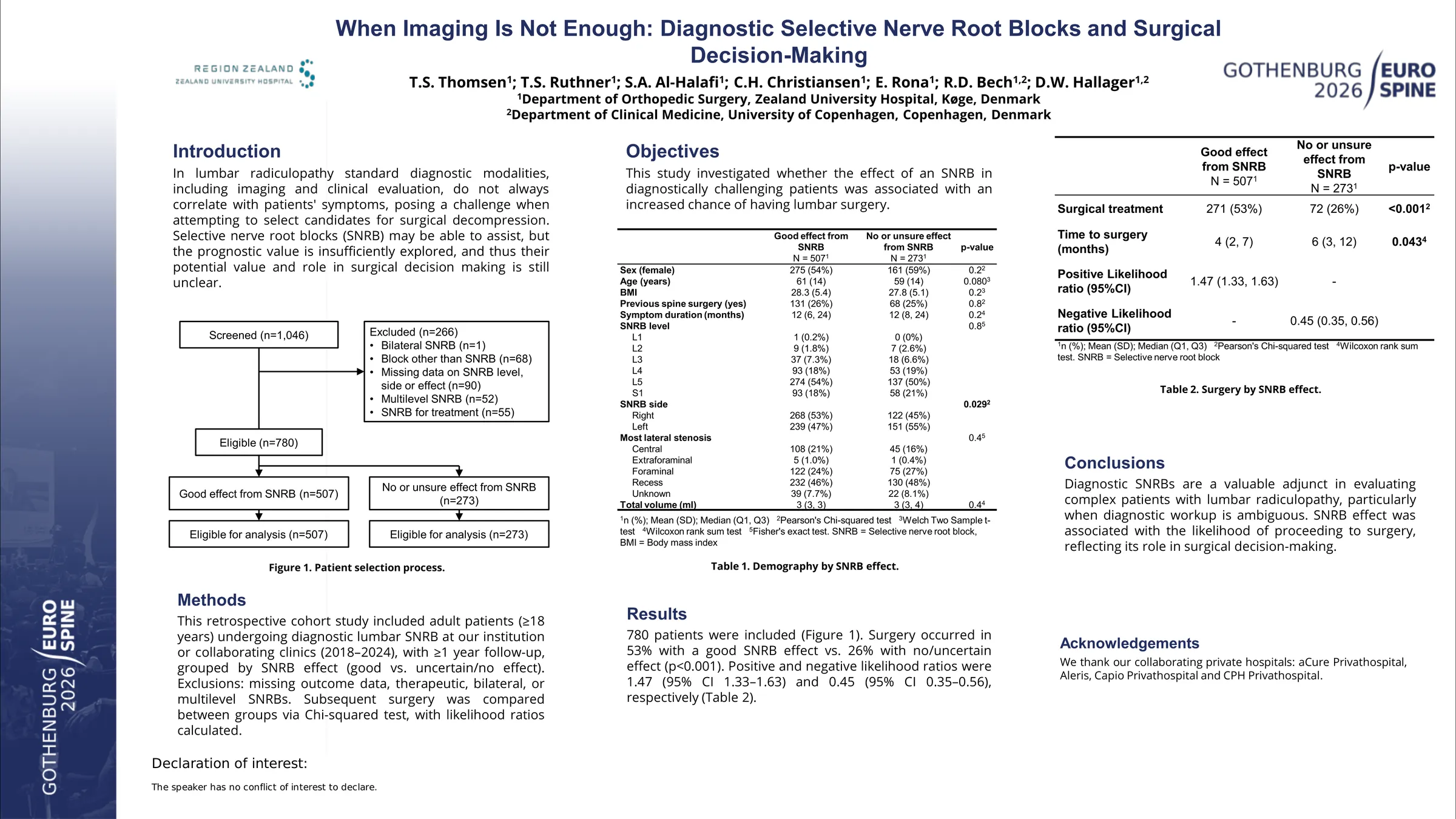
Standard diagnostic modalities, including clinical evaluation and imaging, do not always correlate with patient symptoms, posing challenges in selecting patients with lumbar radiculopathy for surgical decompression. Selective nerve root blocks (SNRBs), described by Macnab in 1971, have been used for both diagnostic and therapeutic purposes; however, their prognostic ability is debated, and thus their role in guiding surgical decision-making remains underexplored. This study investigated whether the effect of an SNRB in diagnostically challenging patients was associated with an increased chance of having lumbar surgery.
This retrospective cohort study included adult patients (≥18 years) who underwent diagnostic lumbar SNRB with local anesthetic and steroid at our institution between January 1, 2018, and May 31, 2024. Follow-up was at least 1 year (1-8 years). Exclusion criteria were SNRBs for therapeutic purposes, bilateral or multilevel injections or missing data on block effect or subsequent treatment. Data sources included electronic health records from our institution and private clinics with which we collaborate. Patients were grouped based on SNRB effect classified as good or uncertain/no effect. Baseline characteristics were extracted for age, sex, BMI, symptom duration, location of nerve root compression, previous spine surgery, SNRB level and volume.
The primary outcome was the proportion of patients who underwent subsequent lumbar surgery within each group. Proportions were compared using the Chi-squared test, and likelihood ratios were calculated. The study was approved by the institutional review board, and the protocol is registered at https://doi.org/10.17605/OSF.IO/6HS7M.
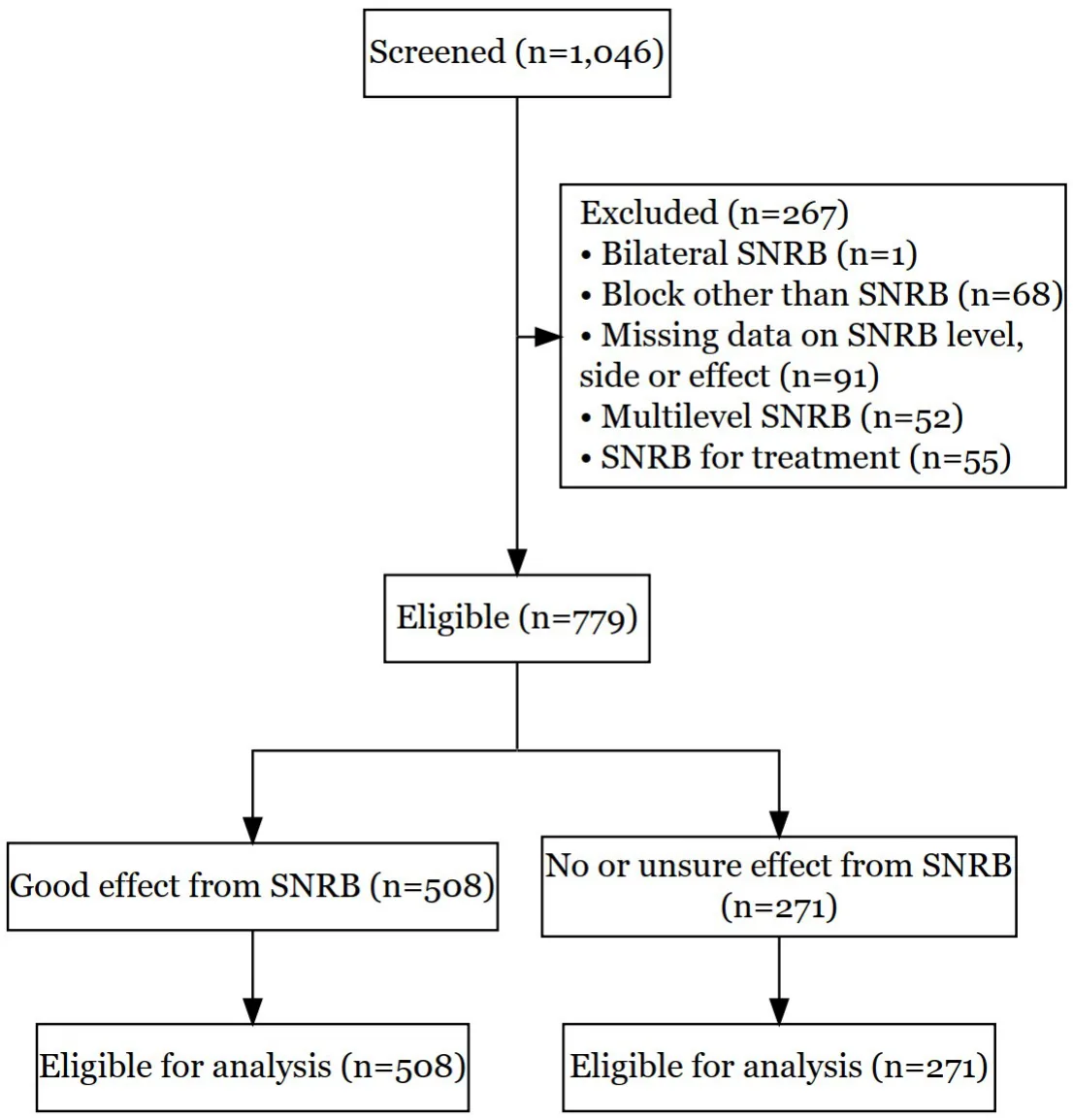
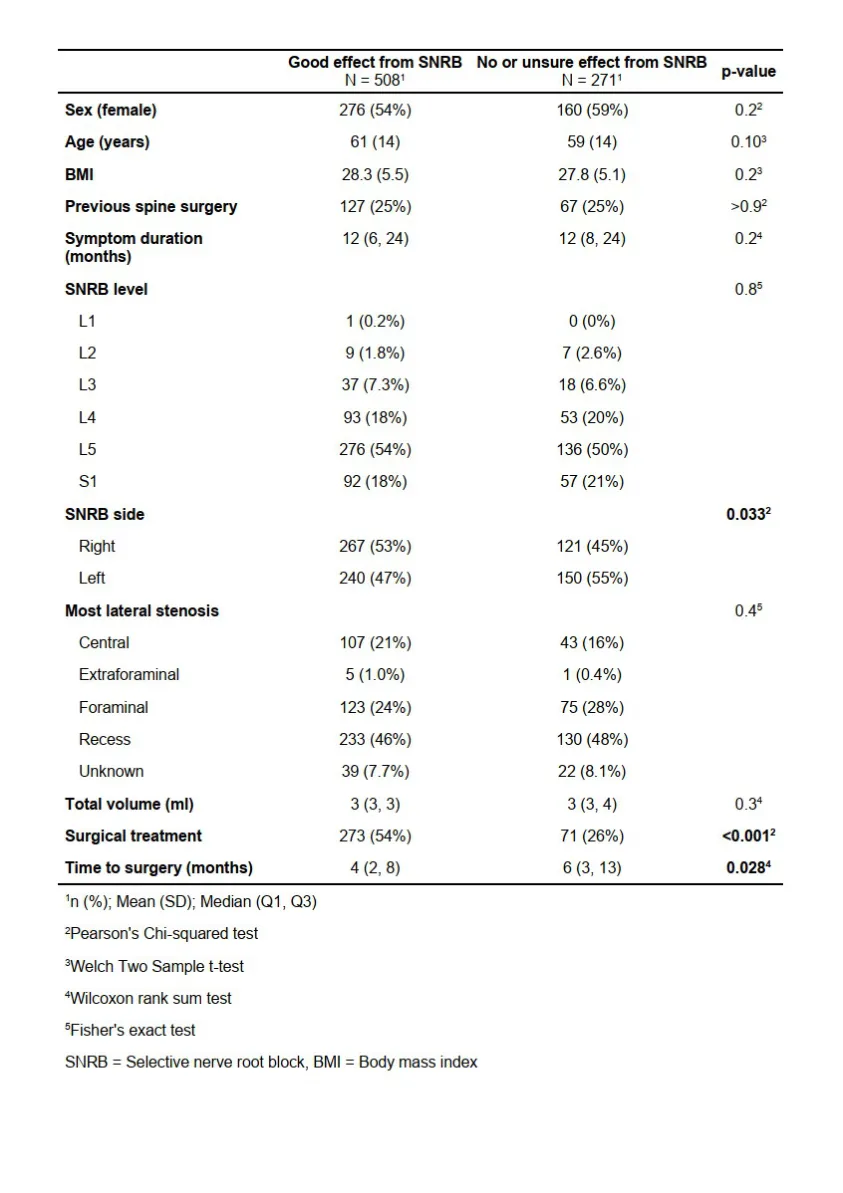
A total of 1,046 patients who underwent a lumbar injection were initially screened and 267 were excluded (Figure 1). 779 patients were included in the analysis. Baseline characteristics were comparable between groups, except that more patients with good effects had right-sided SNRB (Table 1).
Among 508 patients reporting a good effect from SNRB, 54% had surgery at a median of 4 months, while 26% of 271 patients reporting no or an uncertain effect had surgery at a median of 6 months (p<0.001). The positive likelihood ratio (LR+) for proceeding to surgery following a good SNRB response was 1.47 (95% CI 1.33–1.63), while the negative likelihood ratio (LR-) was 0.45 (95% CI 0.35–0.56).
Diagnostic SNRBs are a valuable adjunct in evaluating complex patients with lumbar radiculopathy, particularly when diagnostic workup is ambiguous. The findings indicate that SNRB effect influences the likelihood of proceeding to surgery, thereby helping to stratify appropriate surgical candidates.
Figures and tables
As submitted with the abstract. Tap a figure to open it at full size.