
Tumours & Infection
Treatment Outcomes and Prognostic Factors in Intramedullary Spinal Cord Metastasis: Individual Patient Data Pooled Analysis
- HOCH Health Ostschweiz, Kantonsspital St.Gallen, St. Gallen, Switzerland
- Heidelberg University Hospital, Heidelberg, Germany
- University of Iowa Hospitals and Clinics, Iowa City, United States of America
Abstract
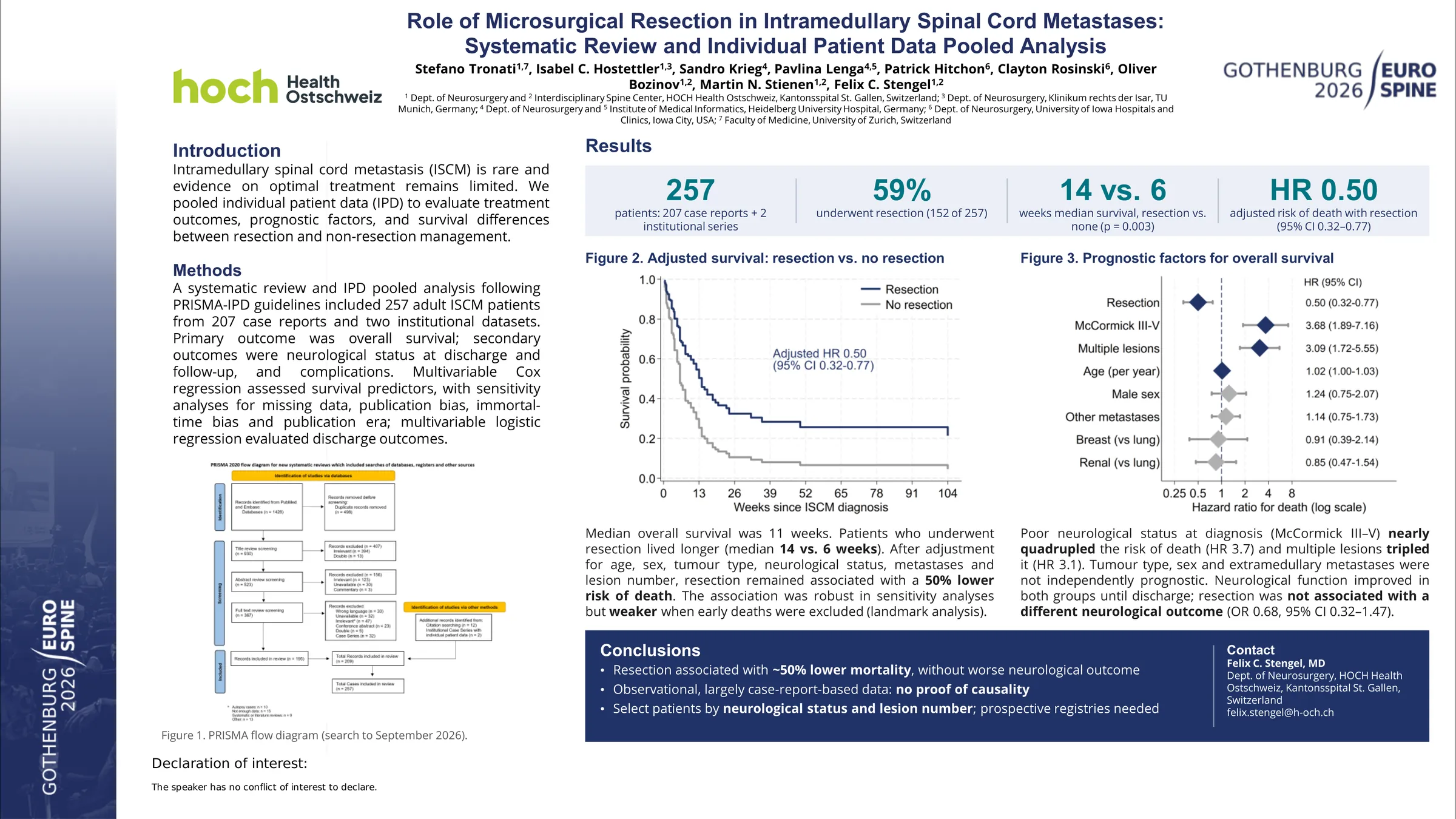
Intramedullary spinal cord metastasis (ISCM) is a rare but devastating manifestation of systemic cancer. Evidence remains limited, and optimal treatment selection is uncertain. In this study we pooled individual patient data (IPD) to evaluate treatment outcomes, prognostic factors, and survival differences between surgical and non-surgical management of patients with ISCM.
A retrospective systematic review and IPD pooled analysis was conducted according to PRISMA-IPD guidelines. A total of 240 adult ISCM patients from 190 case reports and two institutional datasets were included. Detailed demographic, oncological and functional variables were extracted, including baseline functional scores, primary tumor and ISCM lesion characteristics, systemic metastatic burden and full treatment details. Primary outcome was overall survival and secondary outcome variables were neurological status at discharge and follow-up, and treatment-related complications. Multivariate Cox regression with robust standard errors assessed survival predictors, while logistic regression with inverse probability weighting evaluated discharge outcomes.
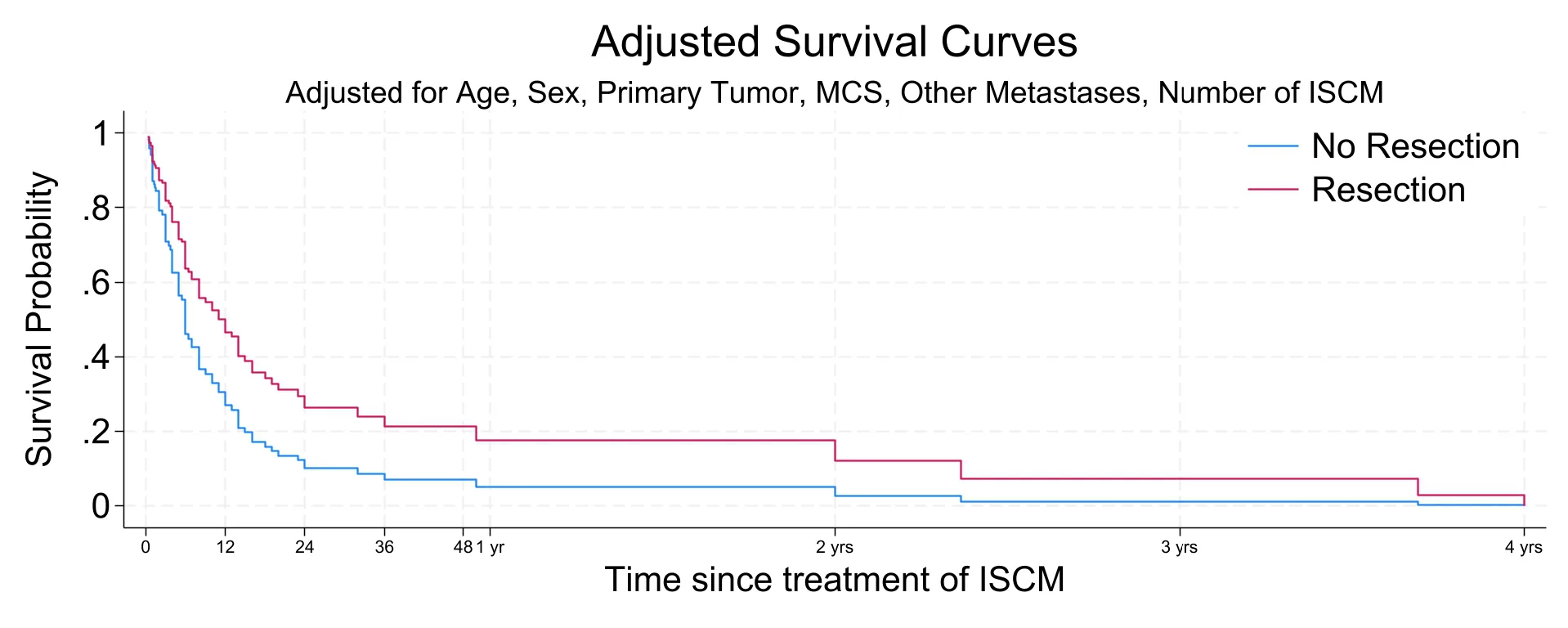
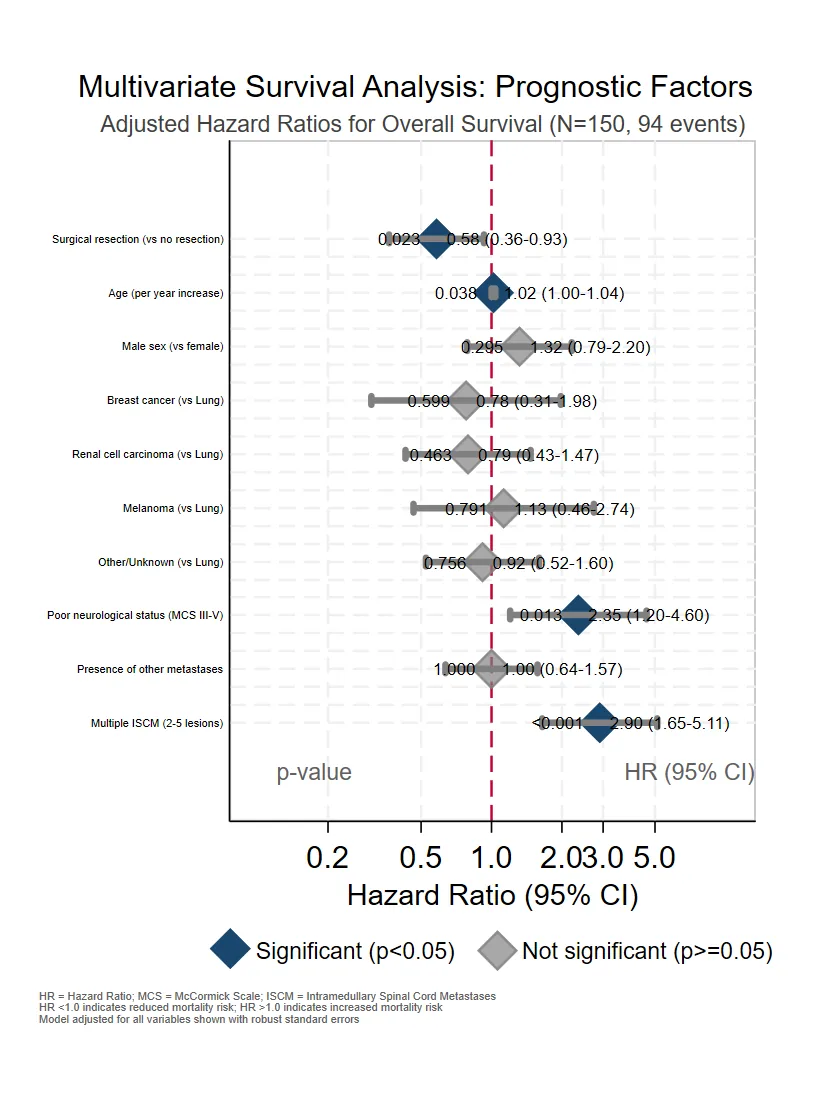
Surgery was performed in 140 patients (58.3%). Overall median survival was 8 weeks (IQR 3-24). Patients undergoing surgical resection had a significantly longer survival than non-surgical patients (median 13 vs. 5 weeks; log-rank p=0.006; univariate HR 0.60, p=0.006). After adjustment for age, sex, primary tumor, baseline McCormick Scale, other metastases, and number of ISCM lesions, surgical resection remained independently associated with a 42% mortality risk reduction (adjusted HR 0.58, 95% CI 0.37-0.93, p=0.023, see figure 1). Multiple ISCM lesions (2-5) were the strongest negative prognostic factor (HR 2.90, 95% CI 1.65-5.11, p<0.001), followed by poor baseline neurological status (MCS III-V: HR 2.35, 95% CI 1.20-4.60, p=0.013) and higher age (HR 1.02 per year, p=0.038, see figure 2). Despite survival advantages, surgical resection did not independently predict improved neurological outcomes at discharge after adjustment for confounders (OR 0.58, 95% CI 0.26-1.31, p=0.192). Of note, missingness pattern was non-random missingness and due to selection bias.
Our comprehensive IPD analysis of ISCM suggests that surgical resection confers robust survival advantage despite analytical challenges including missing data and selection bias. When patient-specific factors are appropriately considered — particularly solitary lesions, limited systemic disease, and favorable baseline neurological status — resection may offer a rational treatment option with possible survival benefit. Prospective multicenter registries with standardized protocols are essential to evaluate long-term outcomes and refine patient selection.
Figures and tables
As submitted with the abstract. Tap a figure to open it at full size.