
Degenerative Thoracolumbar
The Impact Of Frailty, Anxiety, And Depression On Clinical Outcome Of Surgery For Degenerative Lumbar Spine In The Elderly – A Systematic Review
- Leiden University Medical Center (LUMC), Leiden, Netherlands
Abstract
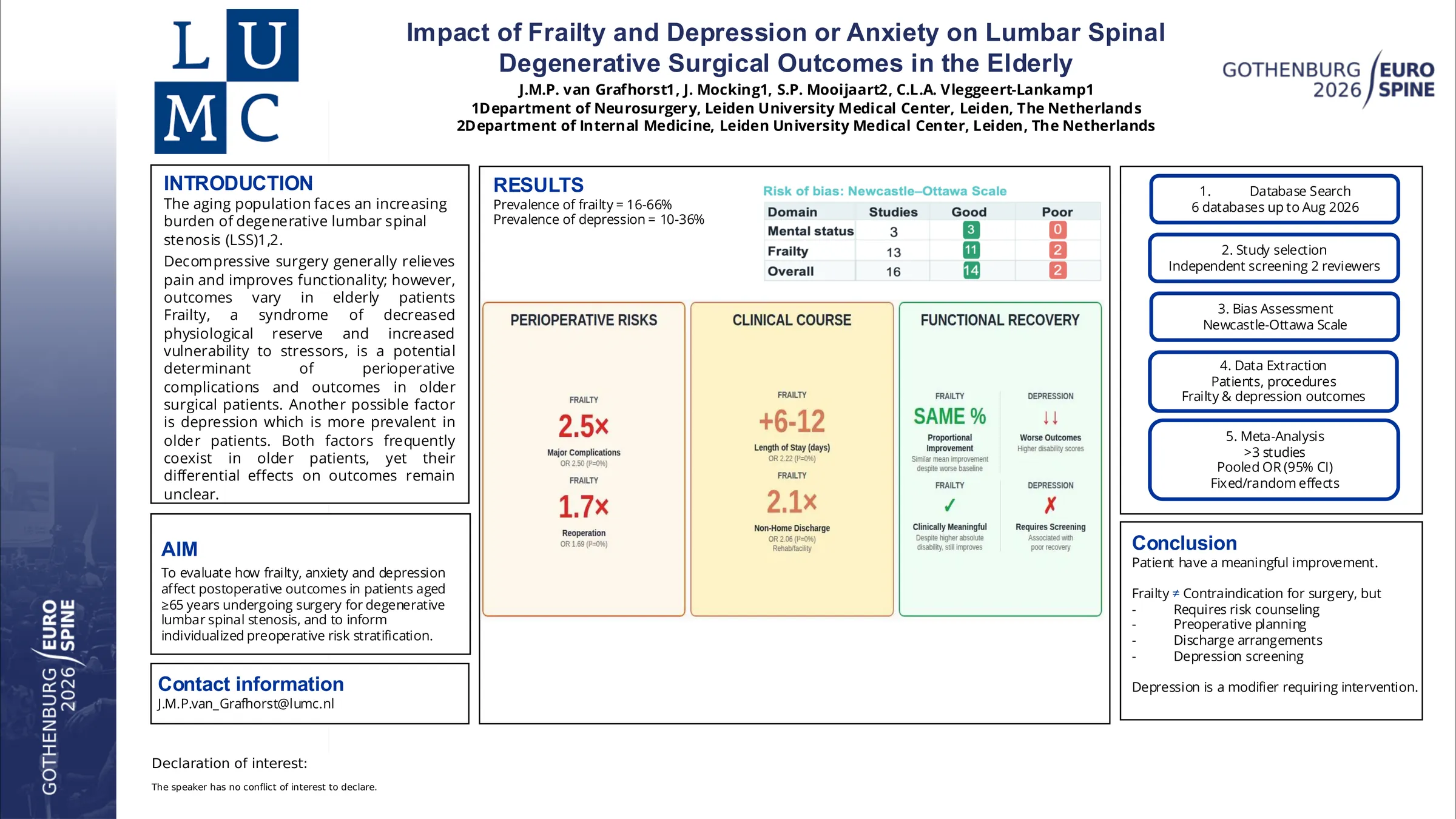
The aging population is increasingly affected by degenerative lumbar spinal stenosis (LSS) for which decompressive surgery is the primary treatment. Both frailty and psychological distress may influence postoperative outcomes, yet their impact in older patients remains unclear. This systematic review evaluates the impact of frailty, anxiety, and depression on clinical outcomes following LSS surgery in older patients.
Databases (PubMed, MEDLINE, Embase, Web of Science, Cochrane Library, Emcare, and PsycINFO) were searched from inception until October 2024. Studies were included if they evaluated frailty and/or psychological distress prior to treatment in patients ≥65 years undergoing decompressive surgery with or without fusion for degenerative lumbar spinal diseases and reported clinical outcomes, patient satisfaction, or adverse events. Risk of bias was assessed using the Newcastle-Ottawa Scale. Meta-analyses used fixed or random-effects models depending on heterogeneity.
Fourteen studies were included, comprising 1,434 older patients. Frailty prevalence ranged from 16% to 66% and depression prevalence varied from 10% to 36%. Frail patients had significantly worse postoperative functional outcomes, increased odds of major complications (OR 2.50, 95%CI 1.83-3.41), non-home discharge (OR 2.06, 95%CI 1.85-2.29), readmission (OR 1.39, 95%CI 1.08-1.78), and reoperations (OR 1.69, 95%CI 1.13-2.55), although still achieving meaningful improvements and comparable satisfaction rates. Depression and anxiety predominantly affected subjective outcomes and were associated with worse functional outcomes, higher pain scores, and lower satisfaction rates.
Both frailty and psychosocial distress significantly affect postoperative outcomes in older LSS patients, although they influence different domains. Frailty primarily affects perioperative outcomes (complications, length of stay, discharge disposition), while psychological problems mainly affect pain, functional recovery, and satisfaction. Given their bidirectional relationship and complementary prognostic value, both should be systematically assessed preoperatively. These factors can inform but not exclude patients from surgery and enable comprehensive risk stratification and personalized treatment optimization in this vulnerable population.
Figures and tables
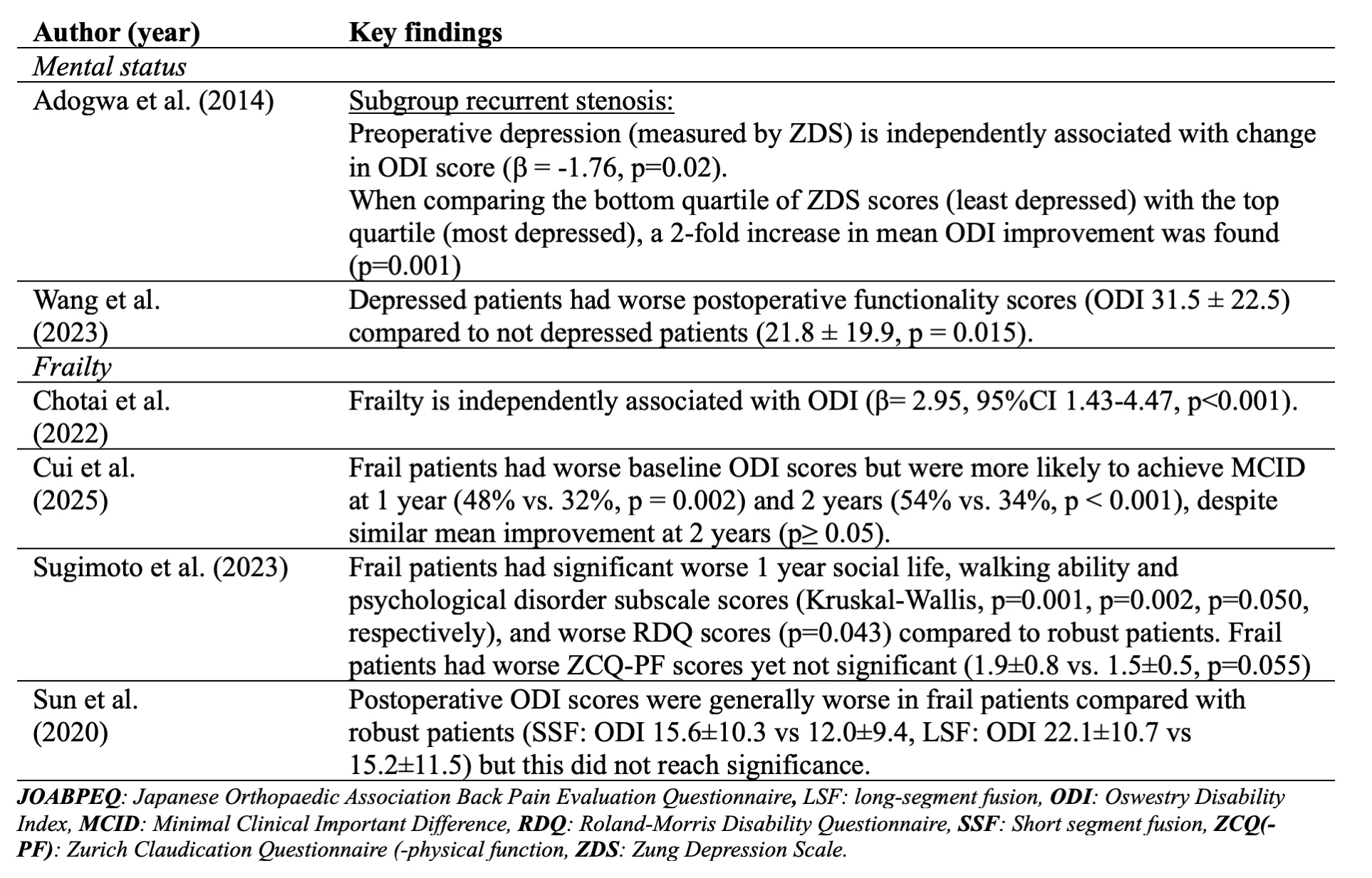
As submitted with the abstract. Tap a figure to open it at full size.