
Complications & Epidemiology
Systematic review of care bundles to reduce postoperative spinal implant infections
- Sahlgrenska Academy Institute of Health and Care Sciences, Gothenburg, Sweden
- Sahlgrenska University Hospital, Gothenburg, Sweden, Sweden
- Institute of Biomedicine, Sahlgrenska Academy, Gothenburg, Sweden
- Karolinska Institutet, Stockholm, Sweden
- Institute of Medicine, Sahlgrenska Academy, Gothenburg, Sweden
- School of Nursing and Midwifery, Griffith University, Gold Coast, Australia
Abstract
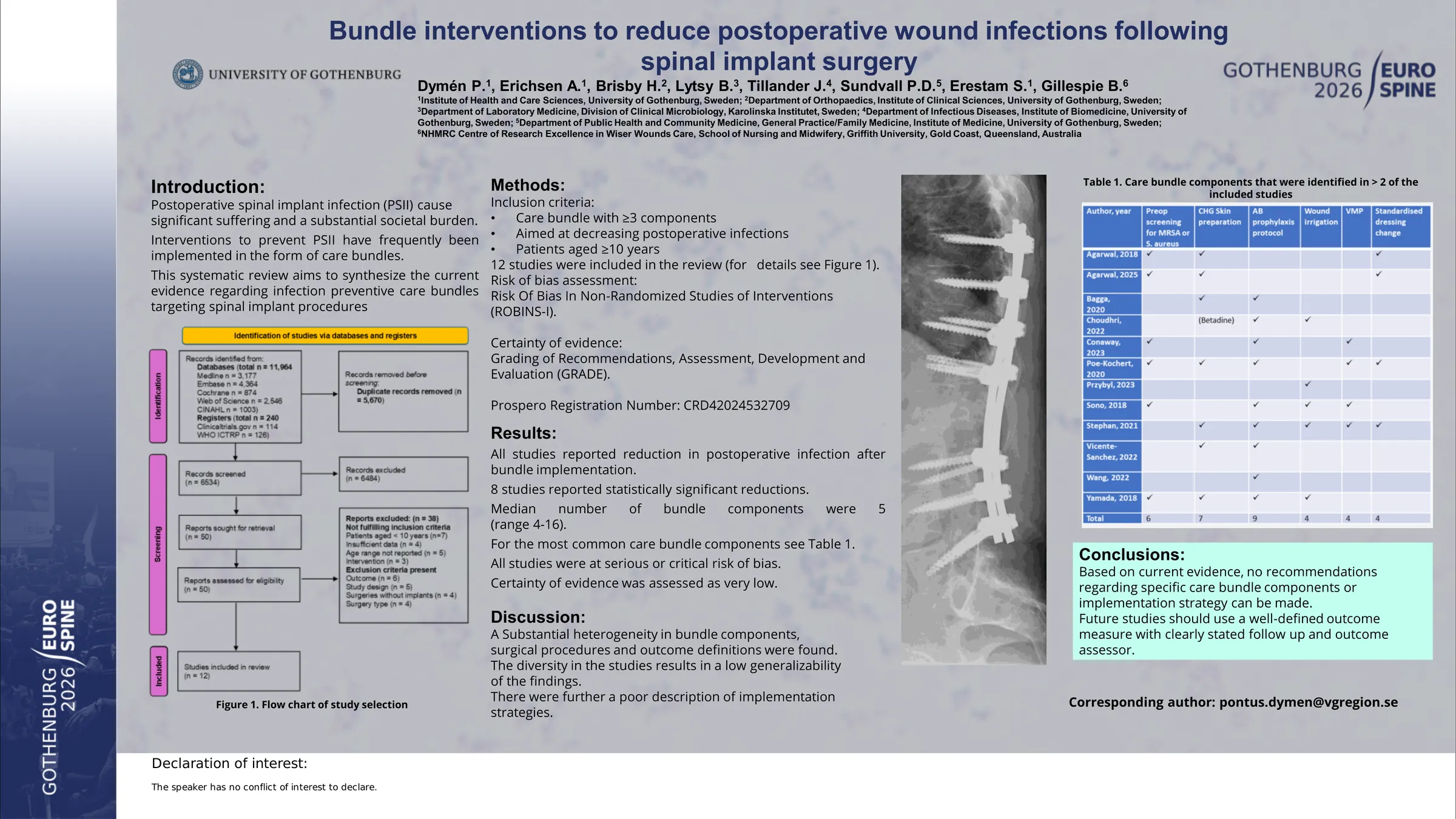
The pooled incidence of postoperative spinal implant infection (PSII) has been reported to be as high as 4.4%. As the potential role of infection preventive care bundles in spinal implant surgery is insufficiently explored, this systematic review aims to synthesize current evidence regarding this topic
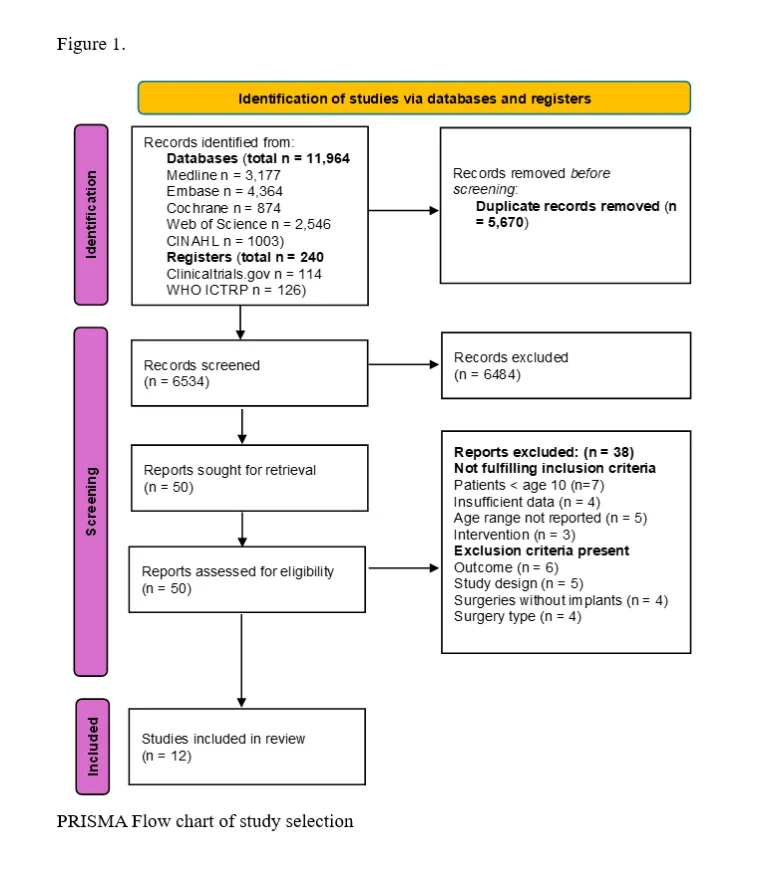
A search was performed in Medline, Embase, Cochrane, Web of Science and CINAHL as well as in Clinicaltrials.gov and WHO ICTRP. The last search was conducted on August 14, 2025.
Randomised controlled trials or non-randomised studies of interventions published in English with postoperative infection as outcome measure were included. Inclusion criteria was care bundle with ≥3 preventive measures aimed at decreasing postoperative infections for patients aged ≥10 years having instrumented spine surgery.
Risk of bias was assessed using Risk Of Bias In Non-Randomized Studies - of Interventions (ROBINS-I). Synthesis without meta-analysis was conducted due to the heterogeneity of included studies. The certainty of the body of evidence was assessed using Grading of Recommendations, Assessment, Development and Evaluation (GRADE).
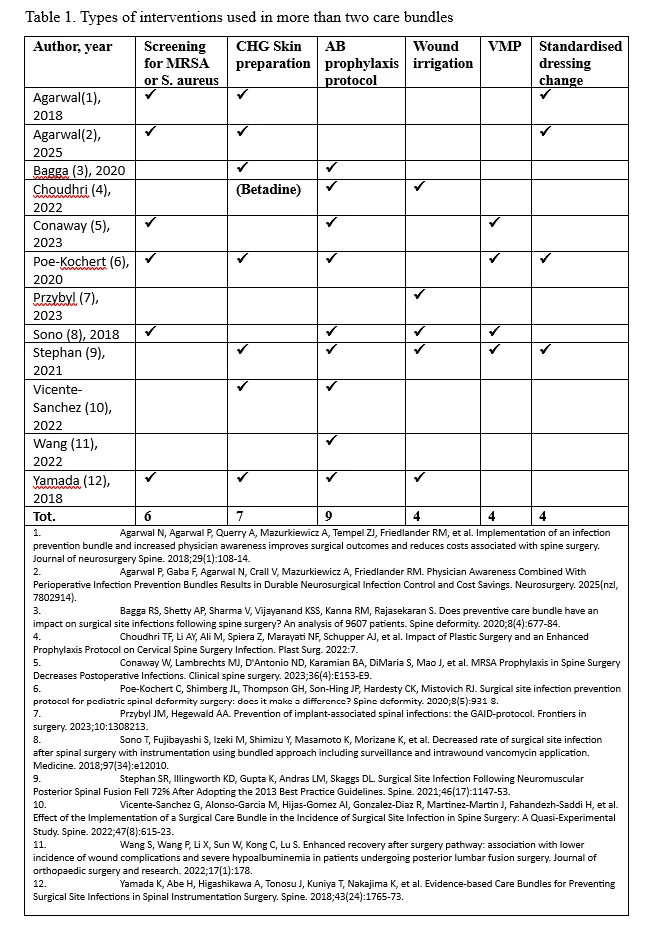
The search identified 6 534 studies. 12 studies from USA, Europe, Japan, India and China were included. Median number of bundle components were 5 (range 4-16). Most common were interventions targeting systemic antibiotic prophylaxis protocol, skin preparation protocols and screening/eradication of MRSA/MSSA. All studies reported reduction in postoperative infection after bundle implementation, with 8 studies reporting statistically significant reduction. All studies were at serious or critical risk of bias, with very low certainty of evidence.
The bundle approach appear to have some effect, as all studies reported lower PSII rates after implementing an infection prevention care bundle. The lack of a validated and widely used definition of postoperative implant infection makes meaningful comparison or pooling of study outcomes impossible.
Due to the high heterogeneity, low certainty of evidence and poor description of implementation methods, no recommendations on specific care bundle components or implementation strategy can be made.
Future studies of infection preventive care bundles in spine surgery should use a well-defined outcome measure (i.e. the 2025 MSIS/EBJIS definition of postoperative spine infection) with clearly stated follow up. Furthermore, to avoid low value care, research on infection prevention would benefit from applying implementation science frameworks and following existing guidelines (SQUIRE) for quality improvement projects.
Figures and tables
As submitted with the abstract. Tap a figure to open it at full size.