
Tumours & Infection
Neurological Status after Surgical Intervention of Intraspinal Tumors – How do we Manage Patient Expectations?
- Rigshospitalet, Copenhagen, Denmark
- Rigshospitalet, Copenhagen East, Denmark
- Rigshospitalet, Hvidovre, Denmark
Abstract
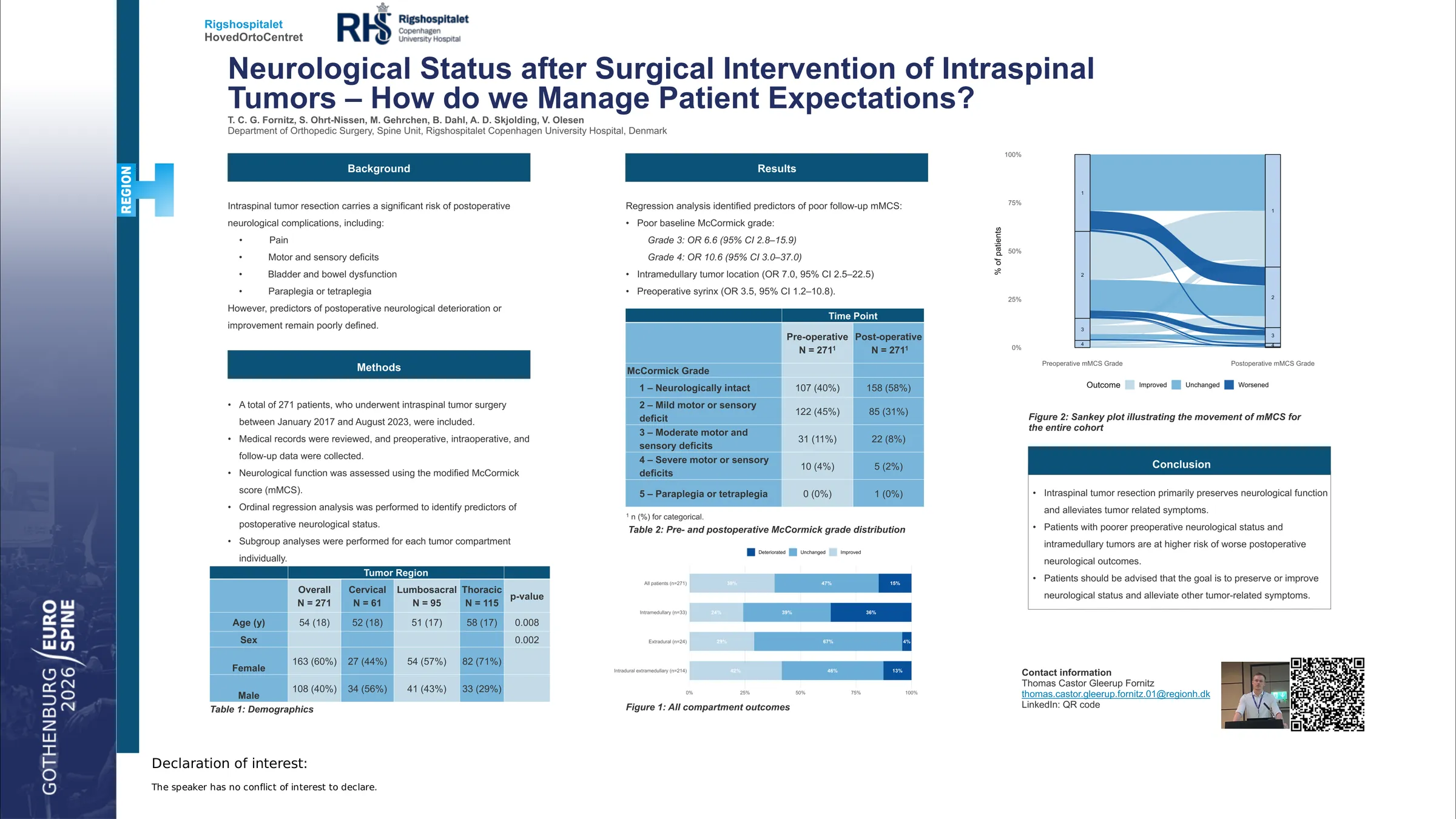
Intraspinal tumor resection is associated with significant risks. The predictors and likelihood of postoperative neurological deterioration or improvement remain inadequately defined. We therefore aimed to assess postoperative neurological outcome, following surgical treatment for Intraspinal tumors.
Patients who underwent resection of an intraspinal tumor between January 2017 and August 2023 were included. Through medical records we recorded preoperative neurological status, tumor location, and intraspinal pathology. Neurological outcome, measured using the McCormick score, was reassessed 10–30 months postoperatively. Using ordinal logistic regression, we assessed predictors for neurological status.
A total of 271 patients were included: 61(23%) were cervical tumors, 115(42%) thoracic and 95(35%) lumbosacral. Ninety-five (35%) were schwannomas, 88 (32%) were meningiomas, 34 (13%) were myxopapillary ependymomas, and 54 (20%) various pathologies. Postoperatively, 104 (38%) improved ≥1 grade, 127 (47%) were unchanged. Of 107 patients with no prior neurological impairments, 29 (27%) deteriorated ≥1 grade, 26 of these had mild sensory symptoms and three had moderate motor deficits. Regression analyses identified poor follow-up McCormick scores as being significantly associated with; poor baseline McCormick grade (grade 3: OR 6.6, CI 2.8–15.9; grade 4: OR 10.6, CI 3–37), intramedullary location (OR 7.0, CI 2.5–22.5) and the presence of a preoperative syrinx (OR 3.5, CI 1.2–10.8). Preoperative intramedullary signal changes and tumor level (cervical, thoracic, or lumbosacral) were not associated with postoperative neurological status.
Intraspinal tumor resection primarily preserves neurological function. Patients should be advised that substantial improvement with surgery is uncommon. Patients with a worse neurological status preoperatively and with intramedullary tumors were more likely to experience a worse postoperative neurological outcome.
Figures and tables
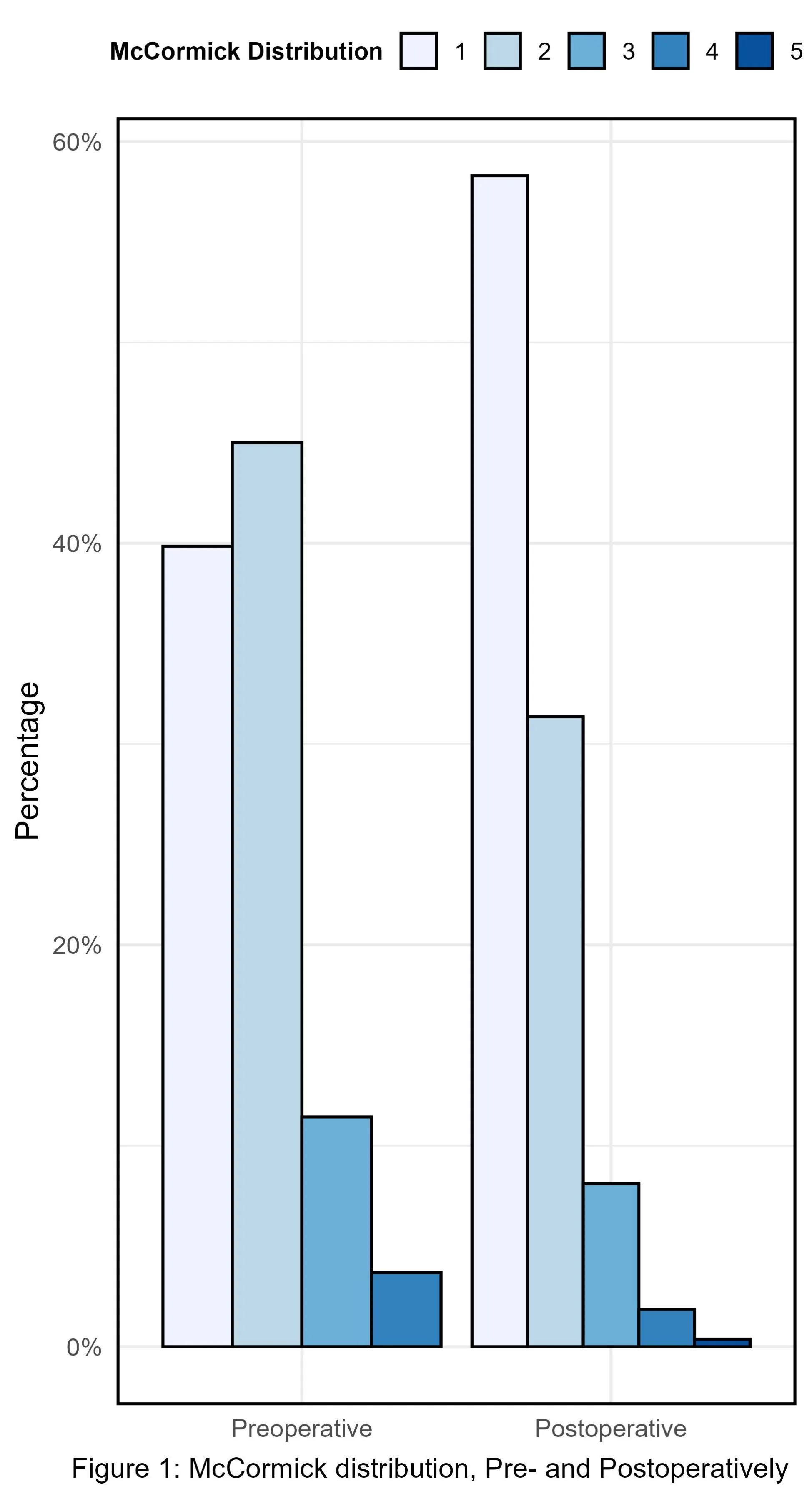
As submitted with the abstract. Tap a figure to open it at full size.