
Basic Science & Economics
Acute Effects of Isometric Trunk Fatigue on Cervical, Scapular, and Lumbar Muscle Mechanical Properties: A Myotonometric Pilot Study Stratified by Nomophobia Level
- İstanbul Beykent Üniversitesi, İstanbul, Türkiye
Abstract
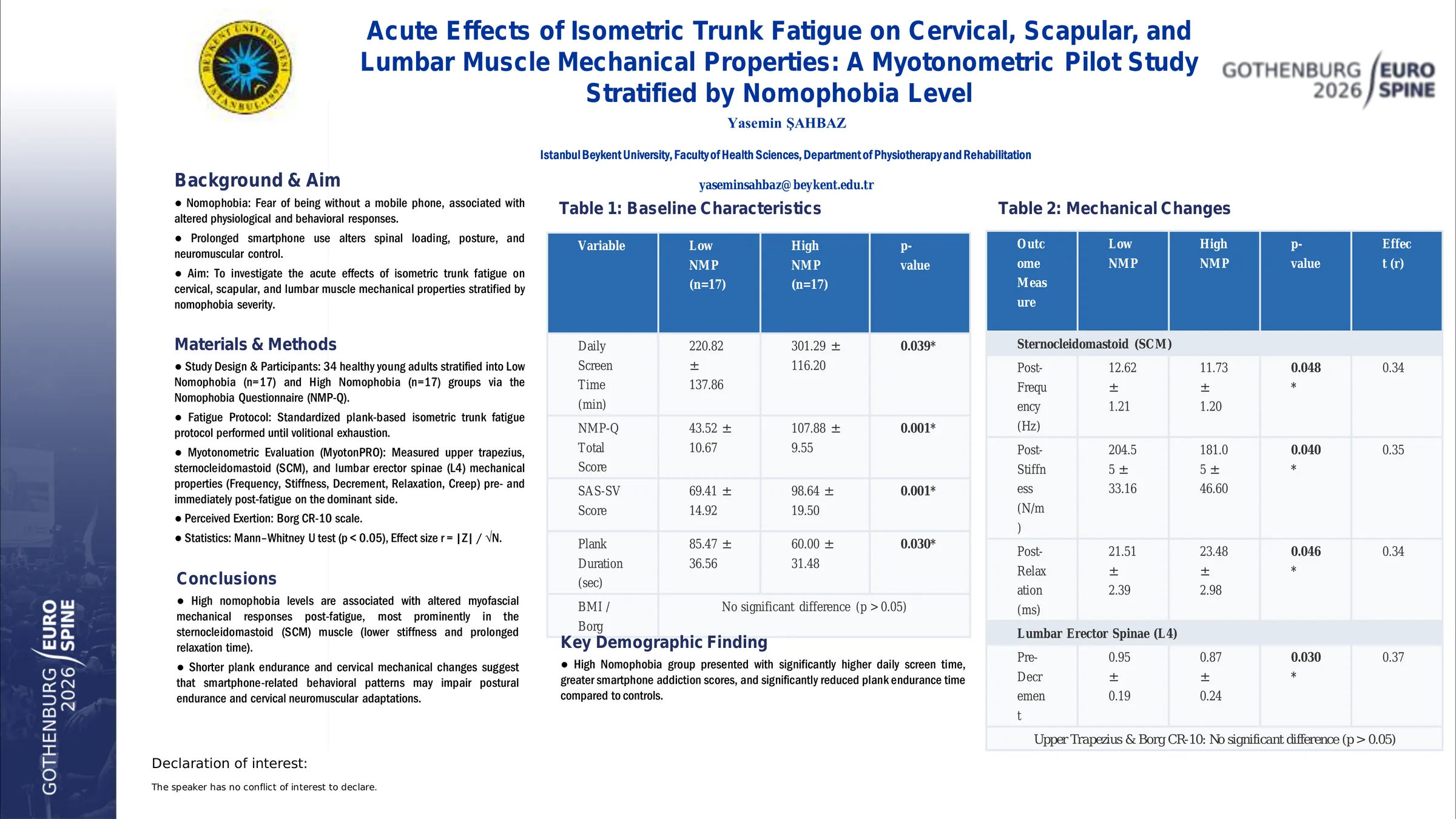
Nomophobia, the fear of being without a mobile phone, has emerged as a behavioral phenomenon associated with altered psychological and physiological responses. Prolonged smartphone use may influence neuromuscular function and spinal loading; however, its potential impact on fatigue-related muscle mechanical responses remains unclear. This pilot study aimed to investigate the acute effects of isometric trunk fatigue on cervical, scapular, and lumbar muscle mechanical properties according to nomophobia severity.
Thirty-four healthy young adults were stratified into low and high nomophobia groups based on the Nomophobia Questionnaire. Participants performed a standardized plank-based isometric trunk fatigue protocol until volitional exhaustion. Mechanical properties of the upper trapezius, sternocleidomastoid, and lumbar erector spinae (L4 level) were assessed on the dominant side using myotonometry before and immediately after fatigue. Perceived exertion was assessed using the Borg CR-10 scale. Between-group differences were analyzed with Mann–Whitney U tests.
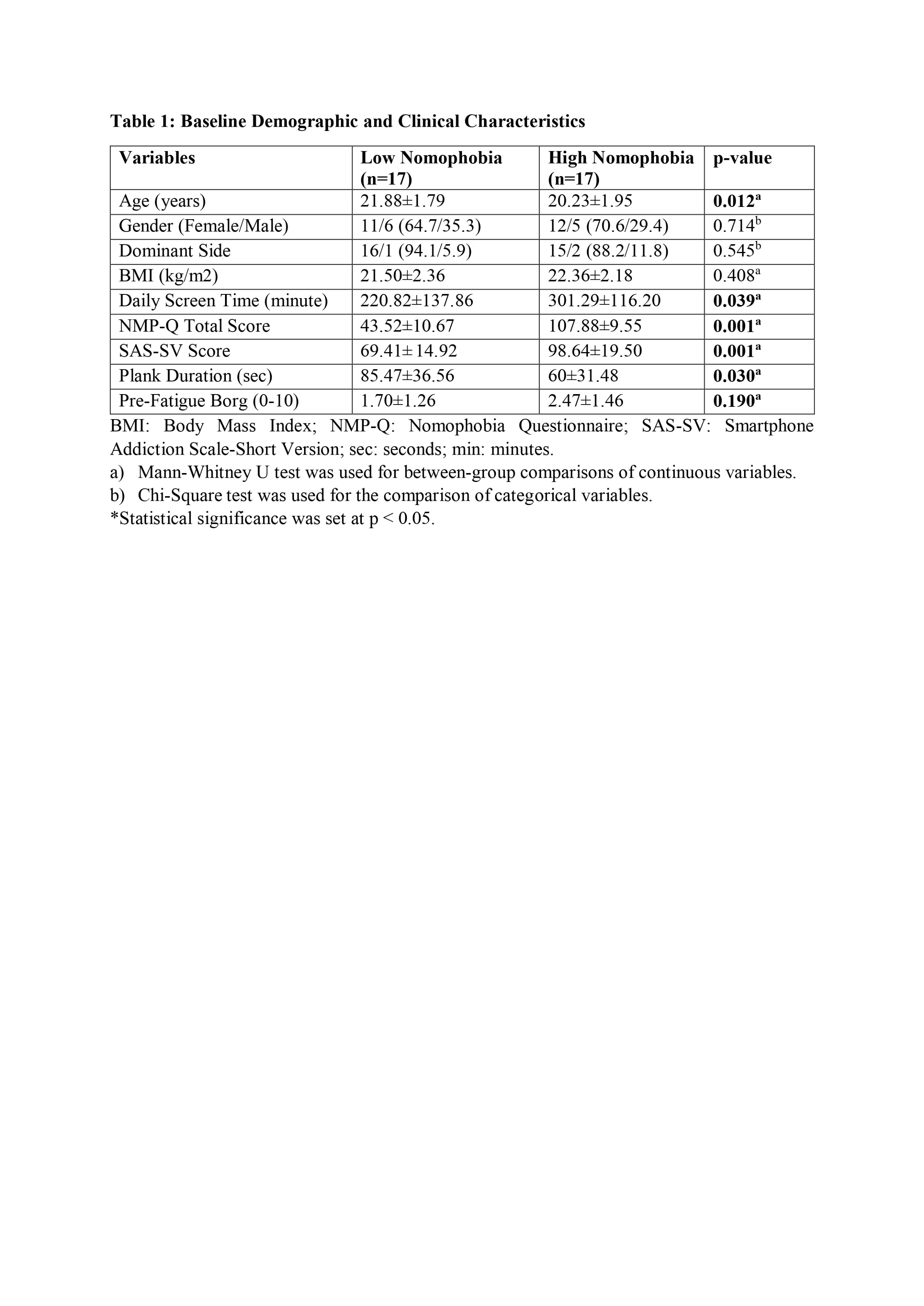
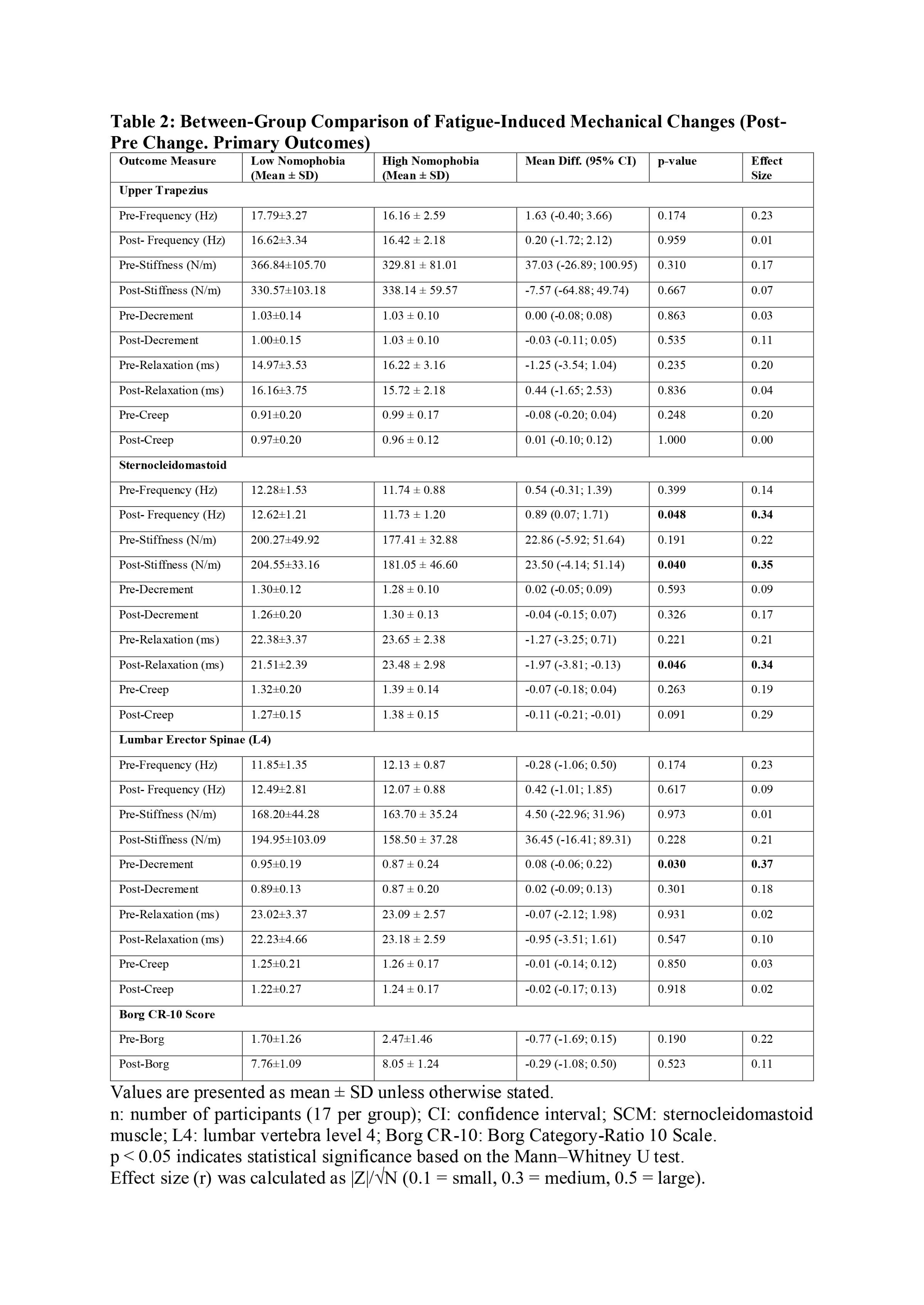
At baseline, the high nomophobia group had significantly longer daily screen time, higher nomophobia and smartphone addiction scores, and shorter plank endurance time (p<0.05), whereas sex distribution, BMI, dominance, and baseline exertion were similar between groups (p>0.05). Significant between-group differences were observed in post-fatigue sternocleidomastoid parameters, including frequency (p=0.048, r=0.34), stiffness (p=0.040, r=0.35), and relaxation time (p=0.046, r=0.34). Specifically, the high nomophobia group demonstrated lower post-fatigue frequency, lower stiffness, and longer relaxation time compared with the low nomophobia group. Pre-fatigue decrement of the lumbar erector spinae was also significantly different between groups (p=0.030, r=0.37). Borg scores increased after fatigue in both groups without significant between-group differences (p>0.05).
High levels of nomophobia were associated with altered myofascial mechanical responses following isometric trunk fatigue, most notably in the sternocleidomastoid muscle. These findings, together with shorter plank endurance and higher perceived exertion, suggest that smartphone-related behavioral patterns may influence cervical neuromuscular adaptations and fatigue tolerance. While trunk fatigue induced mechanical changes across spinal muscles in all participants, the distinct cervical and lumbar responses observed in the high-nomophobia group highlight a potential modulatory role of problematic smartphone use on spinal muscle mechanics. These preliminary findings underscore the need for larger-scale studies to replicate and extend these findings and clarify their long-term musculoskeletal implications.
Figures and tables
As submitted with the abstract. Tap a figure to open it at full size.