
Trauma
Subaxial Cervical Fractures in Ankylosing Spondylitis: A Systematic Review of Management Strategies and Clinical Outcomes
- University Hospital of Wales, Cardiff, United Kingdom
- Cardiff University, Cardiff, United Kingdom
Abstract
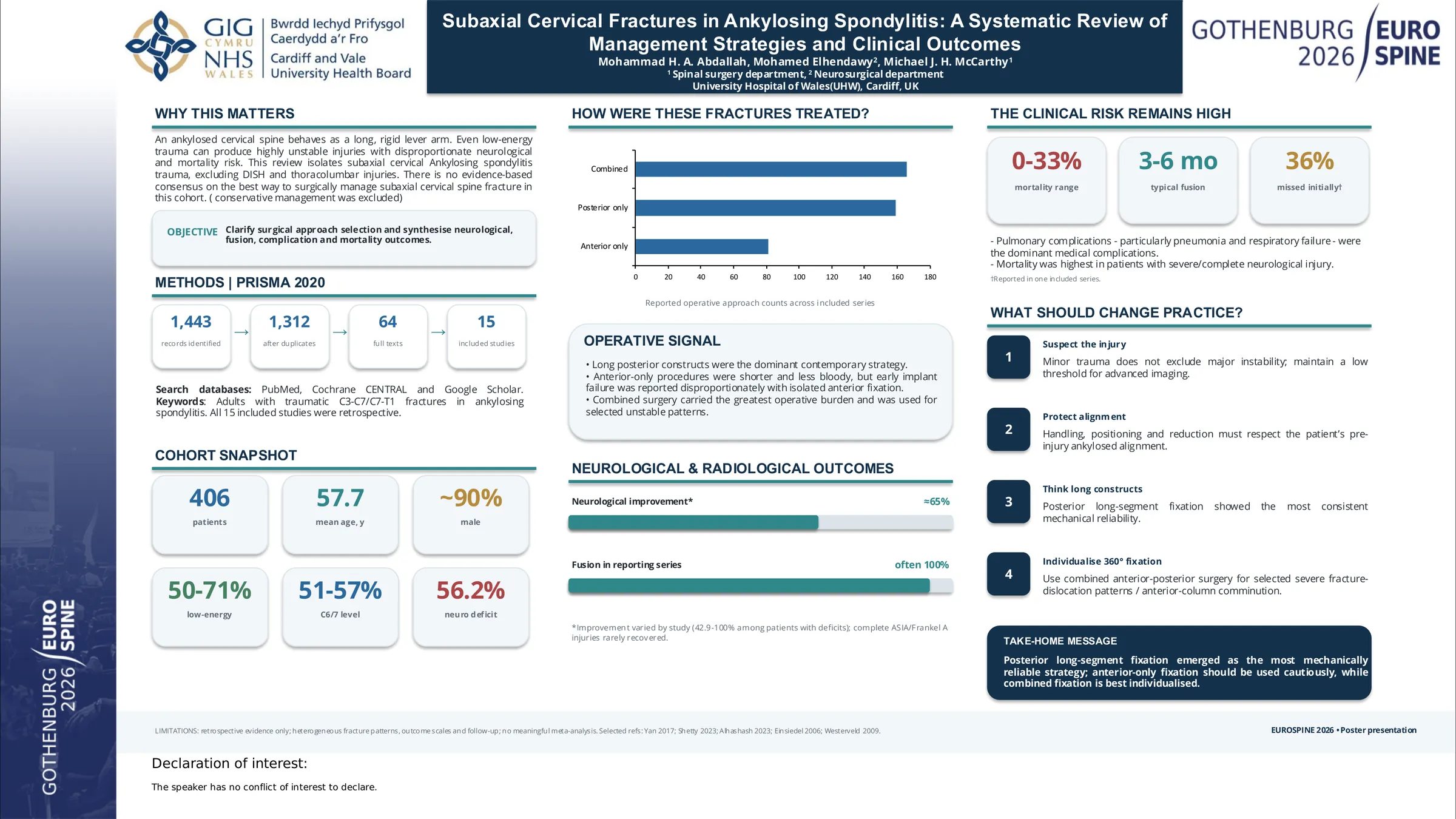
Cervical spine fractures in ankylosing spondylitis (AS) represent highly unstable injuries with disproportionate neurological and mortality risk, even following low-energy trauma. Optimal surgical approach selection remains controversial, and current literature lacks cervical-specific treatment algorithms.
A systematic review was conducted according to PRISMA 2020 methodology using PubMed, Cochrane CENTRAL, and Google Scholar. Eligible studies included adults with AS sustaining traumatic cervical spine fractures (C3–C7) reporting management strategies and clinical outcomes. Data extracted included demographics, surgical approach, neurological outcomes, fusion, complications, and mortality.
A total of 15 primary clinical studies were included, representing approximately 406 patients with AS subaxial cervical trauma. Posterior fixation was the most frequently employed strategy and demonstrated the most reliable construct stability, with markedly lower reoperation rates compared with anterior-only fixation. Approximately 65% of patients demonstrated neurological improvement following surgical treatment. Fusion success was consistently high in posterior or combined constructs. Complication rates remained substantial (9.3%) , and early postoperative mortality ranged from 3–21% across studies.
Cervical spine fractures in ankylosing spondylitis are biomechanically unstable injuries, the majority require surgical stabilisation. Posterior long-segment fixation should be considered the primary operative strategy, with circumferential approaches reserved for selected severe dislocation patterns. Early recognition, prompt surgical intervention, and management are critical to optimize neurological and survival outcomes.
To our knowledge, this is the most Focused synthesis to date dedicated exclusively to cervical spine trauma in ankylosing spondylitis, providing level-summarised evidence on surgical management, neurological recovery, and mortality patterns. By excluding thoracolumbar injuries and non-AS ankylosed pathologies such as DISH, this review delivers the most focused and clinically relevant synthesis to date for guiding operative decision-making in this high-risk population.
Figures and tables
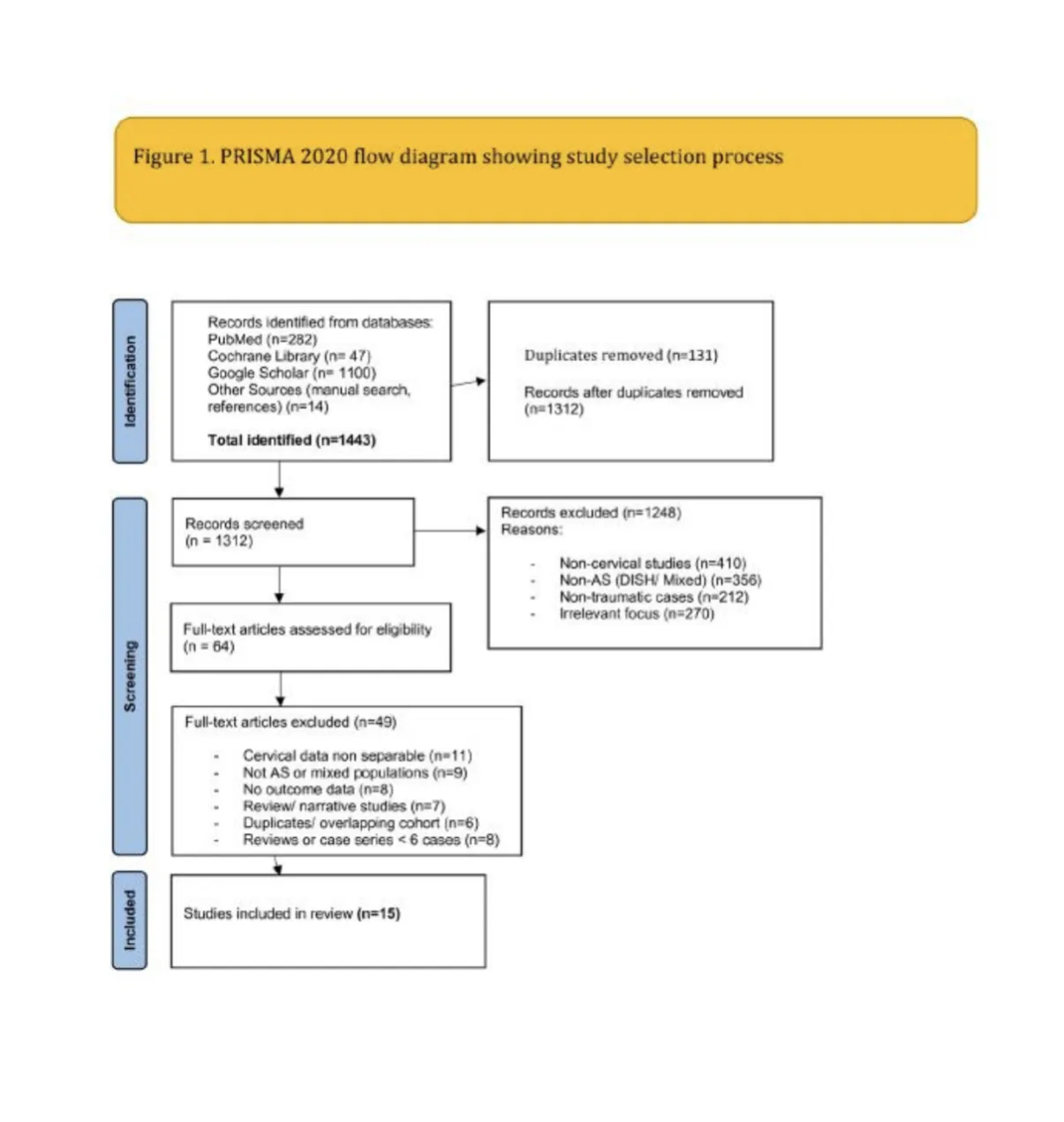
As submitted with the abstract. Tap a figure to open it at full size.