
Complications & Epidemiology
Complication analysis following full-endoscopic uniportal endoscopic surgery
- Schön Klinik München Harlaching, München, Germany
Abstract
Full-endoscopic uniportal spine surgery is being adopted with increasing frequency as a minimally invasive alternative to conventional open or microsurgical approaches. However, prospective evidence on complications and risk factors remains sparse.
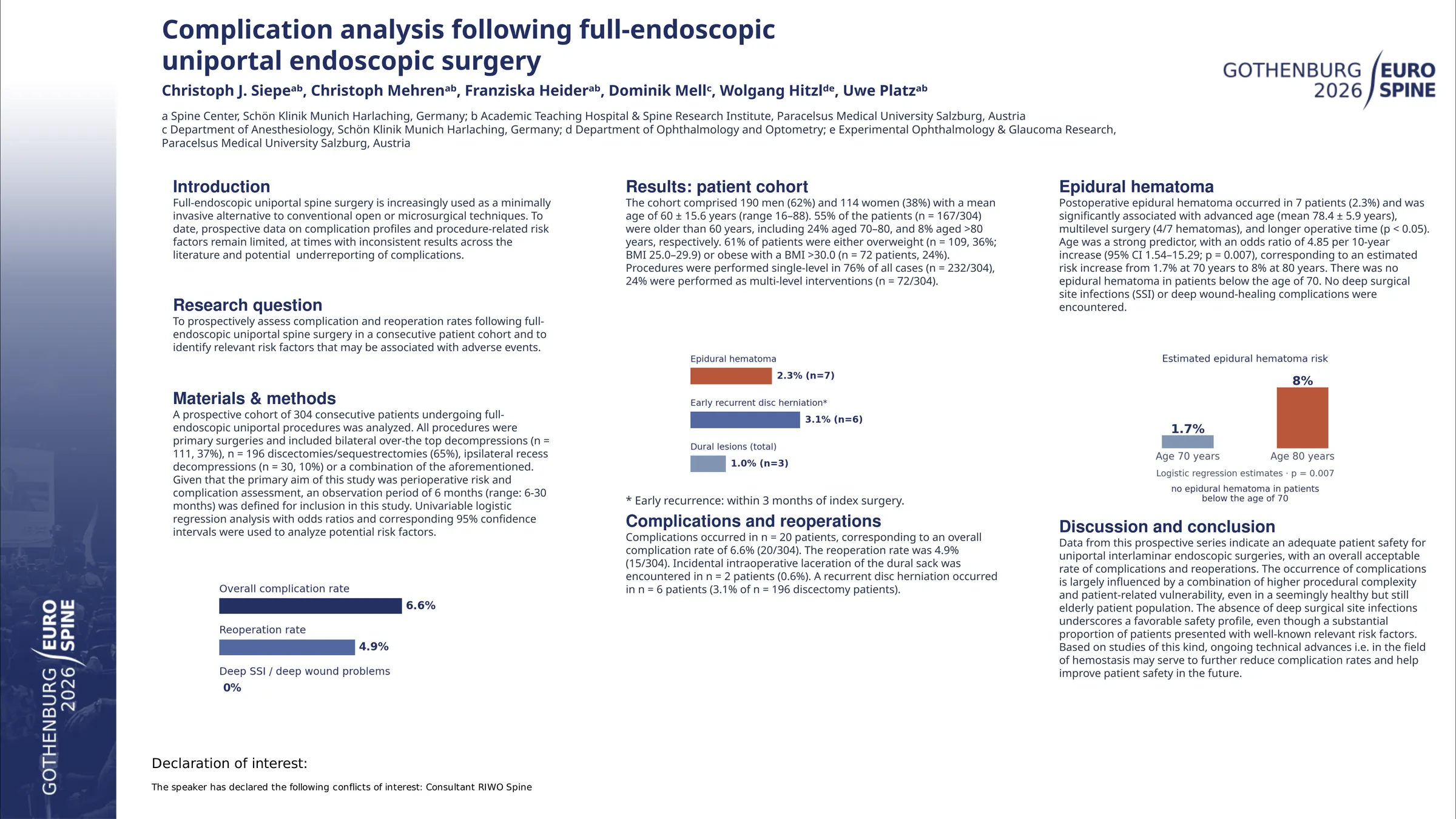
A prospective cohort of 304 consecutive patients undergoing full-endoscopic uniportal procedures was analyzed. All procedures were primary surgeries and included bilateral over-the top decompressions, discectomies/sequestrectomies, ipsilateral recess decompressions or a combination of the aforementioned. An observation period of 6 months (range: 6-30 months) was defined for inclusion in this study. Statistical analysis and univariable logistic regression analysis with odds ratios and corresponding 95% CI were used to analyze potential risk factors.
The mean age was 60 ± 15.6 years. 55% of the patients (n=167/304) were older than 60 years. 61% of patients classified as overweight with a BMI above 25.0 (n=181).
Procedures were performed single-level in 76% of all cases (n=232/304 ), 24% were performed as multi-level interventions (n=72/304).
The overall complication rate was 6.6% (20/304), the reoperation rate was 4.9% (15/304). Incidental intraoperative dural lesion occured in 2 patients (0.6%). A recurrent disc herniation was observed in 6 patients (3.1% of n=196 discectomy patients).
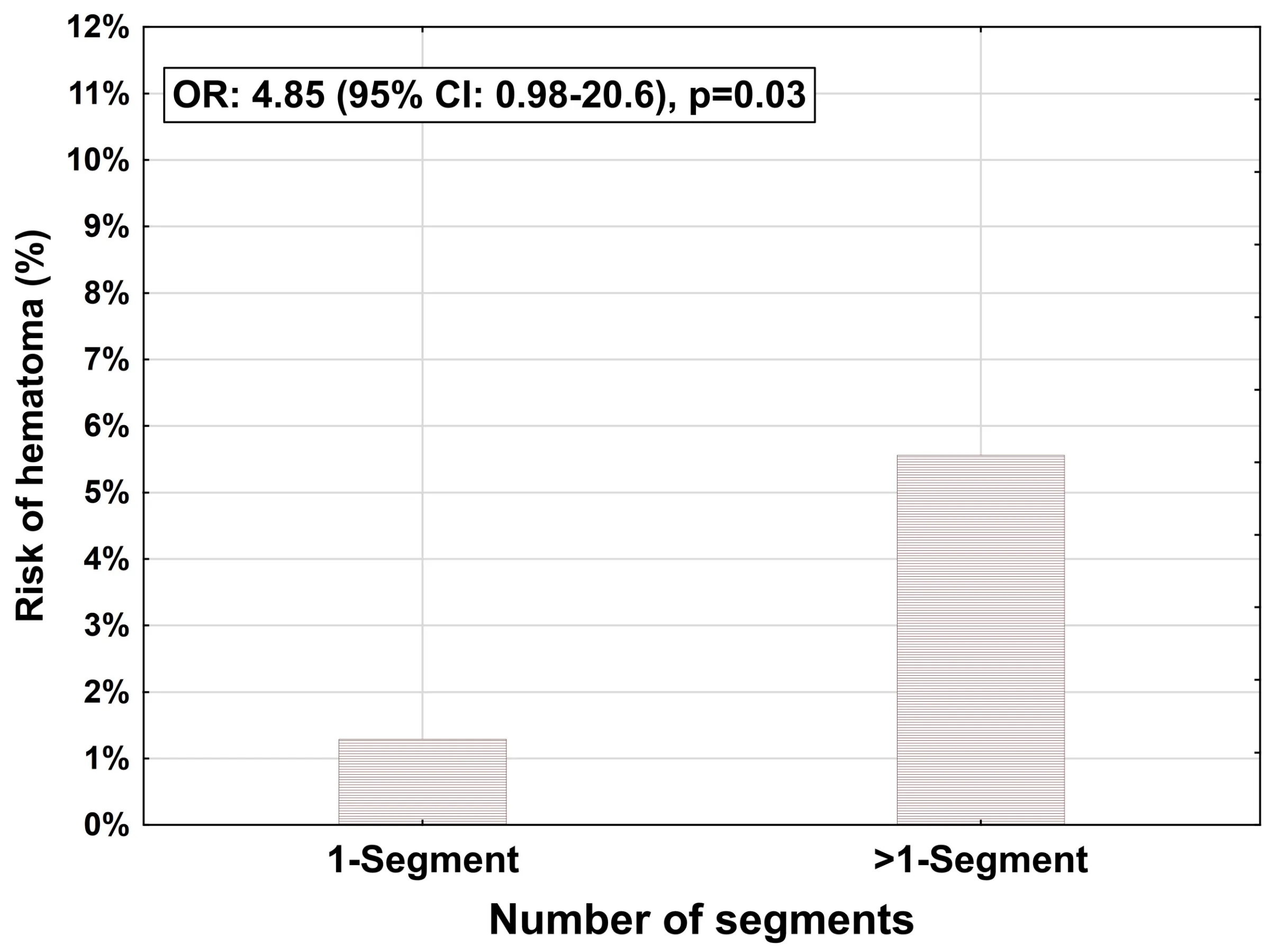
Postoperative epidural hematoma occurred in 7 patients (2.3%) and was significantly associated with advanced age (mean 78.4 ± 5.9 years), multilevel surgery (4/7, Figure) and longer operating time (p < 0.05).
Age was a strong predictor, with an odds ratio of 4.85 per 10-year increase (95% CI 1.54–15.29; p = 0.007), corresponding to an estimated risk increase from 1.7% at 70 years to 8% at 80 years. There was no epidural hematoma in patients below the age of 70.
No deep surgical site infections (SSI) or deep wound-healing complications were encountered.
Data from this prospective series indicate an adequate patient safety for uniportal interlaminar endoscopic surgeries, with an overall acceptable rate of complications and reoperations. The occurrence of complications is largely influenced by higher procedural complexity and patient-related vulnerability, even in a seemingly healthy but still elderly patient population.
The absence of deep surgical site infections underscores a favorable safety profile, even though a substantial proportion of patients presented with well-known relevant risk factors.
Based on studies of this kind, ongoing technical advances i.e. in the field of hemostasis may aid to further reduce complications and help improve patient safety in the future.
Figures and tables
As submitted with the abstract. Tap a figure to open it at full size.