
Degenerative Thoracolumbar
ST Score: Development of an Evidence-Weighted Radiological–Clinical Prototype Model for Segmental Instability in Degenerative Lumbar Disease
- National Institute of Neurology and Neurosurgery, Ciudad de México, Mexico
- Angeles Ciudad Juarez Hospital, Ciudad Juárez, Mexico
- Angeles del Pedregal Hospital, Mexico City, Mexico
- Hispanoamericano Hospital, Mexical, Mexico
- Angeles del Pedregal Hospital, Ciudad de México, Mexico
- Centro Medico ABC, Mexico City, Mexico
Abstract
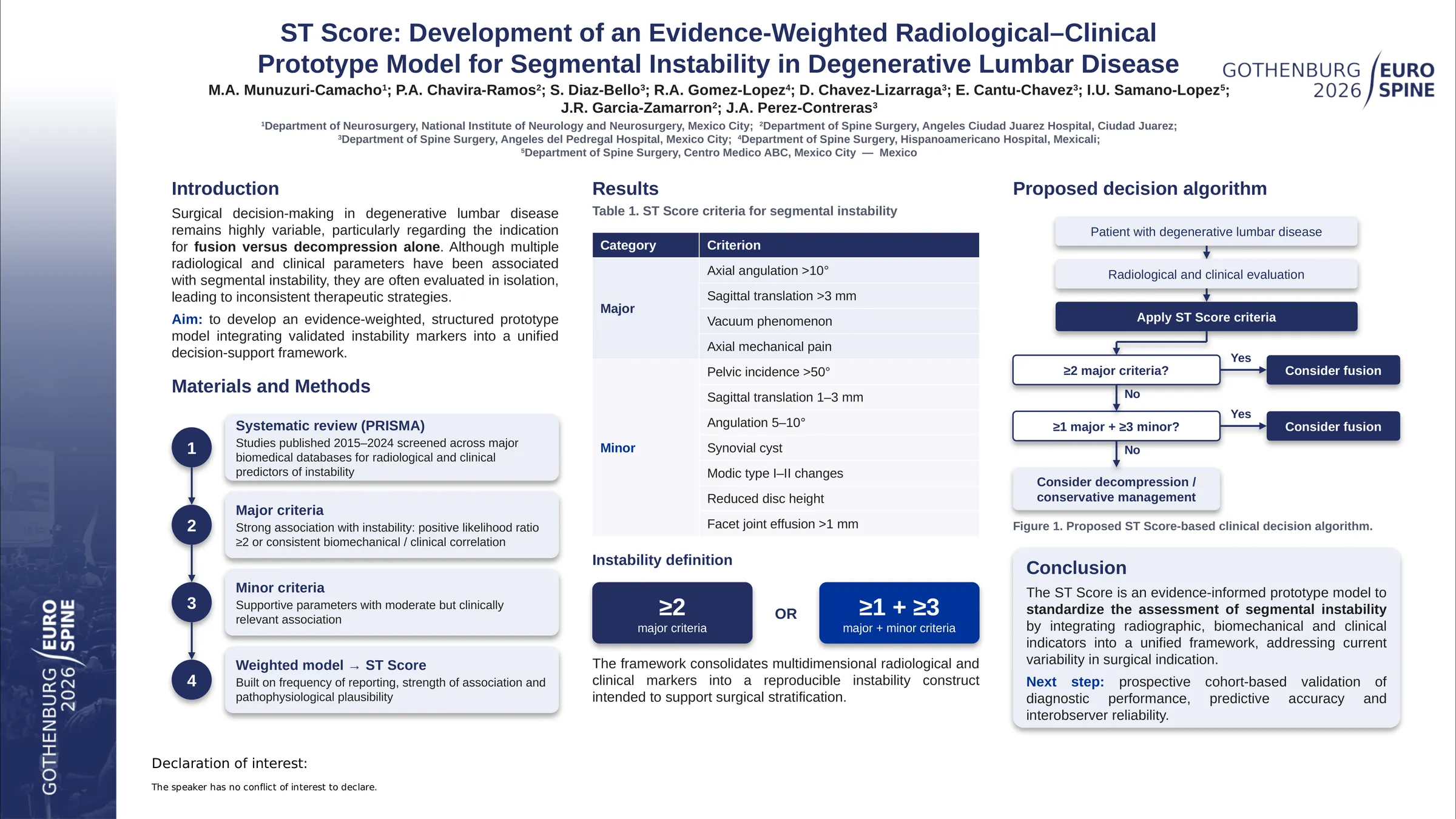
Surgical decision-making in degenerative lumbar disease remains highly variable, particularly regarding the indication for fusion versus decompression alone. Although multiple radiological and clinical parameters have been associated with segmental instability, these criteria are often evaluated in isolation, leading to inconsistent therapeutic strategies. We aimed to develop an evidence-weighted, structured prototype model integrating validated instability markers into a unified decision-support framework.
A systematic review was conducted according to PRISMA guidelines to identify radiological and clinical predictors of segmental instability in degenerative lumbar disease. Studies published between 2015 and 2024 were screened across major biomedical databases. Parameters demonstrating strong associations with instability (positive likelihood ratio ≥2 or consistent biomechanical/clinical correlation) were classified as major criteria. Supportive parameters with moderate but clinically relevant associations were defined as minor criteria. Based on frequency of reporting, strength of association, and pathophysiological plausibility, a weighted scoring model (ST Score) was constructed.
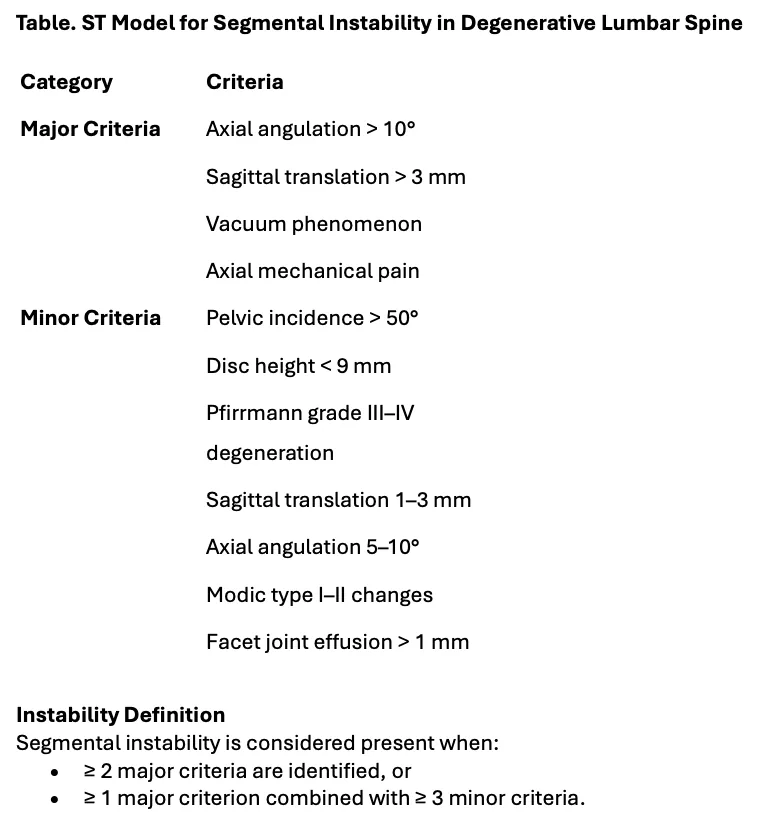
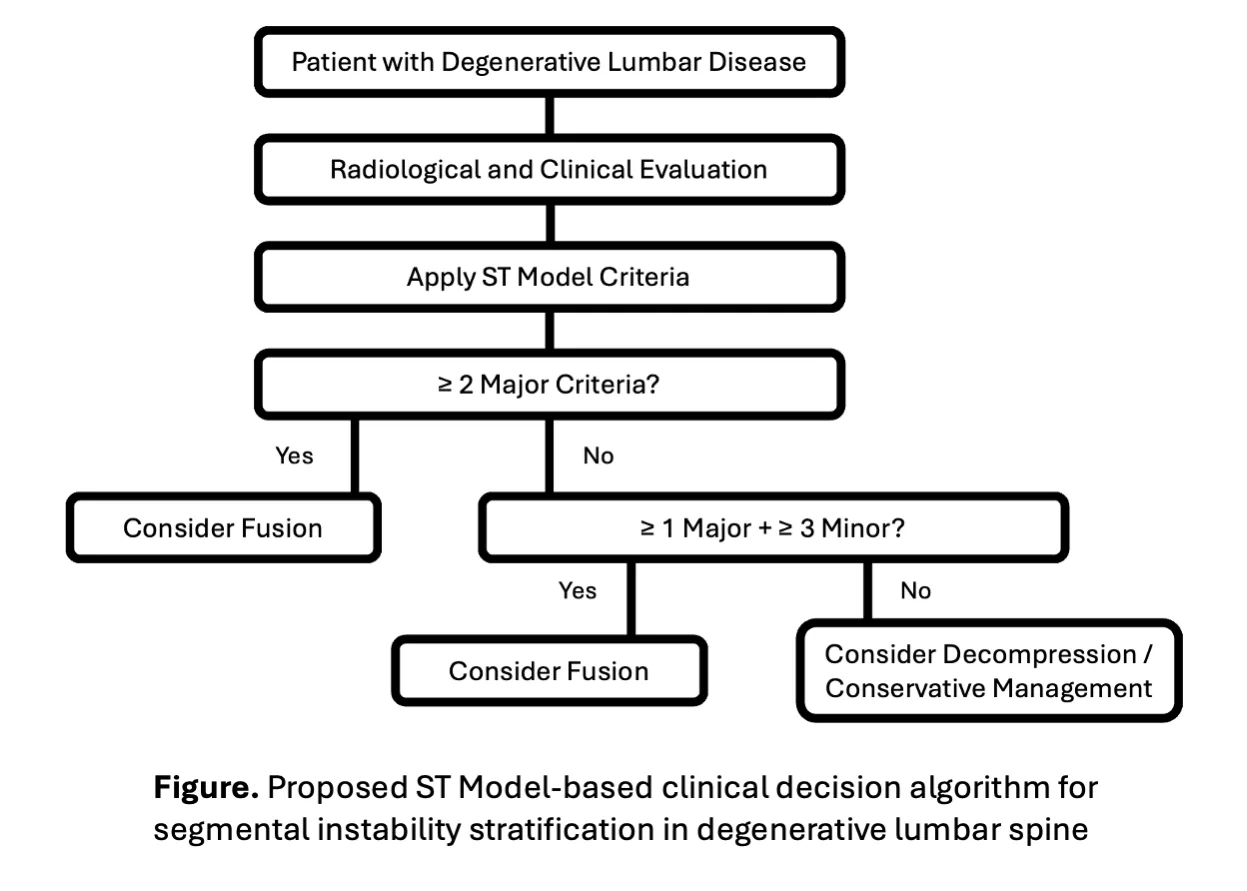
Major criteria included axial angulation >10°, sagittal translation >3 mm, vacuum phenomenon, and axial mechanical pain. Minor criteria comprised pelvic incidence >50°, translation between 1–3 mm, angulation 5–10°, synovial cyst, Modic type I–II changes, reduced disc height, and facet joint effusion >1 mm. The ST Score defines instability when ≥2 major criteria or ≥1 major plus ≥3 minor criteria are present. This structured framework consolidates multidimensional radiological and clinical markers into a reproducible instability construct intended to support surgical stratification.
The ST Score represents an evidence-informed prototype model designed to standardize the assessment of segmental instability in degenerative lumbar disease. By integrating radiographic, biomechanical, and clinical indicators into a unified framework, this model addresses current variability in surgical indication strategies. Prospective cohort-based validation studies are required to determine diagnostic performance, predictive accuracy, and interobserver reliability.
Figures and tables
As submitted with the abstract. Tap a figure to open it at full size.