
Complications & Epidemiology
SPINESAFE: Integration of Non-Technical Skills and Human Factors to Improve Safety in Spinal Surgery – Preliminary Observational Results from an Ongoing Study
- Istituto Ortopedico Rizzoli, Bologna, Italy
Abstract
Spine surgery involves high clinical complexity and multidisciplinary collaboration, with a persistent risk of perioperative complications. Non-Technical Skills (NTS) — including communication, teamwork, leadership, situational awareness, and stress regulation — are essential for safe intraoperative performance. The SPINESAFE initiative aims to develop a human-factors–based safety program to strengthen NTS and support the creation of a Human Safety Team (HST) focused on communication patterns, teamwork dynamics, environmental stressors, and situational awareness influencing perioperative safety.
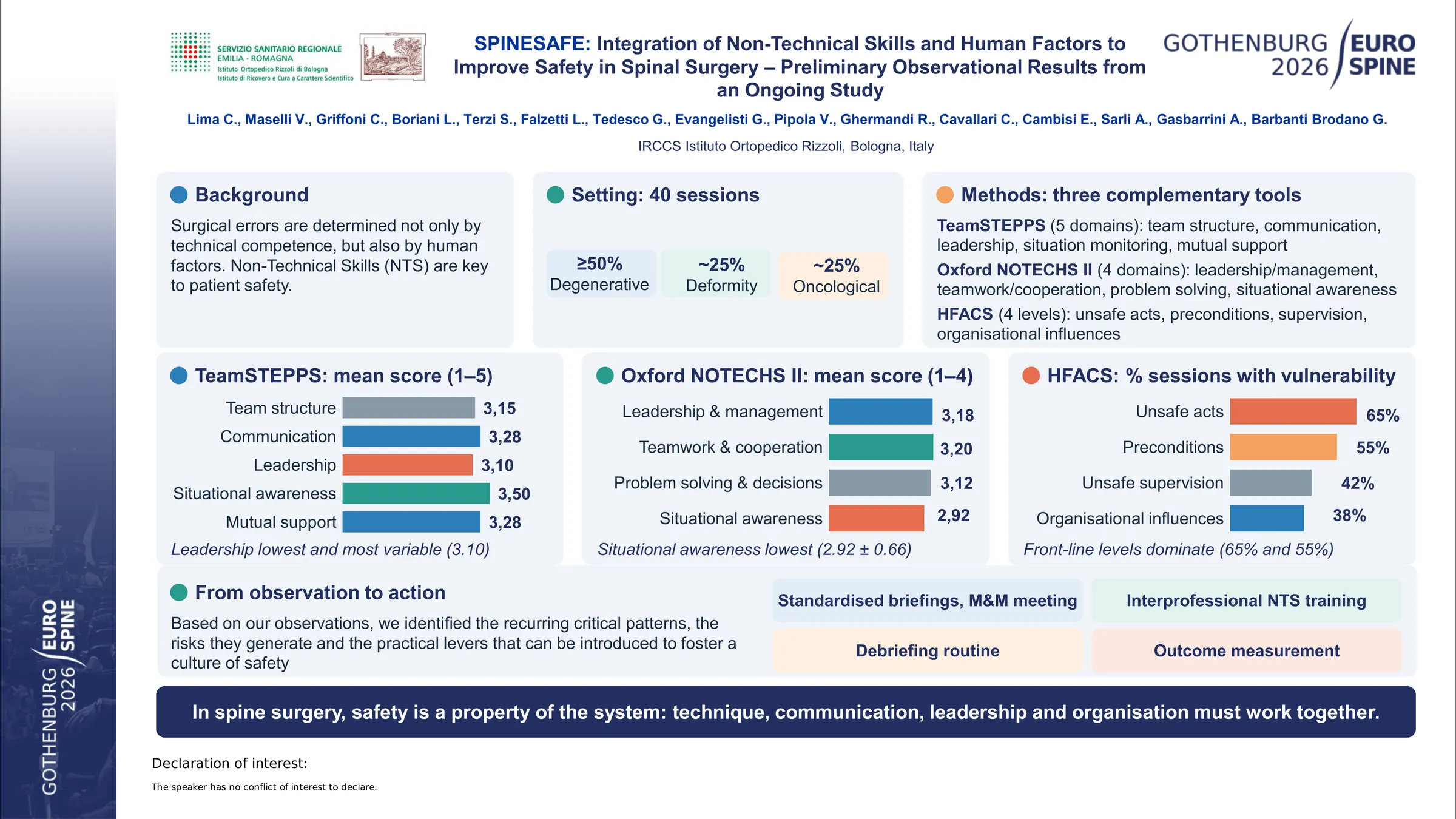
The ongoing phase includes direct qualitative observation across key stages of the surgical pathway: pre-surgical briefings, operating room procedures, ward management, and outpatient follow-up discussions. A systemic-relational psychotherapist conducted in-situ observations focusing on: verbal and non-verbal communication; structure and consistency of briefings and time-outs; quality of interprofessional handovers; management of unexpected intraoperative events; behavioral indicators of cognitive workload and emotional strain; environmental stressors such as noise, interruptions, and variability in team composition. Observations were recorded using predefined human-factors criteria. Staff were informed of the study purpose. No interventions have yet been implemented.
The observational phase identified modifiable human and organizational factors potentially influencing perioperative risk: variability in briefing practices, including differences in completeness, shared understanding, and role clarity; fragmented communication during care transitions, particularly under time pressure; partial adherence to checklist procedures; environmental stressors, including noise peaks, concurrent conversations, and interruptions during critical decision points; cognitive load and emotional tension occasionally associated with reduced situational awareness or delayed recognition of changing surgical conditions.These findings describe patterns rather than outcomes and do not permit conclusions about complication incidence.
Preliminary observations from SPINESAFE indicate that NTS and human-factor dynamics significantly shape perioperative safety in spine surgery. Identifying these patterns provides a foundation for targeted interventions. The next phase will introduce structured briefings and debriefings, focused micro-training on communication and stress management, real-time feedback loops, and implementation of a multidisciplinary HST. Subsequent evaluation will integrate qualitative and quantitative measures to assess changes in team functioning, patient experience, safety culture, and clinical outcomes.