Adult Deformity
Sexual Function After Corrective Spinal Osteotomy in Female Ankylosing Spondylitis Patients
- Marmara University Pendik Education and Training Hospital, Istanbul, Türkiye
Abstract
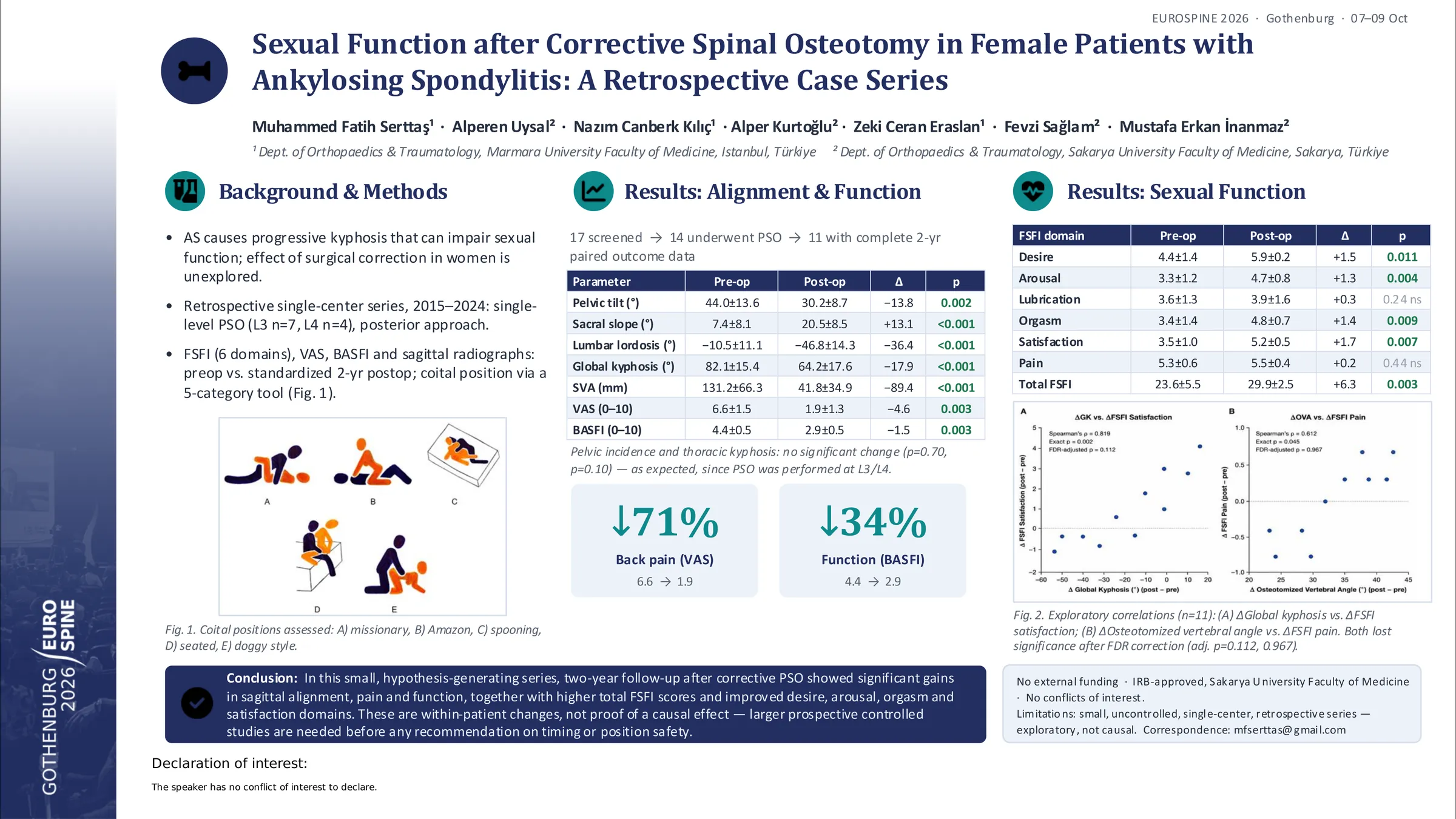
Ankylosing spondylitis (AS) may cause rigid thoracolumbar kyphosis, impaired sagittal balance, pain, and functional limitation. Sexual dysfunction is common in female AS patients; however, the effect of corrective spinal osteotomy on sexual function remains unclear. This study evaluated radiological, functional, and sexual outcomes after spinal osteotomy in female AS patients.
After ethical approval, female AS patients who underwent spinal osteotomy for thoracolumbar kyphosis between 2015 and 2024 were retrospectively reviewed. Inclusion criteria were: diagnosis according to modified New York criteria, age 18–50 years, premenopausal status, and active sexual life before surgery. Eleven patients met the criteria. Ten underwent single-level pedicle subtraction osteotomy (PSO), and one underwent multilevel Ponte osteotomy. Radiological parameters (GK, LL, TK, PI, PT, SS, SVA, OVA) were measured pre- and postoperatively. Clinical outcomes were assessed using VAS and BASFI. Sexual function was evaluated using the Female Sexual Function Index (FSFI). Sexual activity frequency, time to resumption of intercourse, and preferred sexual positions were also analyzed.
Mean age was 39.3±6.3 years, and mean follow-up was 58.9±29.3 months. Significant postoperative improvements were observed in PT, SS, LL, GK, SVA, and OVA (p<0.05), whereas PI and TK remained unchanged. VAS and BASFI scores significantly decreased postoperatively (p<0.05). Mean time to resumption of sexual activity was 6.3±1.7 weeks. Monthly sexual activity frequency increased postoperatively, with a shift toward higher frequency categories. FSFI total score significantly improved, with meaningful increases in desire, arousal, orgasm, and satisfaction domains (p<0.05), while lubrication and pain domains showed no significant change. Improvement in global kyphosis correlated positively with increased sexual satisfaction, and correction of osteotomy angle correlated with reduction in intercourse-related pain (p<0.05). Postoperative preference shifted toward positions associated with reduced spinal stress.
Spinal osteotomy for thoracolumbar kyphosis in female AS patients significantly improves sagittal alignment, pain, and functional capacity. Importantly, surgical correction is associated with enhanced sexual function, increased sexual activity frequency, and improved sexual satisfaction. These findings highlight that restoration of sagittal balance positively influences not only radiological and functional outcomes but also intimate aspects of quality of life. Sexual health should be considered during preoperative counseling and postoperative follow-up in female AS patients undergoing deformity correction surgery.
Figures and tables
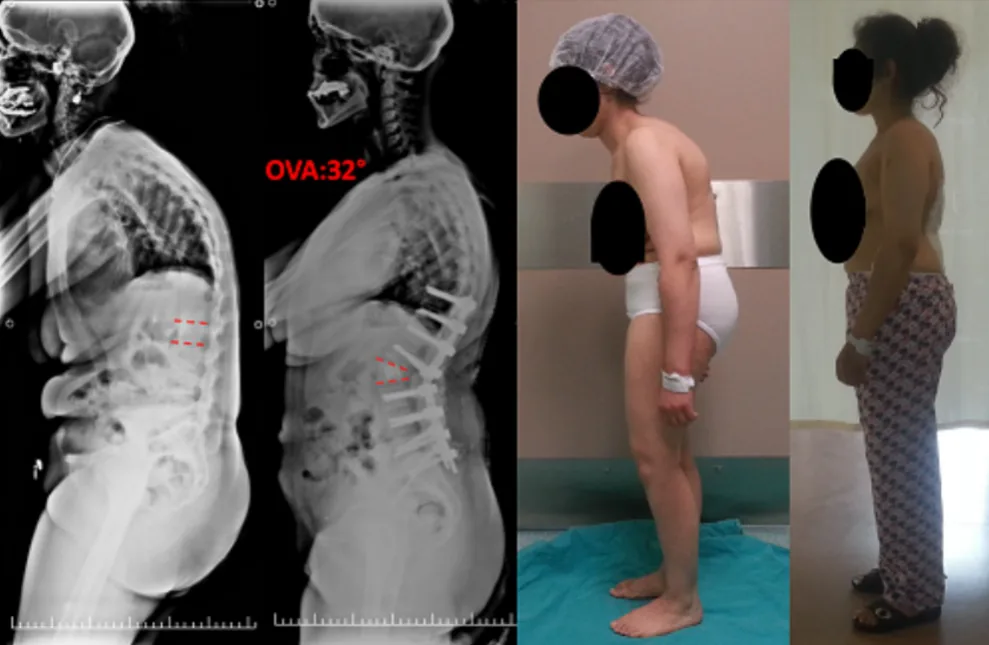
As submitted with the abstract. Tap a figure to open it at full size.