
Complications & Epidemiology
Perioperative Aspirin Continuation Is Not Associated With Increased Surgical Morbidity Following Minimally Invasive Anterior-to-Psoas Lumbar Fusion: A Propensity-Matched Analysis
- BMC, Boston, United States of America
- Boston University School of Medicine, Boston, United States of America
- Boston University School of Medicine, Hopkinsville, United States of America
- University of Colorado Anschutz School of Medicine, Aurora, United States of America
Abstract
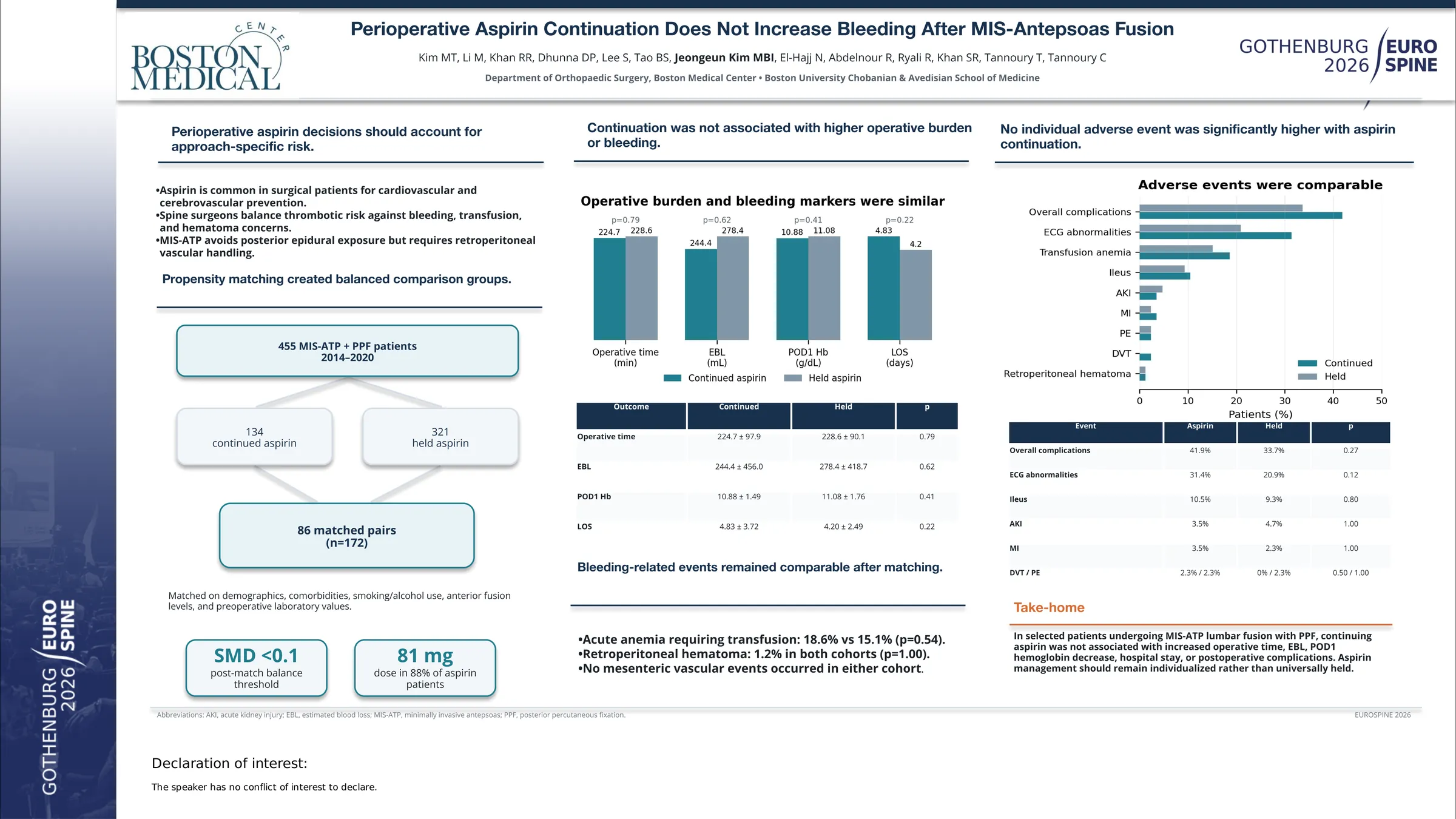
Perioperative aspirin management in spine surgery remains controversial, with concerns centered on bleeding risk versus thrombotic complications associated with discontinuation. Evidence specific to minimally invasive (MIS) lumbar fusion is limited. This study evaluated the impact of perioperative aspirin continuation on surgical and postoperative outcomes following minimally invasive anterior-to-psoas (MIS-ATP) lumbar fusion.
We performed a retrospective cohort study comparing patients who continued aspirin perioperatively with those who discontinued aspirin preoperatively. Propensity score matching was conducted based on age, sex, body mass index, race/ethnicity, number of anterior fusion levels, comorbidities (hypertension, diabetes mellitus, coronary artery disease, chronic obstructive pulmonary disease), smoking and alcohol use, and preoperative laboratory values (hemoglobin, platelet count, creatinine, and preoperative acute kidney injury status). Surgical characteristics and postoperative outcomes were analyzed. A secondary subanalysis compared patients who continued aspirin with those who held aspirin for ≥7 days preoperatively.
A total of 172 patients were included in the primary analysis, with propensity matching yielding 86 patients in each cohort. Baseline demographics and comorbidity profiles were well balanced after matching. Operative parameters, including operative time, estimated blood loss, and length of stay, did not differ significantly between groups. Importantly, perioperative bleeding-related outcomes and overall postoperative complication rates were comparable between cohorts. In the subanalysis of patients who held aspirin for ≥7 days (15 matched pairs), no significant differences were observed in surgical or postoperative outcomes, although this analysis was limited by sample size.
Perioperative continuation of aspirin in appropriately selected patients undergoing MIS-ATP lumbar fusion was not associated with increased surgical morbidity or postoperative complications. These findings suggest that aspirin may be safely continued in select patients, potentially mitigating thrombotic risk without increasing perioperative morbidity. This study supports a risk-balanced approach to antiplatelet management in anterior minimally invasive lumbar fusion surgery.