Growing Spine
Patient and Parental Anxiety, Information-Seeking Behavior, and the Role of Peer Support in Surgery for Adolescent Idiopathic Scoliosis
- Dokkyo Medical University Hospital, Shimotsuga, Japan
- Dokkyo Medical University, Mibu, Japan
- Nikko Meical University Nikko Medical Center, 145-1, Moritomo, Nikko, Tochigi Japan, Nikko,, Japan
- Dokkyo Medical University Hospital, Mibu, Japan
Abstract
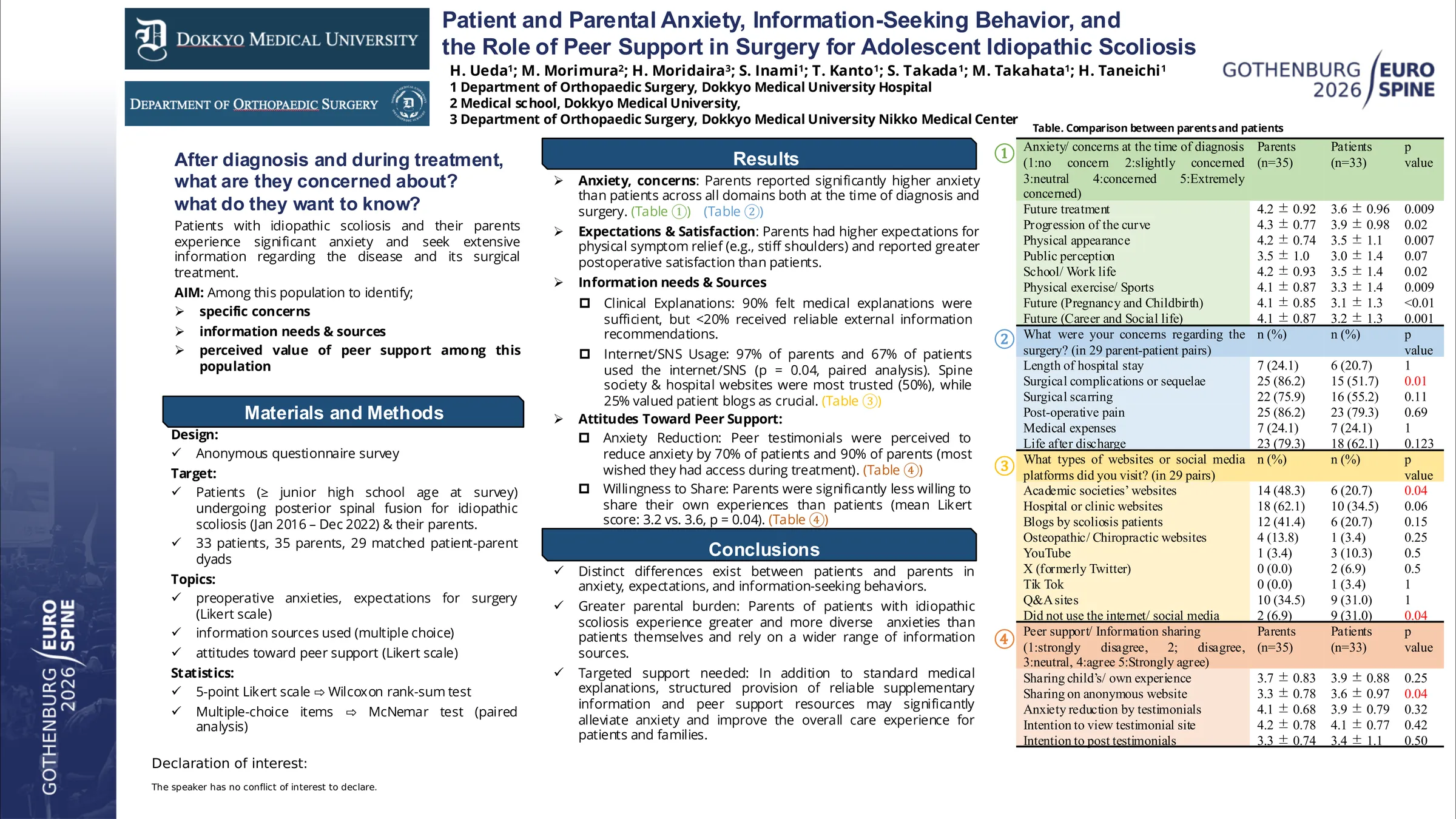
Patients with idiopathic scoliosis and their parents experience significant anxiety and seek extensive information regarding the disease and its surgical treatment. However, the specific nature of these anxieties, information-seeking behaviors, and the perceptual discrepancies between patients and parents remain poorly characterized. We aimed to identify the specific concerns, information needs, and the perceived value of peer support among this population.
An anonymous questionnaire survey was conducted among patients who underwent posterior spinal fusion for idiopathic scoliosis at our university hospital between January 2016 and December 2022, and who were junior high school students or older at the time of this survey, as well as their parents. The survey assessed preoperative anxieties and expectations for surgery, information sources used, and attitudes toward peer support. Data from 5-point Likert scales were analyzed using the Wilcoxon rank-sum test. For multiple-choice items, paired analyses of parent–child dyads were performed using the McNemar test.
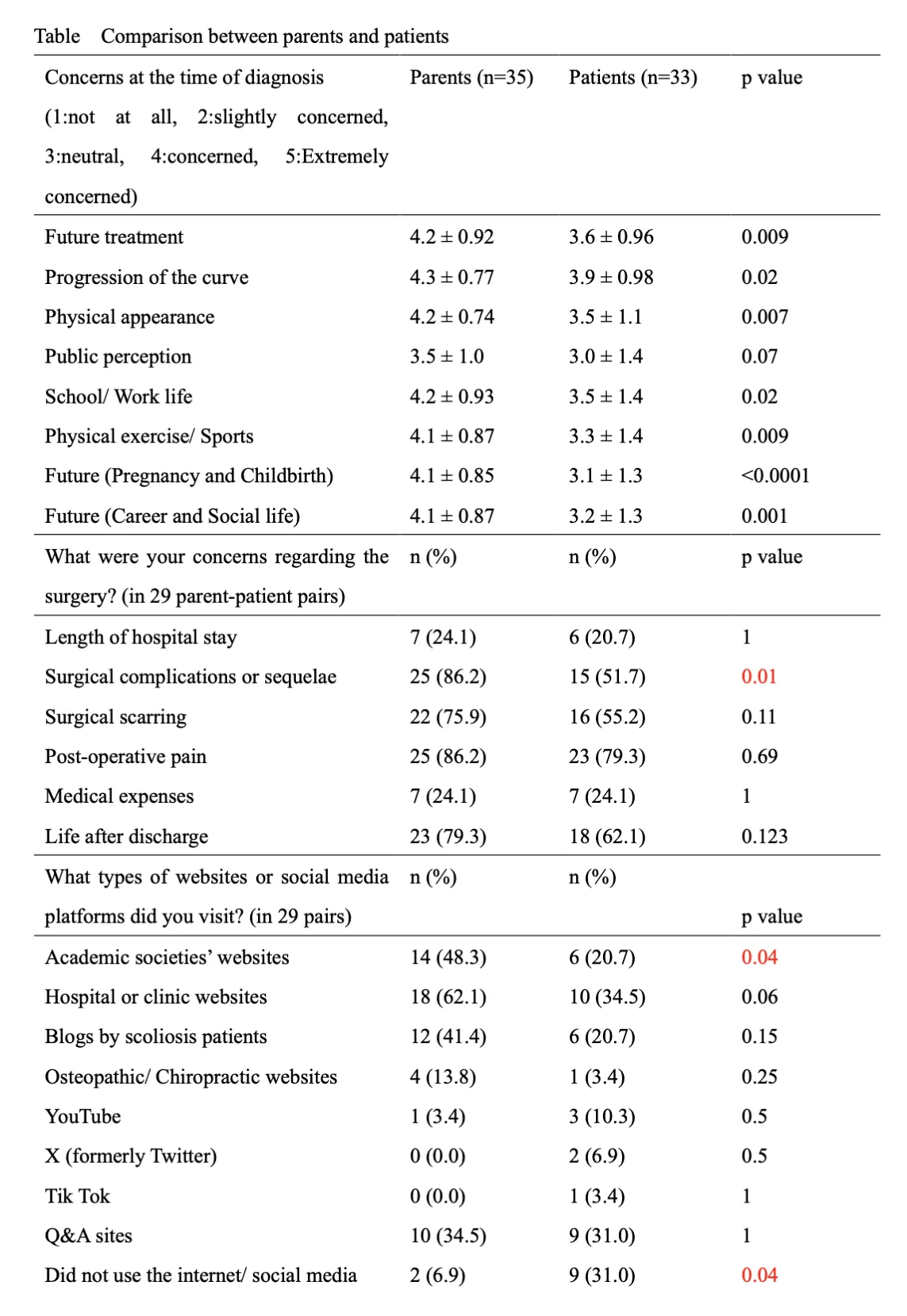
Responses were obtained from 33 patients (mean age at surgery: 15.3 ± 3.6 years) and 35 parents, including 29 matched dyads. Parents reported significantly higher anxiety than patients regarding treatment and postoperative sequelae, disease progression, physical appearance, future lifestyle, exercise, and pregnancy. Regarding the relief of physical symptoms such as stiff shoulders, parents tend to have higher preoperative expectations, and feel more satisfied with the surgery afterward than the patients themselves. Although approximately 90% of respondents felt clinical explanations from medical professionals were sufficient, fewer than 20% were provided reliable external information sources. Only 3% of parents and 33% of patients did not use the internet/ social media (paired analysis, p=0.04). While spine surgery society and medical institutional websites were the most trusted (approx. 50%), 25% of respondents valued patient blogs as crucial resources. Peer testimonials were perceived to reduce anxiety by 70% of patients and 90% of parents, with most stating they would have accessed such resources during treatment if available. However, parents were significantly less willing to share their own experiences than patients (mean Likert score: 3.2 vs. 3.6, where 1 is not willing to share and 5 is very much willing to share, p = 0.03).
Parents of patients with idiopathic scoliosis experience greater and more diverse anxieties than patients themselves and rely on a wider range of information sources. Distinct differences exist between patients and parents in anxiety, expectations, and information-seeking behaviors. In addition to standard medical explanations, structured provision of reliable supplementary information and peer support resources may significantly alleviate anxiety and improve the overall care experience for patients and families.
Figures and tables
As submitted with the abstract. Tap a figure to open it at full size.