Growing Spine
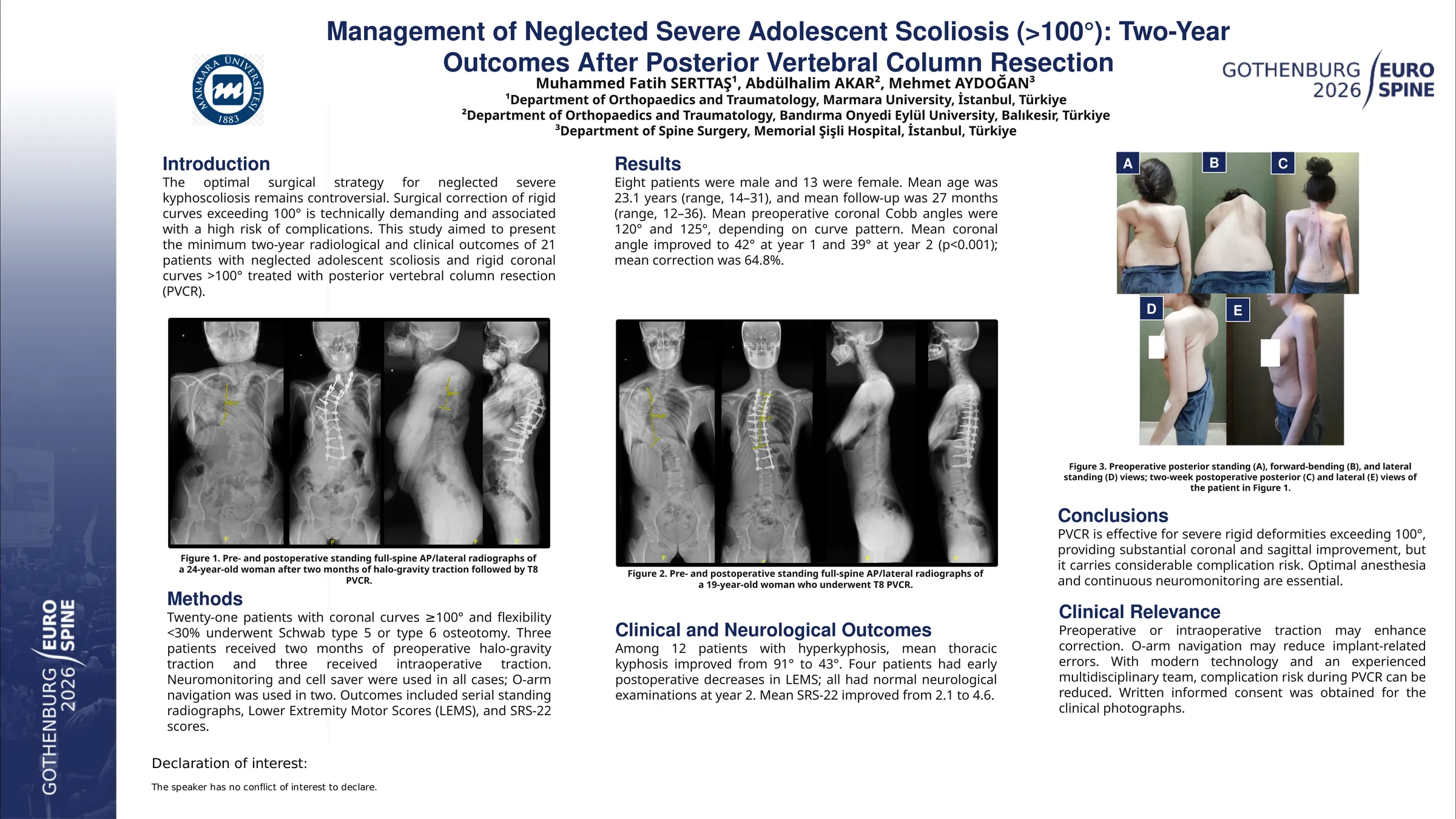
Management of Neglected Severe Adolescent Scoliosis (>100°) : Two-Year Outcomes After Posterior Vertebral Column Resection
- Memorial Şişli Hastanesi, Istanbul, Türkiye
- Marmara University Pendik Education and Training Hospital, Istanbul, Türkiye
Abstract
The optimal surgical strategy for neglected severe kyphoscoliosis remains controversial. Surgical correction of rigid curves exceeding 100° is technically demanding and associated with a high risk of complications. This study aimed to present the minimum two-year radiological and clinical outcomes of 21 patients with neglected adolescent scoliosis and rigid coronal curves >100° treated with posterior vertebral column resection (PVCR).
Twenty-one patients with neglected adolescent scoliosis and coronal curves ≥100° were included. Preoperative evaluation consisted of standing full-spine radiographs and side-bending films. Curve flexibility was <30% in all cases. Three patients underwent preoperative halo-gravity traction for two months with close neurological monitoring, and three patients received intraoperative traction. All patients underwent Schwab type 5 or type 6 osteotomy. Intraoperative neuromonitoring and cell-saver were used in all cases. Pedicle screw placement was performed under O-arm navigation guidance in two patients. Radiological correction was assessed using standing scoliosis radiographs at postoperative year 1 and at final follow-up. Neurological examinations were performed pre- and postoperatively, and Lower Extremity Motor Scores (LEMS) were recorded. Patient satisfaction was evaluated using the SRS-22 questionnaire.
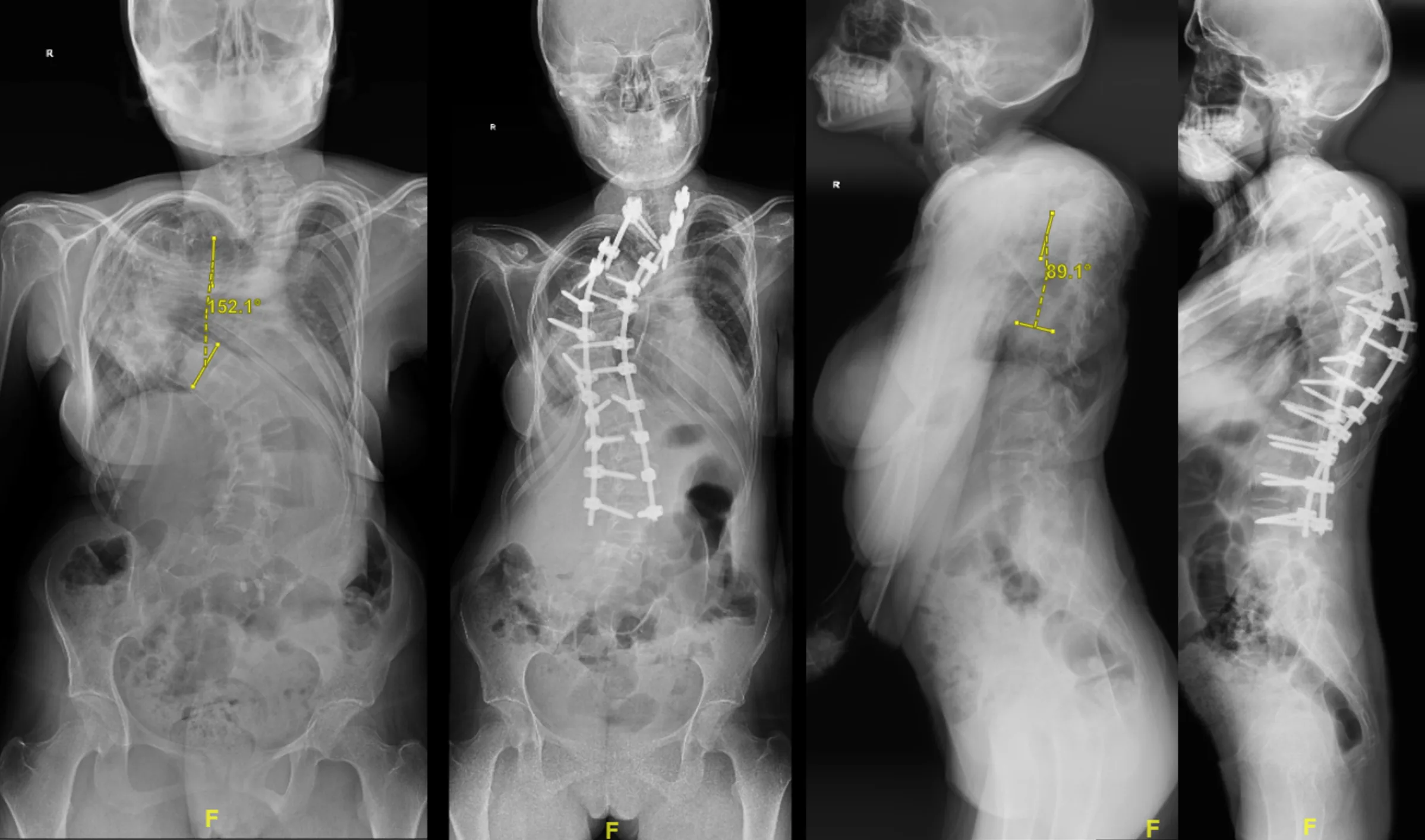
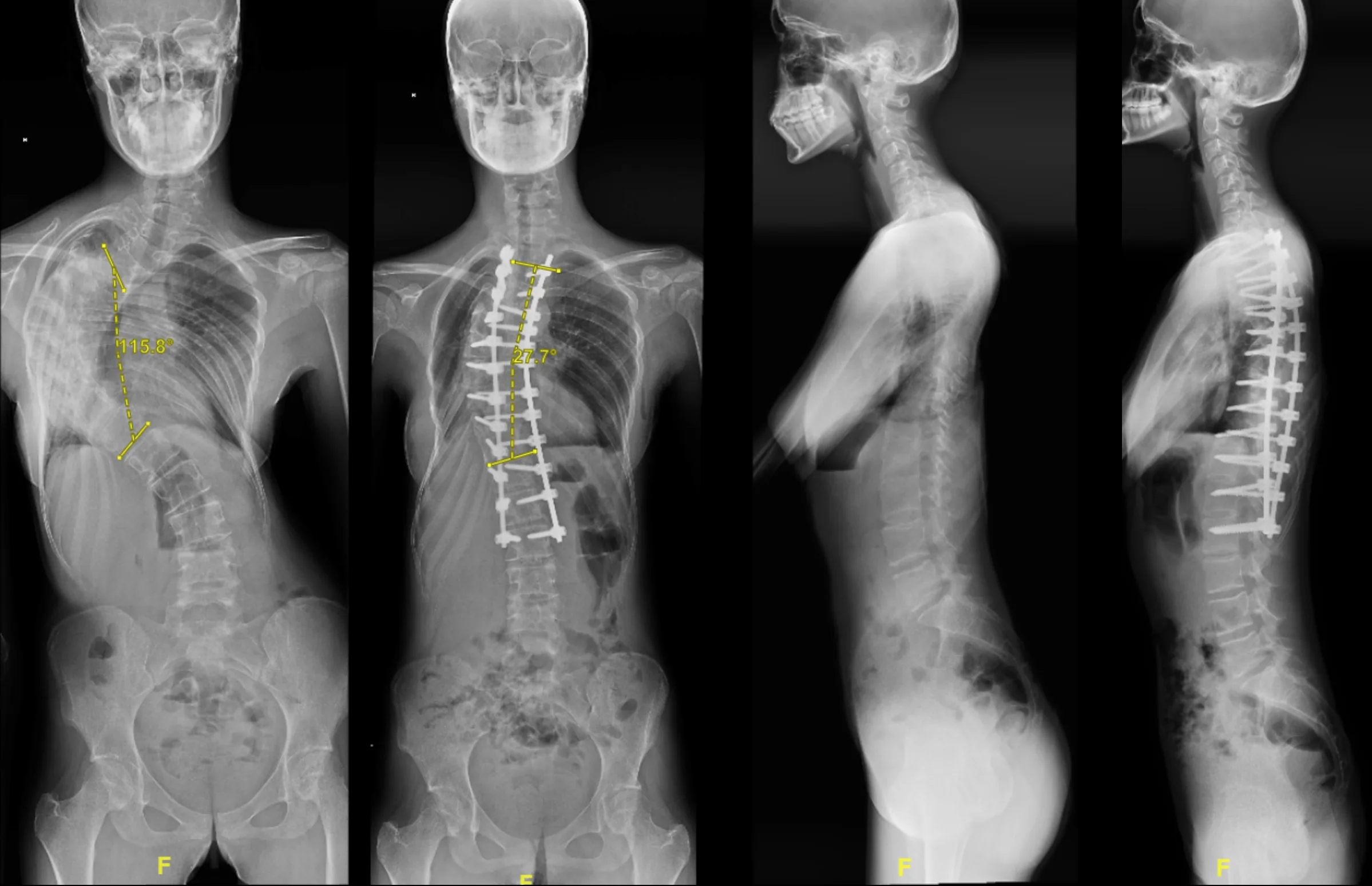
Of the 21 patients, 8 were male and 13 were female. The mean age was 23.1 years (range, 14–31), and the mean follow-up duration was 27 months (range, 12–36). The mean preoperative coronal Cobb angle was 120° (range, 104–145) and 125° (range, 110–140) depending on curve pattern. At postoperative year 1 and year 2, the mean coronal angle improved to 42° and 39°, respectively (p<0.001). The mean correction rate was 64.8%. Among 12 patients with hyperkyphosis, mean thoracic kyphosis improved from 91° preoperatively to 43° postoperatively. Four patients experienced early postoperative decreases in LEMS; however, all had normal neurological examinations at the second postoperative year. The mean SRS-22 score improved from 2.1 preoperatively to 4.6 at two years.
PVCR is an effective technique for the correction of severe rigid spinal deformities exceeding 100°, providing substantial coronal and sagittal plane improvement. However, it is associated with a considerable risk of complications. Optimal anesthesia management and continuous neuromonitoring are essential. Preoperative and intraoperative halo traction may enhance correction rates. O-arm navigation can reduce implant-related errors in challenging cases. With modern technology and an experienced multidisciplinary team, complication rates in PVCR surgery can be significantly reduced.
Figures and tables
As submitted with the abstract. Tap a figure to open it at full size.