
Tumours & Infection
Neurosurgical Aspects, Functional Outcome and Rehabilitation After Intramedullary Spinal Tumor Surgery
- Sahlgrenska University Hospital, Gothenburg, Sweden
Abstract
Intramedullary spinal cord tumors are rare central nervous system neoplasms accounting for 2 to 4 percent of all CNS tumors. Histopathological subtypes include ependymomas, astrocytomas, gangliogliomas and metastatic tumors. These lesions arise within the spinal cord parenchyma and typically present with symptoms related to cord infiltration or compression, including sensorimotor deficits, pain, myelopathy and impaired bowel or bladder function. Gross total resection is the primary treatment; however, surgery carries a substantial risk of postoperative neurological deterioration. Structured rehabilitation is commonly used to optimize recovery, but evidence regarding its impact remains limited. The aim of this study was to evaluate functional outcome and the effect of postoperative rehabilitation during the first six months after surgery.
In this single center study, adult patients who underwent surgical treatment for intramedullary spinal cord tumors between 2007 and 2023 were included. As the sole provider of neurosurgical care for a population of approximately 1.9 million inhabitants, our institution provides population-based data. Demographic, clinical, radiological, surgical and outcome variables were retrospectively collected. Neurological status was assessed using the modified McCormick scale.
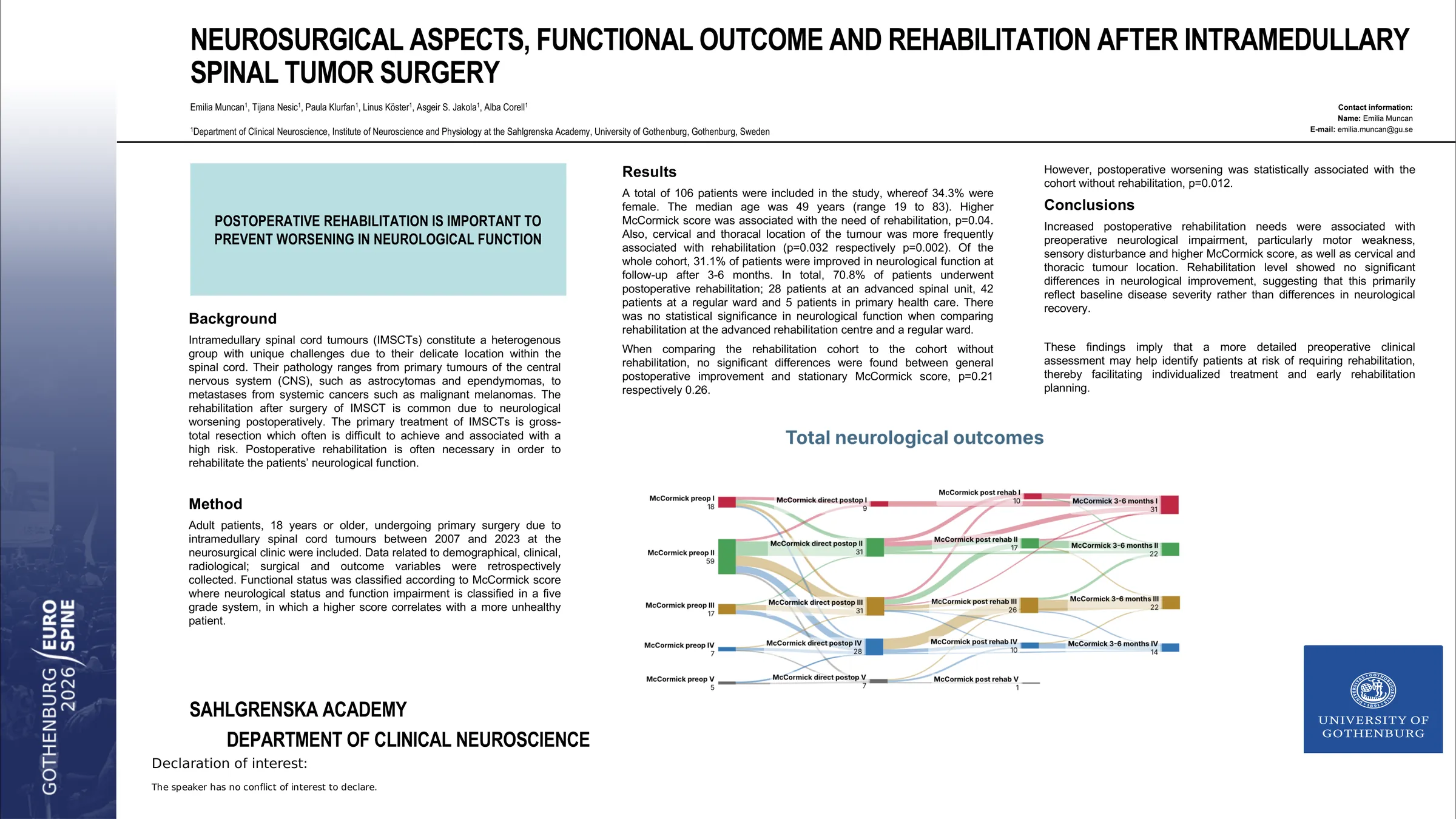
A total of 106 patients were included, of whom 56.6 percent were male. Median age was 49 years, ranging from 19 to 83 years. At 3 to 6 months follow up, 33 patients 31.1 percent demonstrated neurological improvement. Seventy five patients 70.8 percent underwent postoperative rehabilitation: 28 at an advanced spinal rehabilitation unit, 42 at a regular ward and 5 in primary health care. No statistically significant difference in neurological outcome was observed between patients treated at an advanced rehabilitation unit and those treated at a regular ward. Unchanged function occurred in 29.5 percent versus 37.8 percent, p 0.598. Improvement occurred in 70.4 percent versus 59.5 percent, p 0.435. Deterioration occurred in 0 percent versus 2.7 percent, p 1.00.
Postoperative rehabilitation was required in most patients following intramedullary spinal tumor surgery. Although no significant difference was observed between rehabilitation settings, patients undergoing rehabilitation demonstrated higher rates of functional improvement compared with the overall cohort. These findings suggest that structured rehabilitation may support neurological recovery after surgery.