
Degenerative Thoracolumbar
Measuring Surgical Outcomes of delayed presented Cauda Equina Syndrome Patients using a new scoring system: Analysis of 109 patients
- PGIMER, Chandigarh, India
Abstract
To evaluate the long-term outcomes of cauda equina syndrome patients who presented delayed in their course of disease. To develop a scoring system to evaluate long-term surgical outcomes of cauda equina patients. To determine the predictors of good and poor functional outcomes.
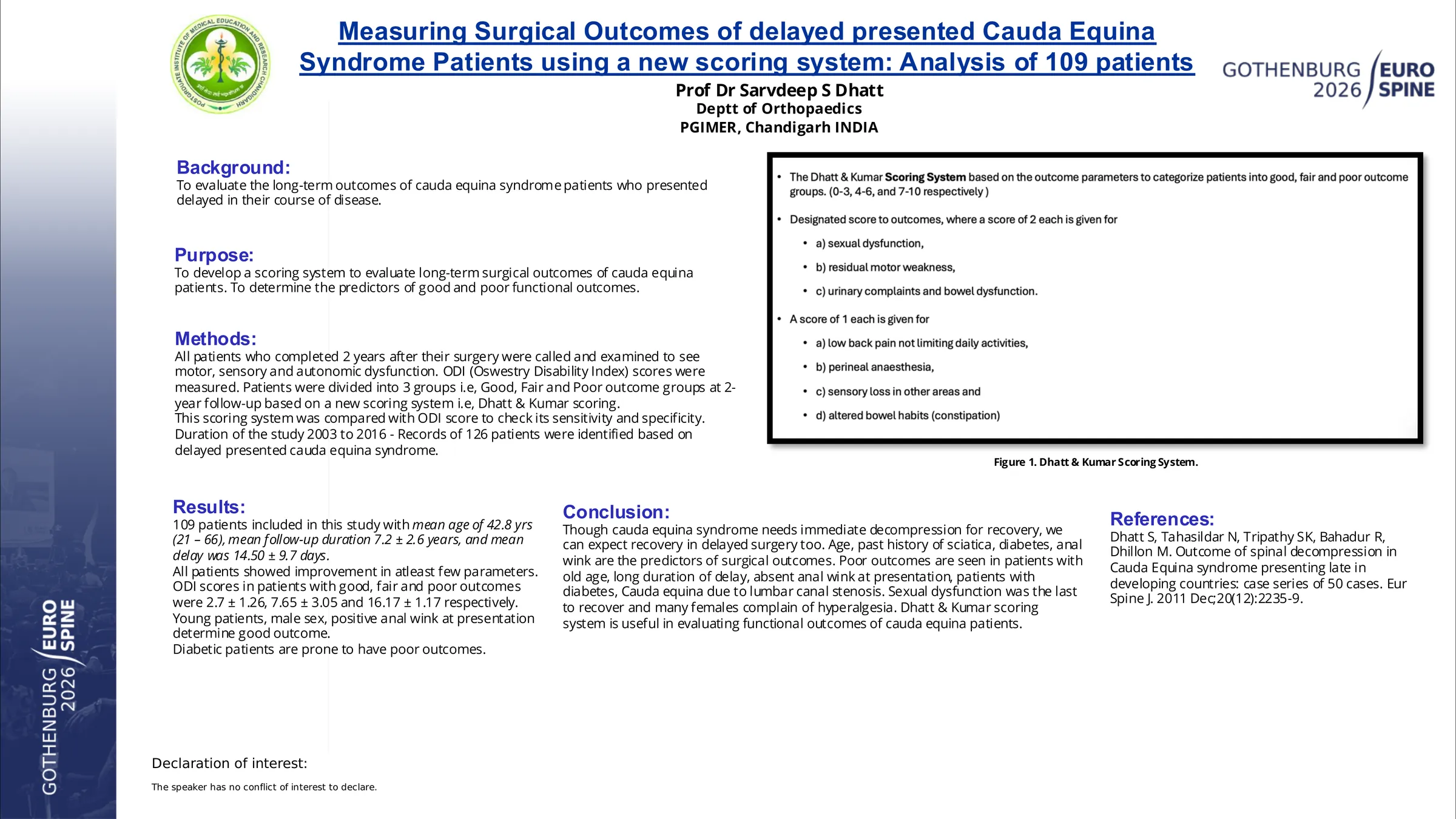
All patients who completed 2 years after their surgery were called and examined to see motor, sensory and autonomic dysfunction. ODI (Oswestry Disability Index) scores were measured. Patients were divided into 3 groups i.e, Good, Fair and Poor outcome groups at 2-year follow-up based on a new scoring system i.e, Dhatt & Kumar scoring. This scoring system was compared with ODI score to check its sensitivity and specificity.
109 patients included in this study with mean age of 42.8 yrs (21 – 66), mean follow-up duration 7.2 ± 2.6 years, and mean delay was 14.50 ± 9.7 days. All patients showed improvement in atleast few parameters. ODI scores in patients with good, fair and poor outcomes were 2.7 ± 1.26, 7.65 ± 3.05 and 16.17 ± 1.17 respectively. Young patients, male sex, positive anal wink at presentation determine good outcome. Diabetic patients are prone to have poor outcomes.
Age, past history of sciatica, diabetes, anal wink are the predictors of surgical outcomes. Dhatt & Kumar scoring system is useful in evaluating functional outcomes of cauda equina patients.