
Cervical & Neural Pathologies
Longitudinal Outcomes and Predictive Value of Early Pain Relief After Cervical Selective Nerve Root Block: A Three- Group Trajectory Model
- National University Hospital Singapore, Singapore, Singapore
Abstract
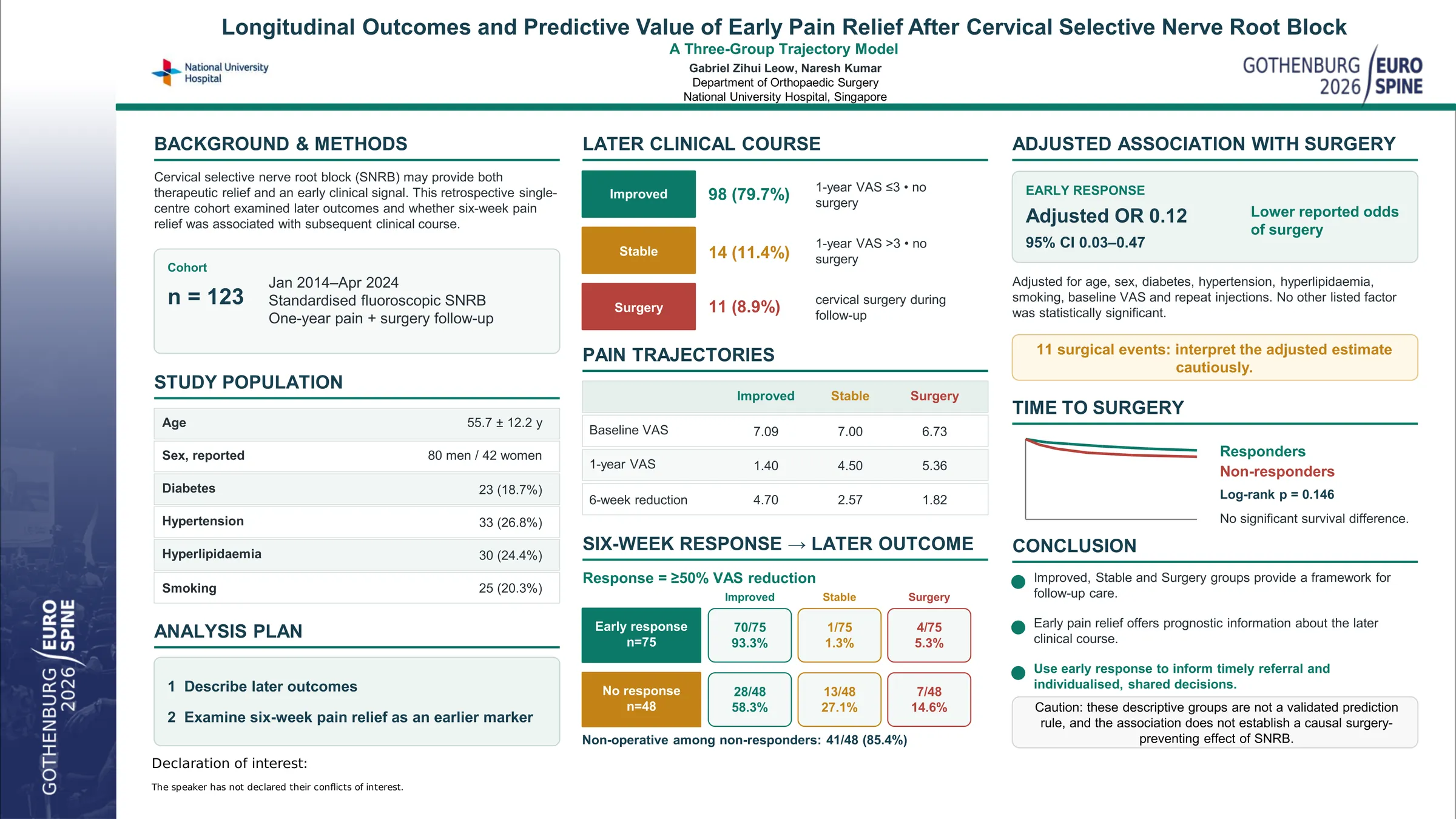
Cervical selective nerve root block (SNRB) is widely used for cervical radiculopathy. However, long-term post-injection trajectories vary and the prognostic value of early pain relief remains unclear. We postulated that early, appropriately targeted SNRB may reduce, postpone, or obviate the need for major surgery.
In this study, we address this clinical gap by proposing a pragmatic stratification model based on early post-injection pain response. By classifying patients into three longitudinal outcome categories, we aim to elucidate the prognostic implications of early pain relief and offer an evidence-based approach for postoperative surveillance and escalation of care.
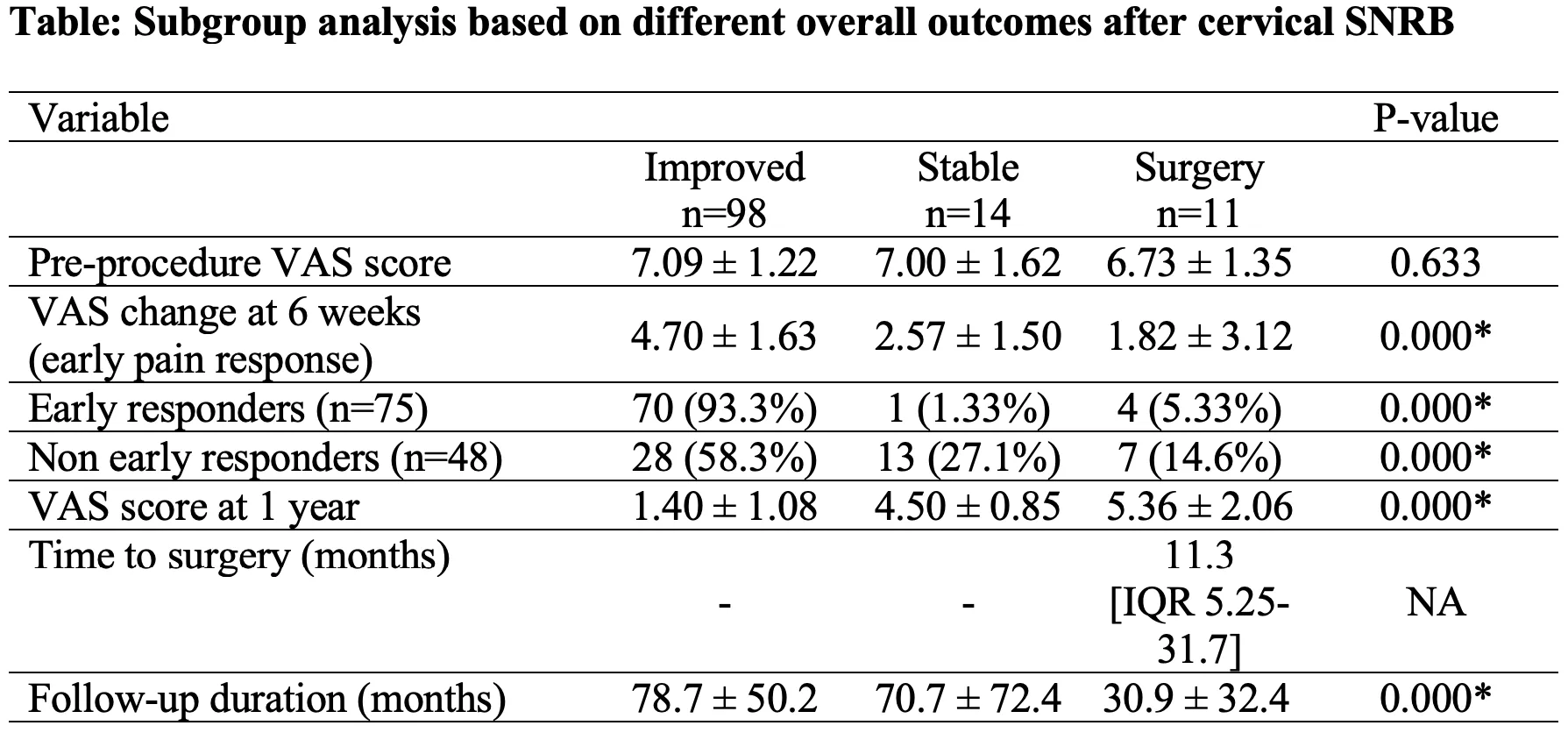
A retrospective cohort study was conducted at a tertiary spine centre involving 123 patients who underwent cervical SNRB. Patients were stratified at 1 year into: (1) Improved – sustained relief (VAS ≤ 3) without surgery; (2) Stable – persistent symptoms managed non-operatively; and (3) Surgery – those proceeding to intervention. Early response was defined as ≥50% VAS reduction at 6 weeks. Analyses included chi-square, ANOVA, logistic regression, and Kaplan-Meier survival curves.
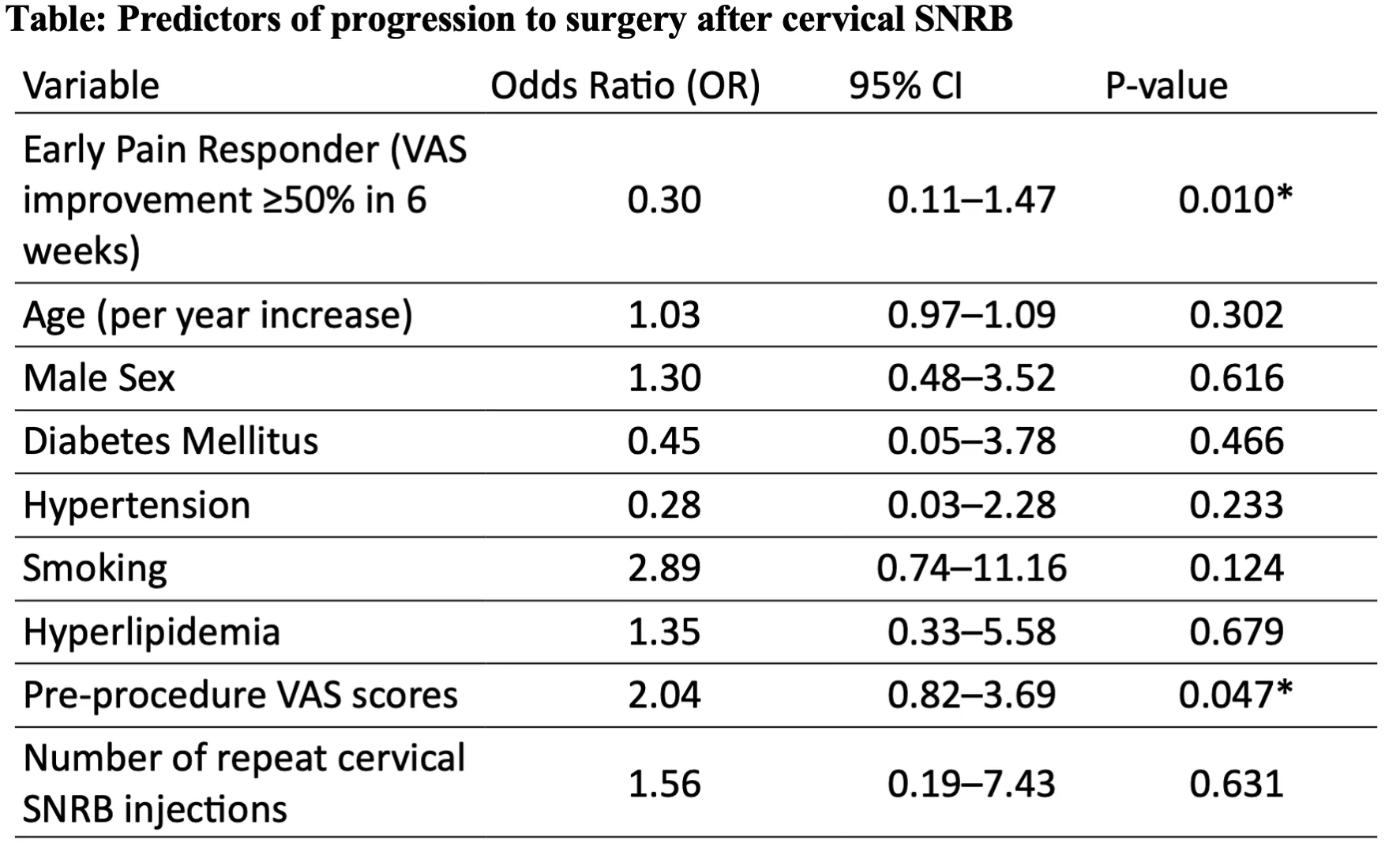
A total of 123 patients ranging from 37 to 77 years of age were recruited in our study. Among all patients, 98 (79.7%) improved, 14 (11.4%) remained stable, and 11 (8.9%) required surgery. Early responders were significantly more likely to avoid surgery (93.3% vs 58.3%, P=0.000). Six-week VAS improvement differed across groups (Improved: 3.8; Stable: 2.6; Surgery: 1.8; P=0.000). Early response independently reduced surgical risk (adjusted OR 0.12, 95% CI 0.03–0.47; P=0.000). Kaplan-Meier analysis showed surgical conversions clustered within 12 months. There were no significant differences in baseline demographic variables or comorbidities among the three outcome groups.
SNRB appears to be an effective minimally invasive option for symptomatic cervical degenerative disc disease. When delivered in a timely manner, it may substantially delay (and in many cases prevent) subsequent surgical intervention. Incorporating SNRB into preoperative treatment pathways for cervical disc pathology may be beneficial. Prospective studies are needed to confirm these outcomes and define optimal patient selection and timing.
Figures and tables
As submitted with the abstract. Tap a figure to open it at full size.