
Complications & Epidemiology
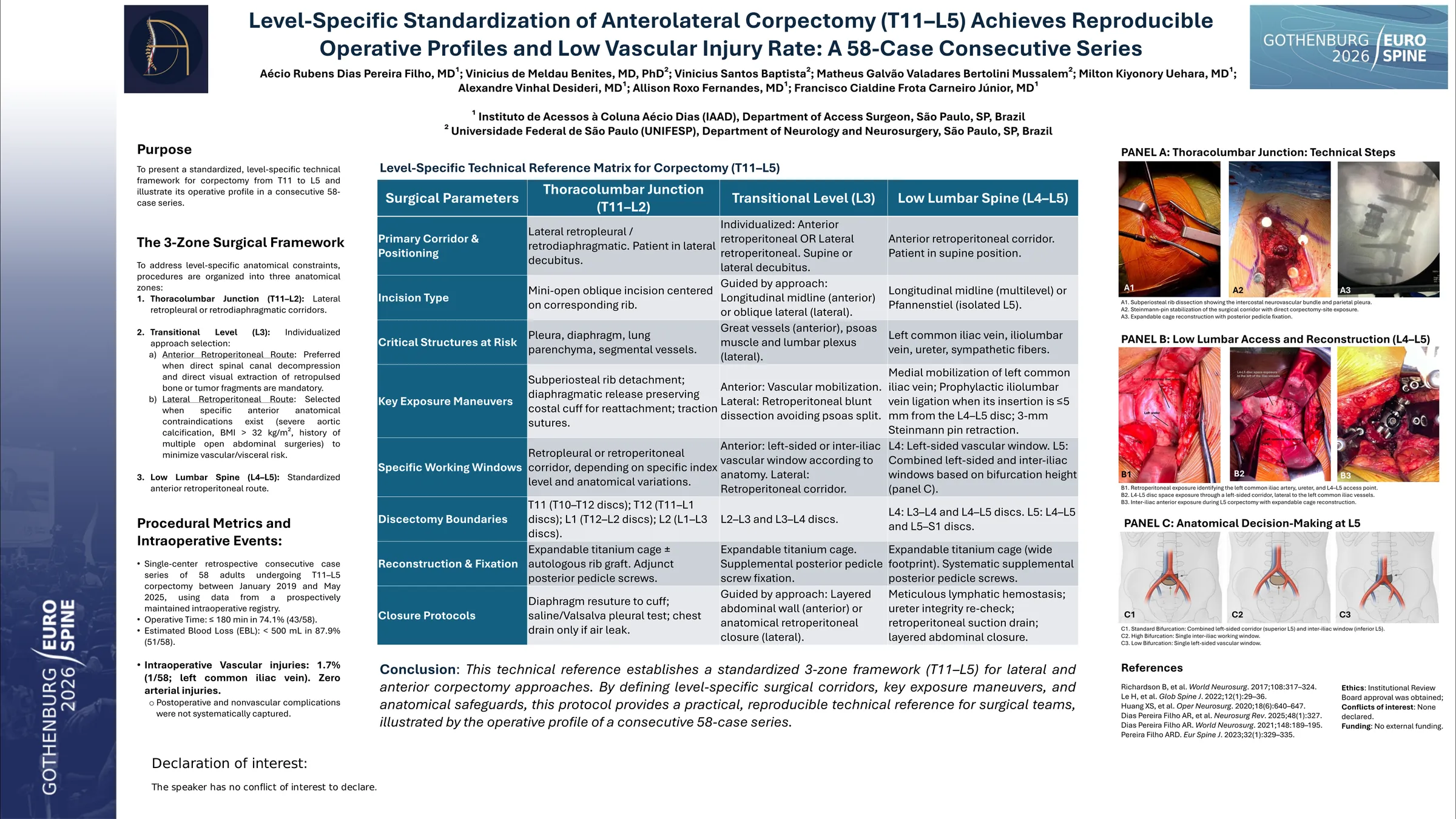
Level-Specific Standardization of Anterolateral Corpectomy (T11–L5) Achieves Reproducible Operative Profiles and Low Vascular Injury Rate: A 58-Case Consecutive Series
- IAAD, São Paulo, Brazil
- Escola Paulista de Medicina - Federal University of São Paulo, São Paulo, Brazil
Abstract
Anterolateral corpectomy provides direct anterior column reconstruction for thoracolumbar and lumbar pathology. However, level-specific exposure strategies across T11–L5 remain heterogeneously described in the literature, and vascular risk remains a major concern. We report operative profiles and vascular safety in a consecutive series performed using a structured, level-specific workflow.
We retrospectively reviewed 58 consecutive adult patients undergoing mini-open anterolateral corpectomy with anterior column reconstruction between T11 and L5. Data were extracted from a prospectively maintained intraoperative registry.
Level-specific exposure followed a predefined institutional algorithm. T11–L2 corpectomies were performed through lateral retropleural or retroperitoneal approaches. L3–L4 exposure was individualized between lateral and anterior retroperitoneal corridors according to vascular anatomy and pathology. L4–L5 and L5–S1 corpectomies were systematically performed via anterior retroperitoneal access.
All cases involved vertebral body resection and corpectomy cage reconstruction, with supplemental posterior fixation added when required based on pathology and construct demands.
Operative time (skin-to-skin), estimated blood loss (EBL), number of levels resected, and intraoperative vascular injury were recorded. Analyses were descriptive, and exact 95% confidence intervals were calculated for vascular events.
Fifty-eight patients were included (median age 58 years; 44.8% male). Indications were trauma (67.2%), tumor (19.0%), infection (6.9%), and others (6.9%).
Operative time was ≤120 min in 34.4%, 121–180 min in 39.7%, and >180 min in 25.9%. EBL was <150 mL in 32.8%, 150–250 mL in 19.0%, 251–500 mL in 36.2%, and >500 mL in 12.1%. Multi-level resections were more frequently represented in higher operative time and EBL categories, consistent with procedural magnitude.
One intraoperative vascular injury occurred (1.7%; left common iliac vein; 95% CI 0.04–9.2%). No arterial injuries were recorded.
A structured, level-specific anterolateral workflow for corpectomy from T11 to L5 demonstrated reproducible operative profiles and a low rate of vascular injury in a consecutive series. A predefined level-specific exposure algorithm within a multidisciplinary framework may enhance procedural consistency and mitigate access-related vascular morbidity.
Figures and tables
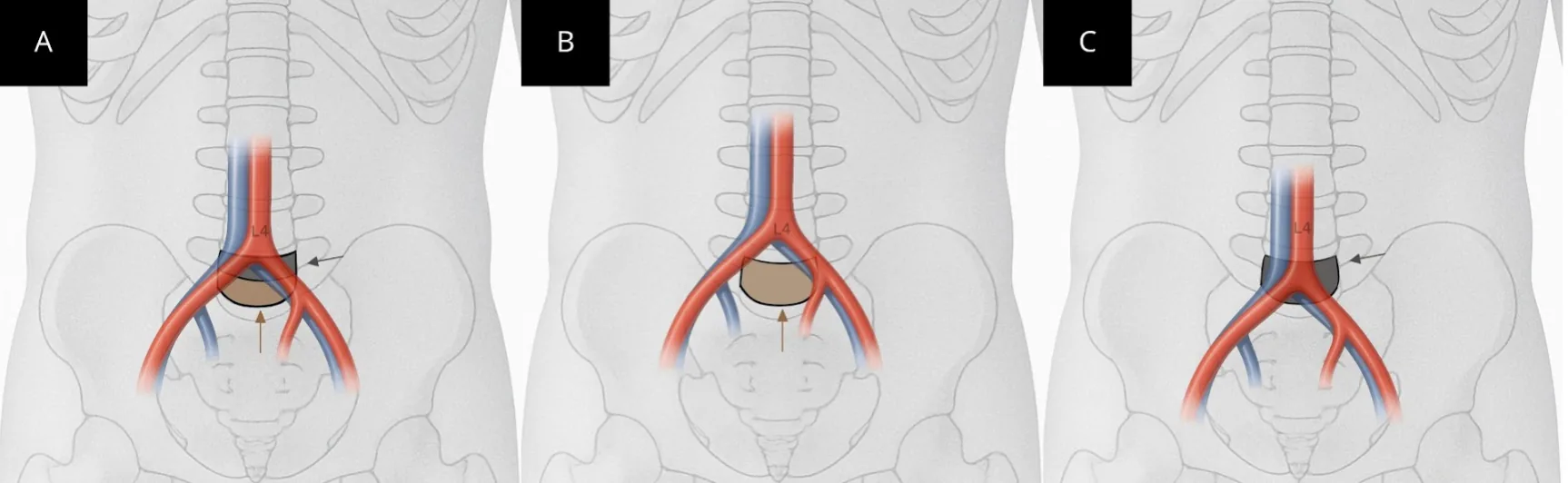
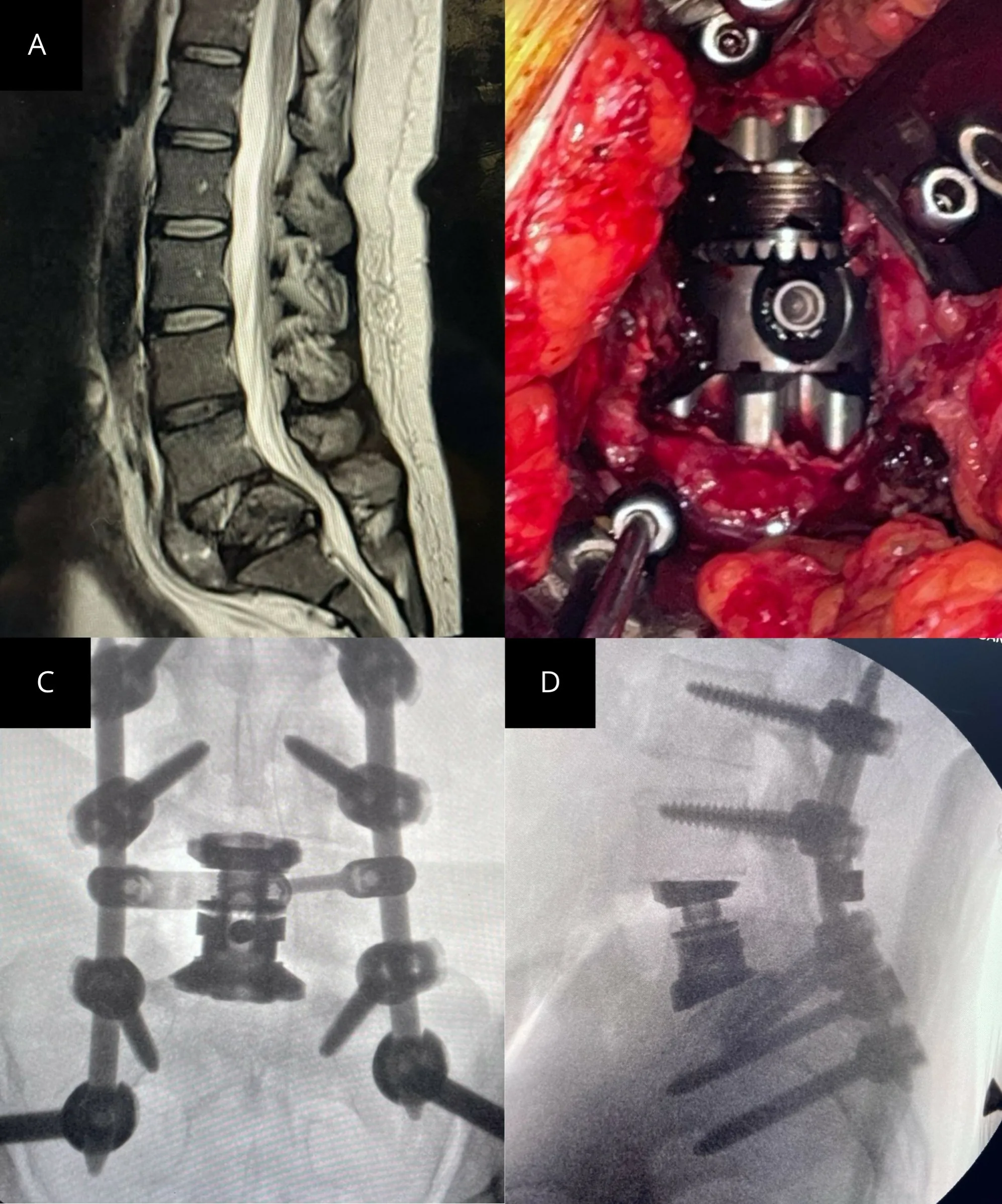
As submitted with the abstract. Tap a figure to open it at full size.