
Degenerative Thoracolumbar
Expandable Cages as Independent Risk Factor for Early Cage Subsidence in Transforaminal Lumbar Interbody Fusion: A Retrospective Analysis of 530 Patients
- HOCH Health Ostschweiz, Kantonsspital St.Gallen, St. Gallen, Switzerland
Abstract
Cage subsidence remains a significant complication following transforaminal lumbar interbody fusion (TLIF), with potential impact on clinical outcomes and fusion success. While various risk factors have been identified, the role of cage type in subsidence development requires further clarification. This study aimed to evaluate independent risk factors for cage subsidence at 3 months post-TLIF, with particular focus on expandable versus static cage design.
We conducted a single-institution retrospective analysis of 530 patients who received 648 cages during single- or multi-level TLIF procedures between November 2018 and May 2025. The cohort included 481 expandable cages (74.2%) and 167 static cages (25.8%). Cage subsidence was assessed radiographically at 3-month follow-up. Multivariable logistic regression analysis was performed to identify independent risk factors for subsidence, adjusting for patient demographics (age, BMI, frailty score, ASA grade), radiological parameters (PI-L mismatch, spinal segment), type of cage, and cage position in the intervertebral space.
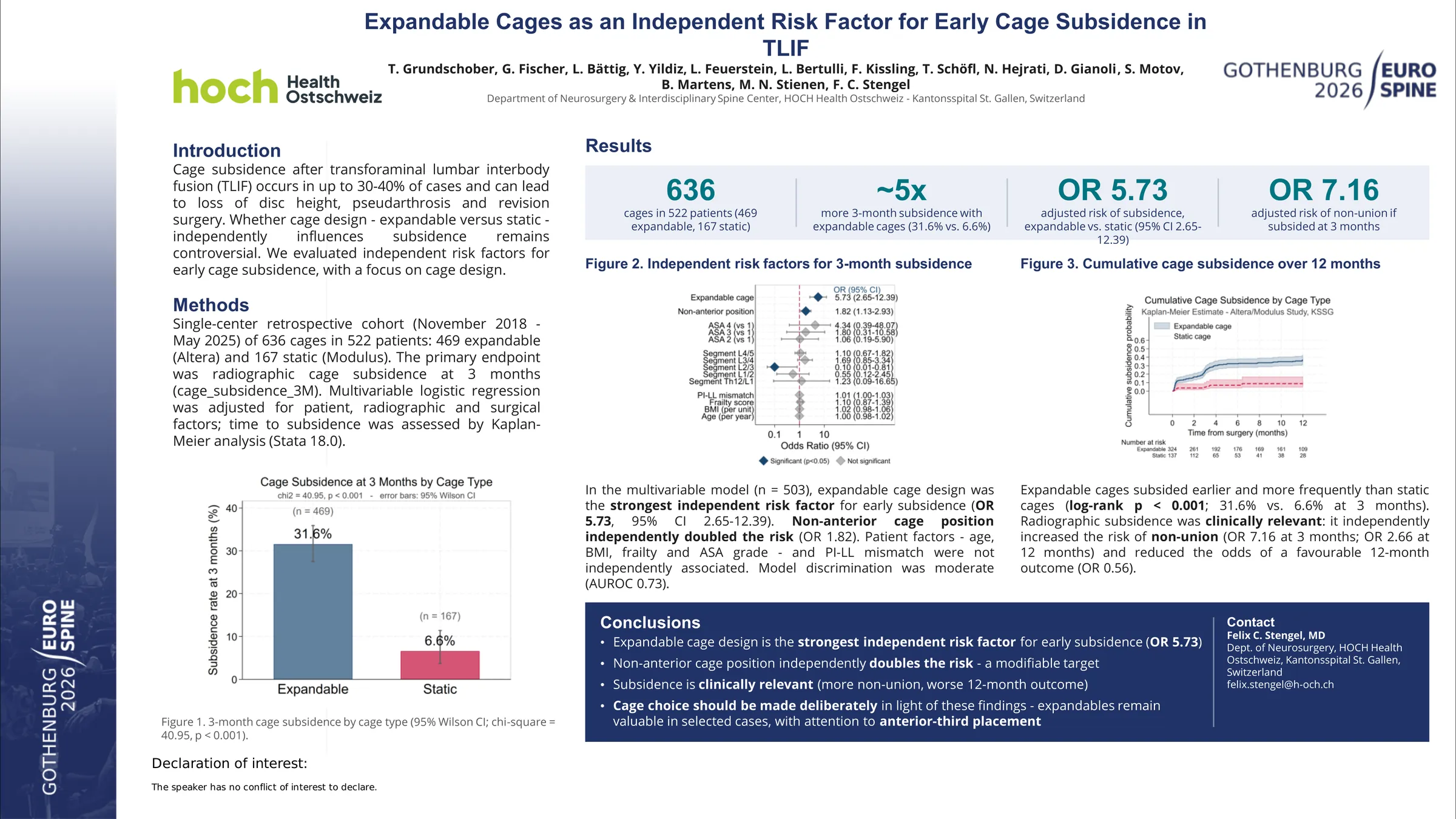
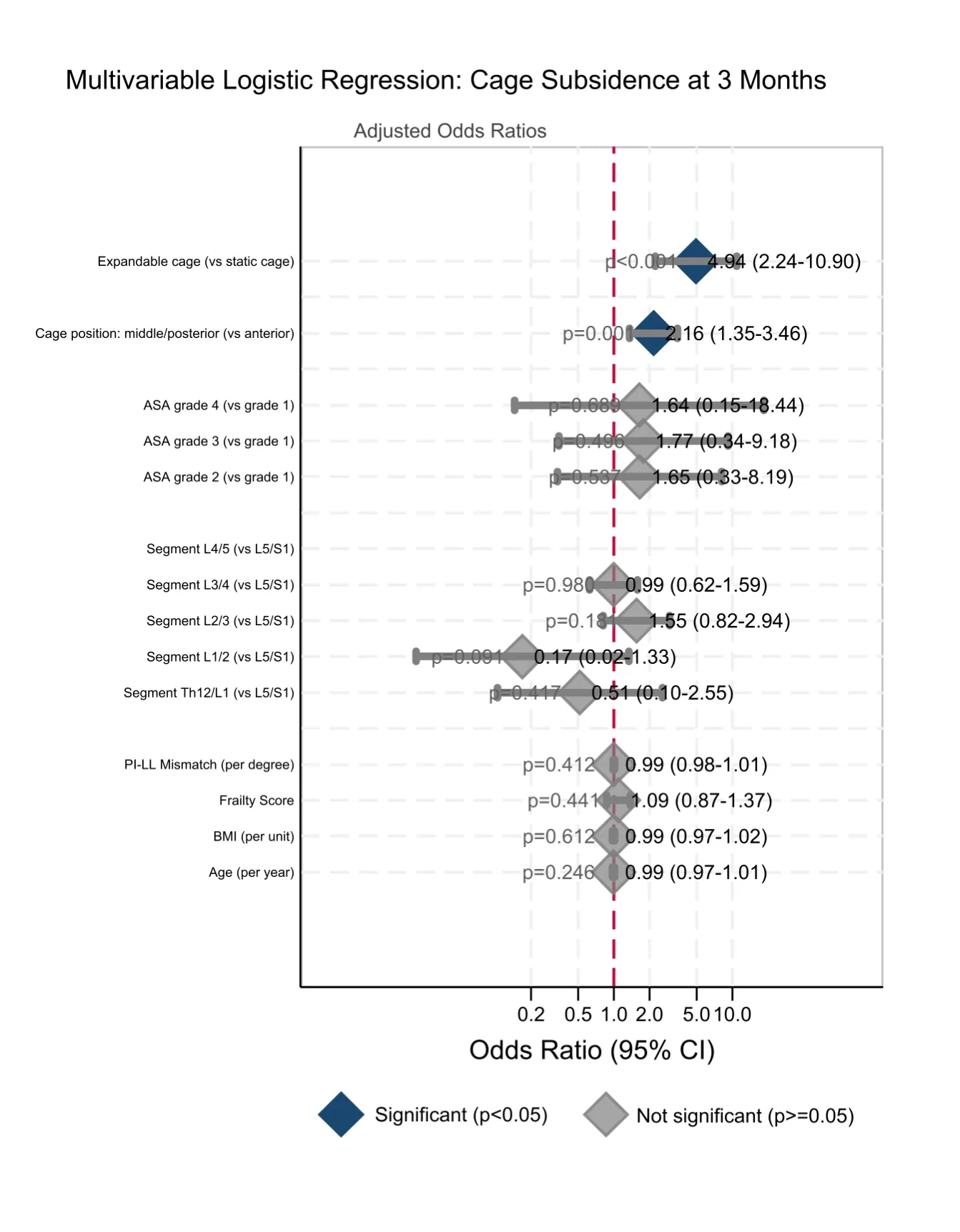
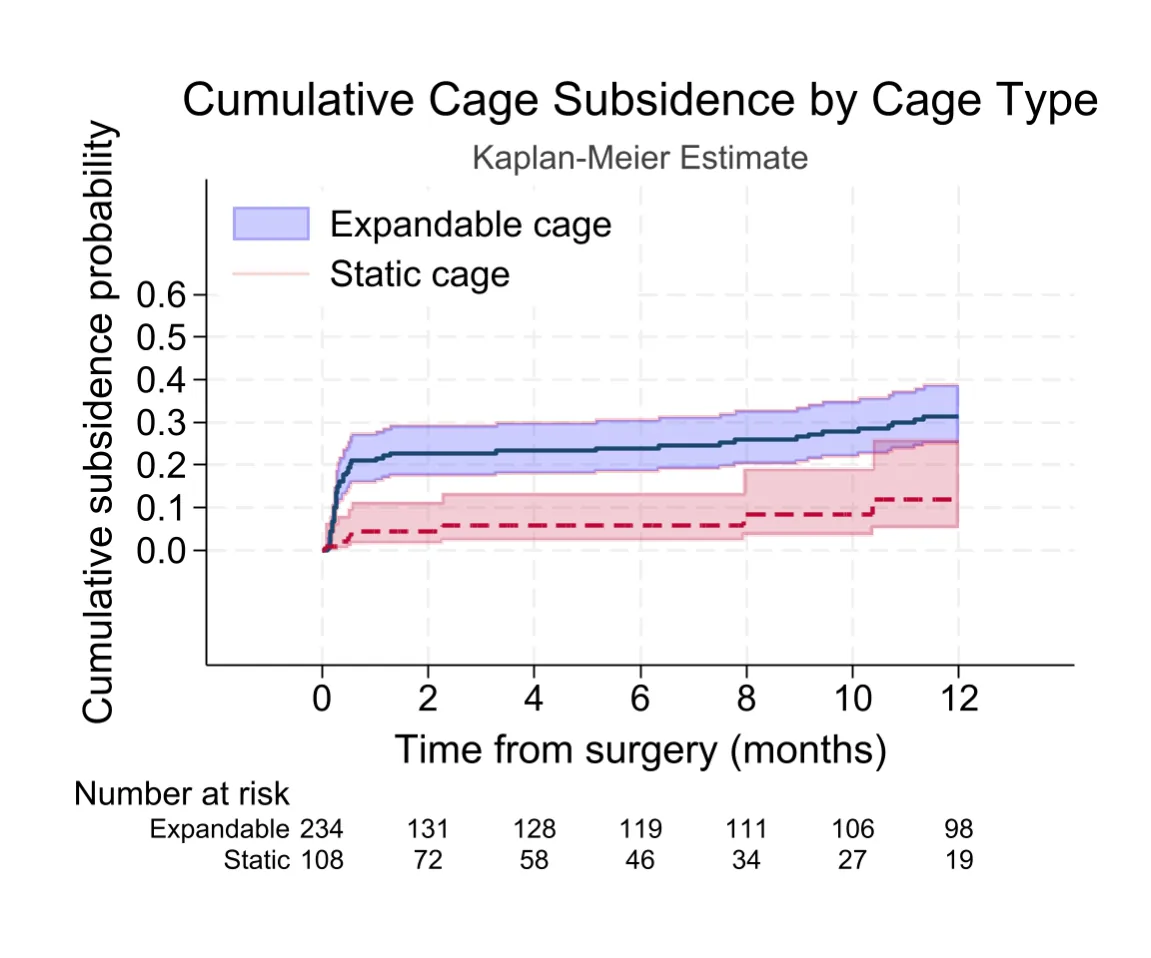
Cage subsidence at 3 months occurred in 25.3% of cages (164/648). In univariable analysis, expandable cages showed substantially higher subsidence rates than static cages (31.6% vs. 7.2%, χ² = 39.09, p < 0.001). Non-anterior cage positioning was associated with higher subsidence (36.3% vs. 14.4%, p < 0.001). Cage footprint size was not significant (p = 0.282). Baseline patient characteristics (age, BMI, frailty, ASA, PI-LL mismatch) were not associated with subsidence. In multivariable analysis (n = 521), expandable cage type was the strongest independent risk factor (OR 4.94, 95% CI 2.24–10.90, p < 0.001; see figure 1), followed by non-anterior cage positioning (OR 2.16, 95% CI 1.35–3.46, p = 0.001). No baseline patient characteristics reached significance. The model showed acceptable discrimination (AUROC = 0.72). Kaplan-Meier analysis demonstrated a consistently higher cumulative subsidence probability for expandable cages across the entire 12-month follow-up period (42.3% vs. 16.5% at 12 months; log-rank χ² = 13.13, p = 0.0003; see figure 2).
Expandable cage design represents the strongest independent risk factor for early cage subsidence following TLIF, conferring nearly a 5-fold increased odds compared to static cages. Non-anterior cage positioning is an additional independent surgical predictor of subsidence. These findings challenge the presumed advantages of expandable cage technology and underscore the importance of cage selection and optimal intraoperative placement — specifically aiming for anterior third positioning within the intervertebral space — to minimize subsidence risk in TLIF procedures.
Figures and tables
As submitted with the abstract. Tap a figure to open it at full size.