
Tumours & Infection
Does Glycemic Control Explain the Risk of Infection in Diabetic Patients Undergoing Instrumented Lumbar Arthrodesis?
- Hospital Universitari MútuaTerrassa, Barcelona, Spain
- Hospital Universitari MútuaTerrassa, Terrassa, Spain
Abstract
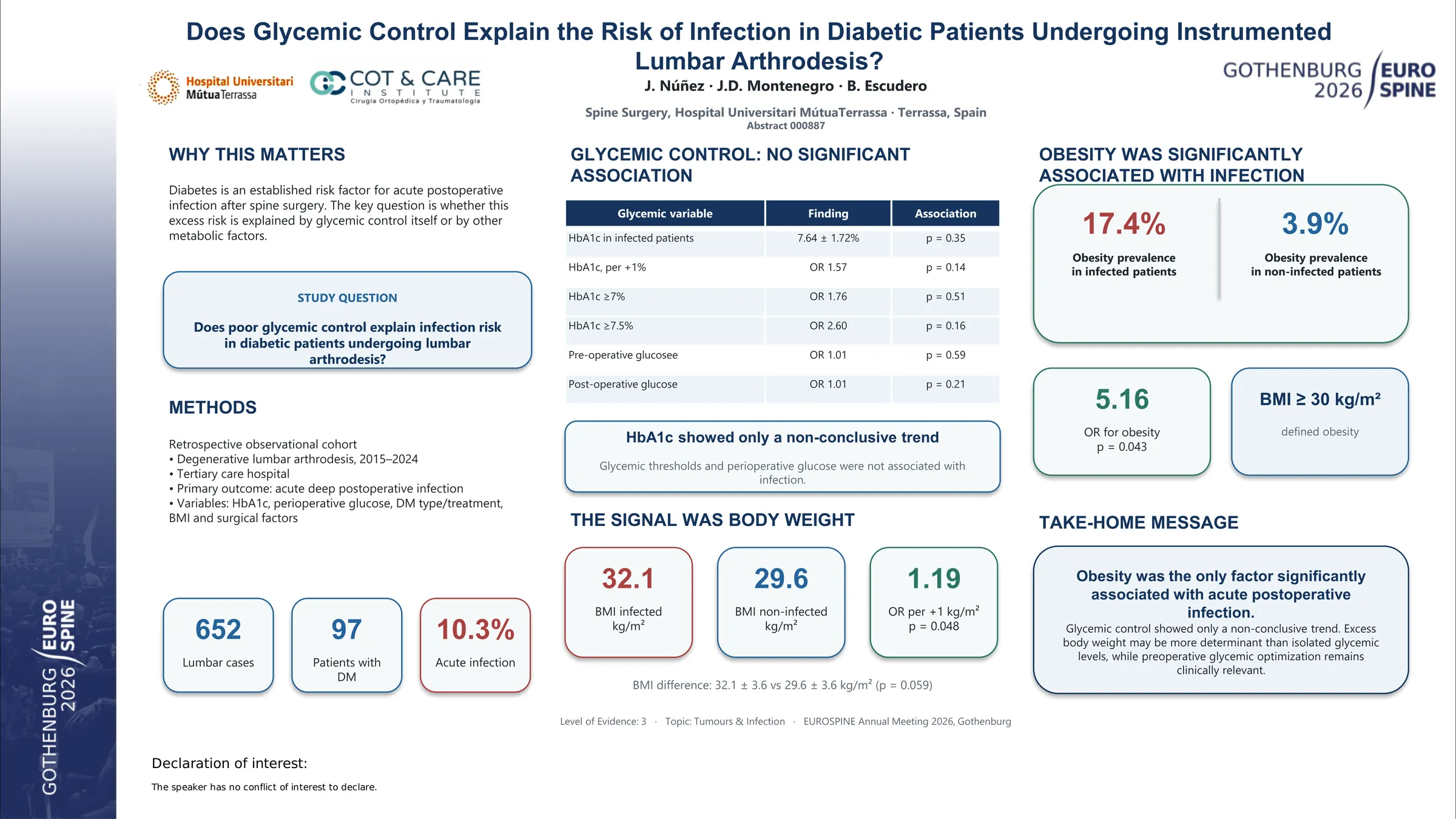
Diabetes mellitus (DM) is an established risk factor for acute postoperative infection in spine surgery. However, uncertainty remains as to whether this risk is attributable to DM itself, the degree of glycemic control, or the presence of other metabolic factors. The aim of this study was to determine whether poor glycemic control could explain the increased risk of infection reported in the literature among diabetic patients undergoing lumbar arthrodesis
This retrospective observational study included all patients with DM who underwent lumbar arthrodesis for degenerative pathology at a tertiary care hospital between 2015 and 2024. The primary outcome was acute deep postoperative infection. Demographic, clinical, metabolic (preoperative and postoperative glucose levels, preoperative glycated hemoglobin [HbA1c]), and surgical variables were collected.
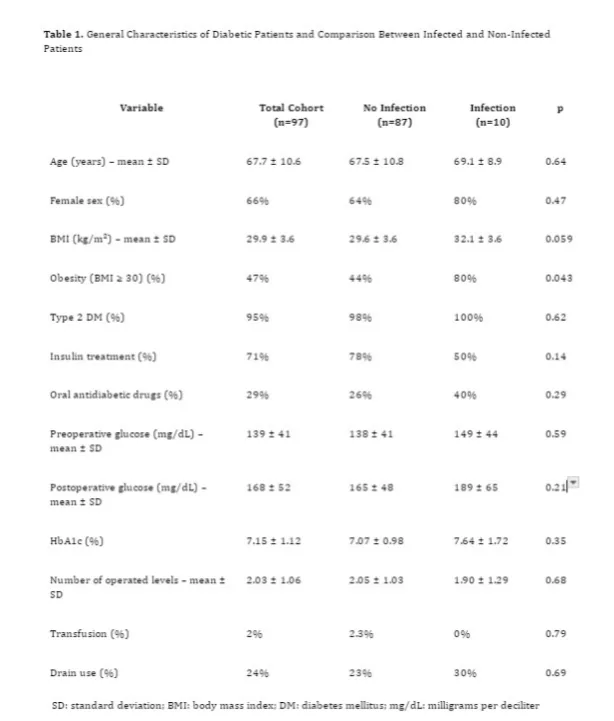
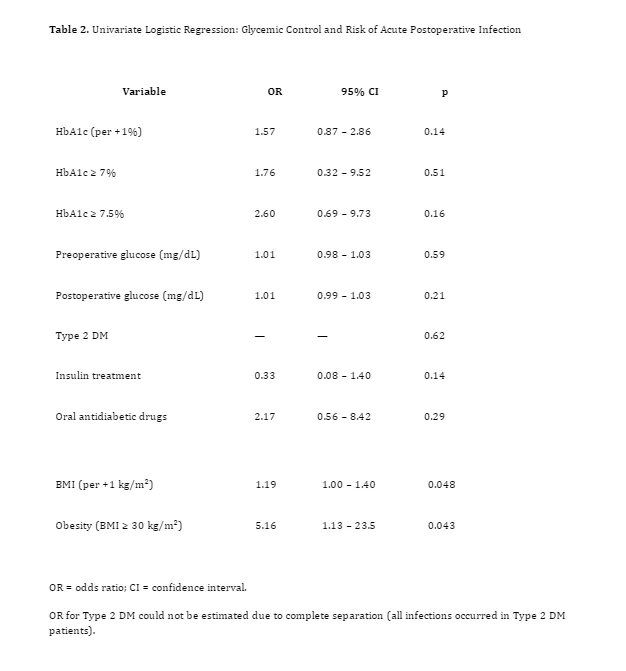
Among 652 patients who underwent surgery for degenerative pathology, 97 patients with DM were identified. The incidence of acute infection was 10.3% (Table 1). Patients who developed infection showed higher HbA1c values (7.64 ± 1.72%), although this difference was not statistically significant (p = 0.35). Logistic regression analysis demonstrated only a non-significant trend toward increased risk with each 1% increase in HbA1c (OR: 1.57; p = 0.14). Neither HbA1c cut-off values (≥ 7% or ≥ 7.5%), nor preoperative or postoperative glucose levels, nor the type or treatment of DM were associated with infection (Table 2).
In contrast, infected patients had a higher body mass index (BMI) (32.1 ± 3.6 vs. 29.6 ± 3.6 kg/m²; p = 0.059), with a significant association in logistic regression (OR: 1.19 per kg/m²; p = 0.048), and a higher prevalence of obesity (BMI ≥ 30 kg/m²) (17.4% vs. 3.9%; OR: 5.16; p = 0.043) (Table 2).
In our series, obesity was the only factor significantly associated with acute postoperative infection in diabetic patients undergoing lumbar arthrodesis, whereas glycemic control showed only a non-conclusive trend. These findings suggest that excess body weight may play a more determinant role than isolated glycemic levels in this patient population. Nevertheless, we consider that preoperative glycemic optimization remains clinically relevant.
Figures and tables
As submitted with the abstract. Tap a figure to open it at full size.