
Adult Deformity
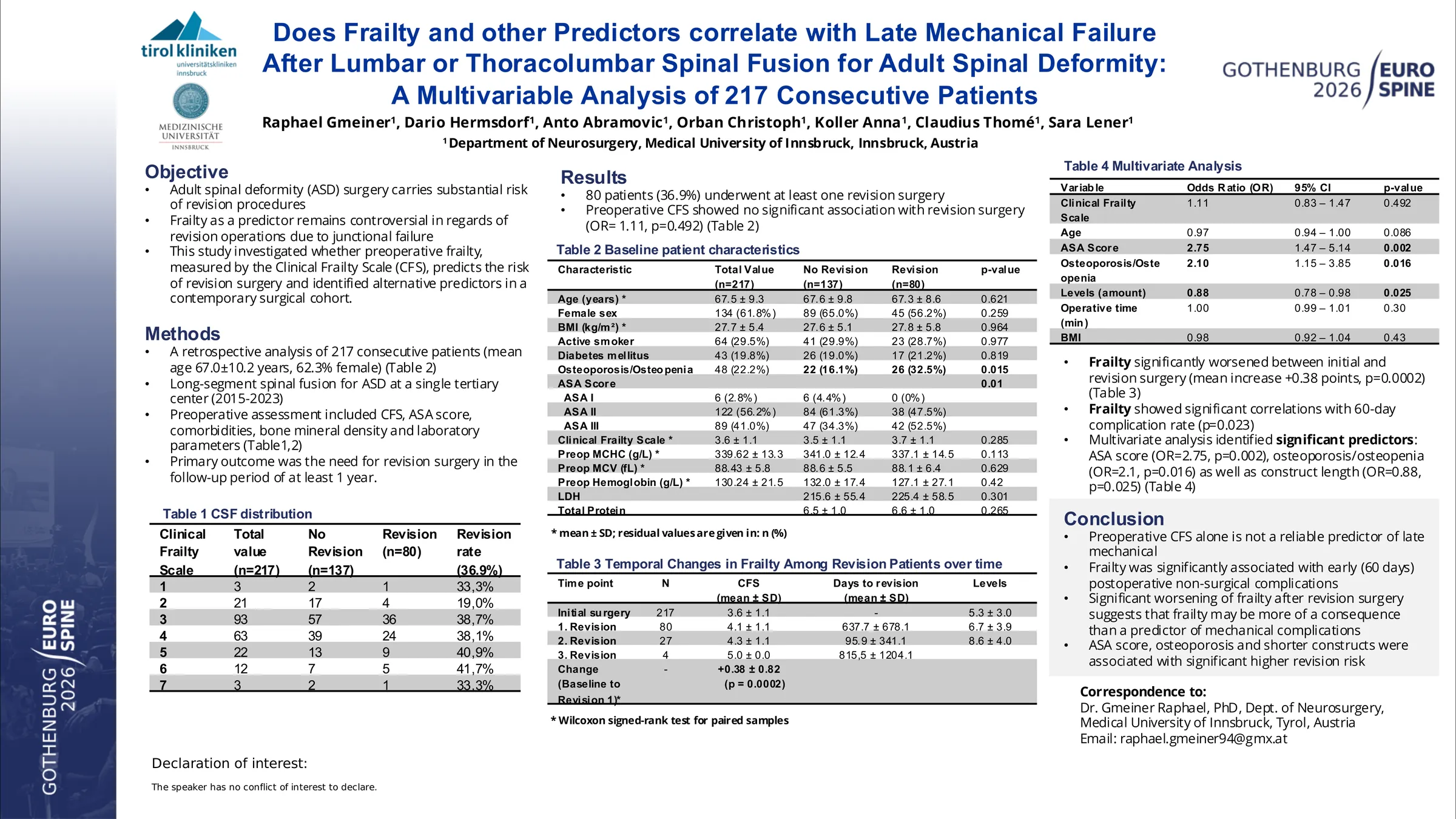
Does Frailty and other Predictors correlate with Late Mechanical Failure After Lumbar or Thoracolumbar Spinal Fusion for Adult Spinal Deformity: A Multivariable Analysis of 217 Consecutive Patients
- Medical University of Innsbruck, Innsbruck, Austria
Abstract
Adult spinal deformity (ASD) surgery carries substantial risk of revision procedures, yet the role of frailty as a predictor remains controversial in regards of revision operations due to junctional failure. This study investigated whether preoperative frailty, measured by the Clinical Frailty Scale (CFS), predicts the risk of revision surgery and identified alternative predictors in a contemporary surgical cohort.
A retrospective analysis of 217 consecutive patients (mean age 67.0±10.2 years, 62.3% female) who underwent long-segment spinal fusion for ASD at a single tertiary center (2015-2023) was performed. Preoperative assessment included CFS, ASA score, comorbidities, bone mineral density and laboratory parameters. The primary outcome was the need for revision surgery in the follow-up period of at least 1 year.
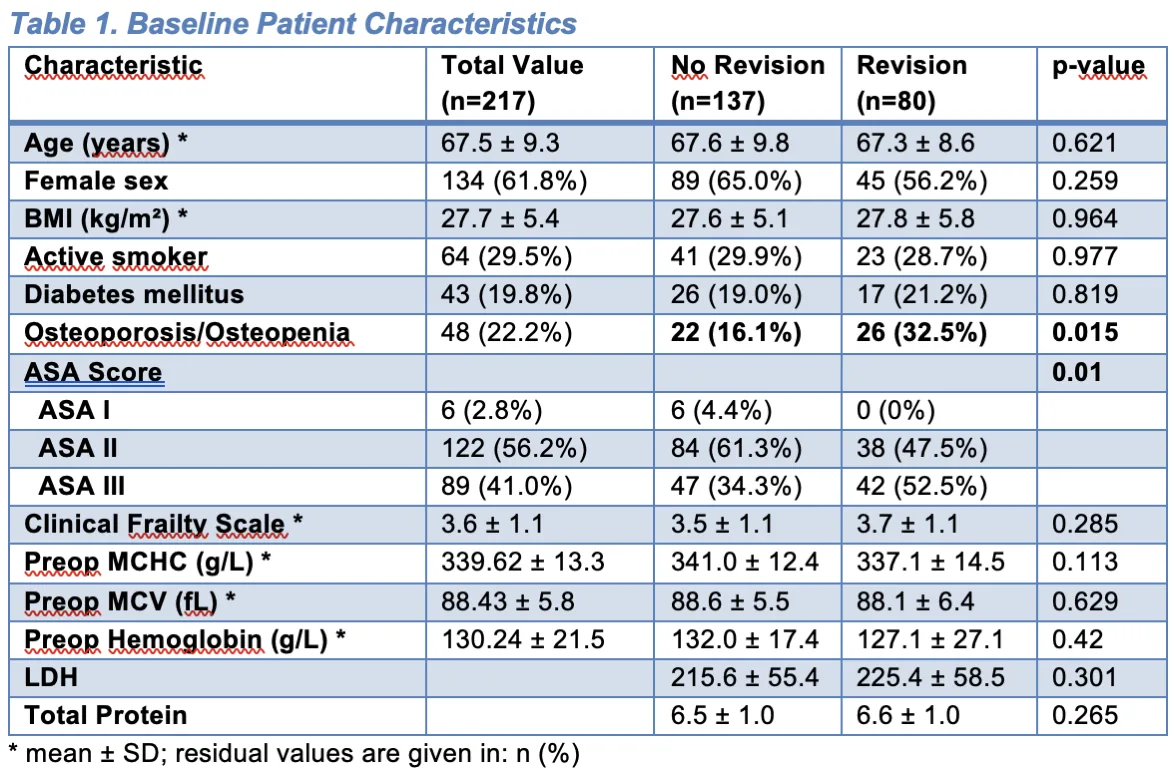
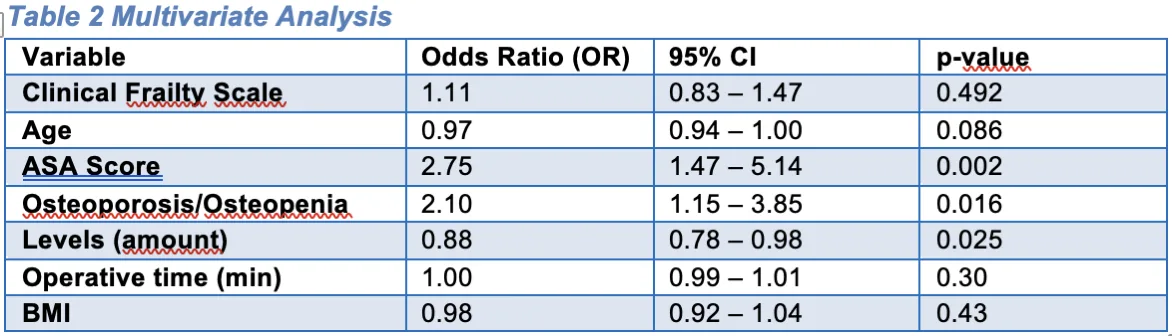
Overall, 80 patients (36.9%) underwent at least one revision surgery (Table 1). Contrary to our hypothesis, preoperative CFS showed no significant association with revision surgery (OR= 1.11, p=0.492). Further multivariate analysis identified significant predictors: ASA score (OR=2.75, p=0.002), osteoporosis/osteopenia (OR=2.1, p=0.016) as well as construct length (OR=0.88, p=0.025)(Table 2). Frailty significantly worsened between initial and revision surgery (mean increase +0.38 points, p=0.0002). Additionally, frailty showed significant correlations with 60-day complication rate (p=0.023).
Preoperative CFS alone is not a reliable predictor of late mechanical complications after ASD correction. Instead, frailty was significantly associated with early (60 days) postoperative non-surgical complications. The significant worsening of frailty after revision surgery suggests that frailty may be more of a consequence than a predictor of mechanical complications. ASA score, osteoporosis and shorter constructs were associated with significant higher revision risk. These findings implicate that frailty correlates with medical complications but cannot predict mechanical failure. Preoperative risk stratification in ASD surgery incorporating modifiable medical and radiological factors should guide surgical decision-making.
Figures and tables
As submitted with the abstract. Tap a figure to open it at full size.