Complications & Epidemiology
Does a one-time guideline-based educational video intervention improve osteoporosis-related knowledge?
- Catholic Hospital Bochum - St. Josef-Hospital, Bochum, Germany
Abstract
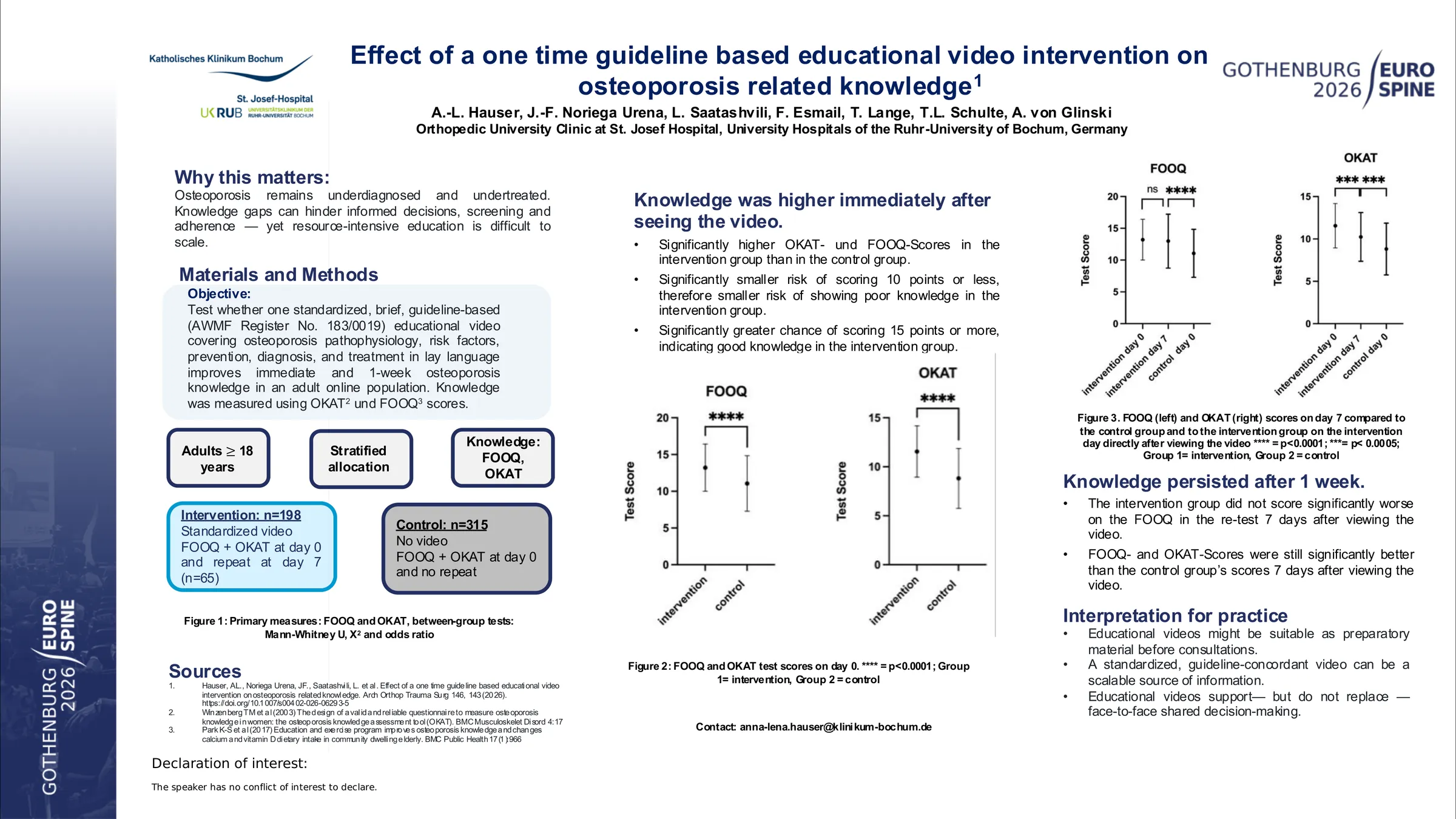
Osteoporosis remains underdiagnosed and undertreated, partly due to insufficient patient knowledge. This study aimed to assess osteoporosis-related knowledge and to evaluate the immediate and short-term effects of a one-time educational intervention through a guideline-based video in an adult online population.
In this prospective, randomized controlled trial, adults aged ≥18 years were recruited via an established online panel. Participants were randomized to an intervention group, which viewed a standardized educational video on osteoporosis, or a control group without intervention. Osteoporosis knowledge was assessed using the Facts on Osteoporosis Quiz (FOOQ) and the Osteoporosis Knowledge Assessment Tool (OKAT). Knowledge retention was evaluated in the intervention group after one week. Between-group comparisons were performed using Mann-Whitney U tests, χ² tests, and odds ratios.
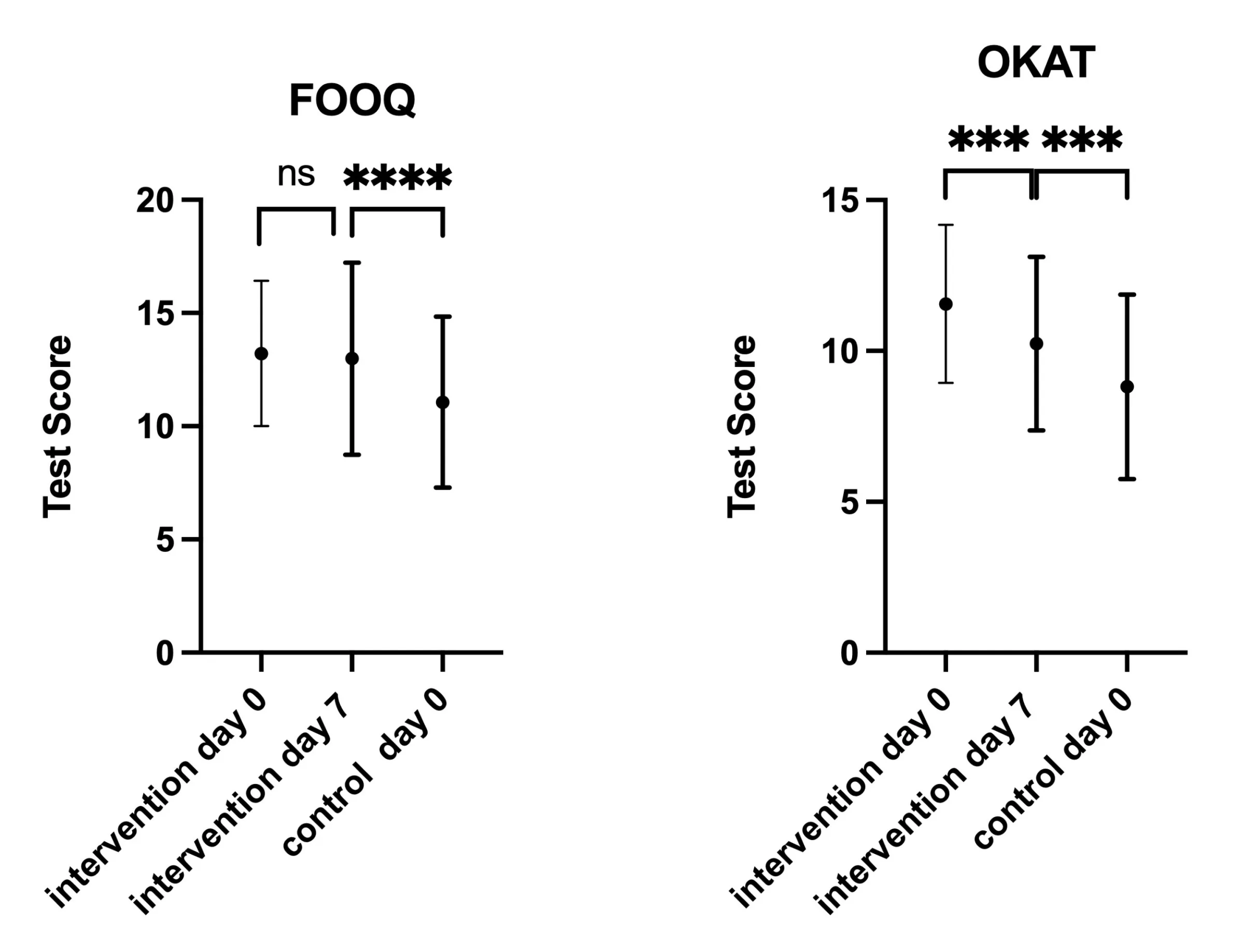
A total of 513 participants were included (intervention group: n = 198; control group: n = 315), with no significant differences in baseline demographic or clinical characteristics. Immediately after the intervention, osteoporosis-related knowledge was significantly higher in the intervention group compared with controls, as measured by both OKAT (11.6 vs. 8.8 points, p < 0.0001) and FOOQ (13.2 vs. 11.1 points, p < 0.0001). The proportion of participants with poor knowledge (FOOQ ≤10 points) was lower in the intervention group (20.7% vs. 41.3%; OR 0.37, 95% CI 0.24–0.56), while good knowledge (FOOQ ≥15 points) was more frequent (37.9% vs. 17.5%; OR 2.88, 95% CI 1.92–4.30).
At 1-week follow-up (n = 65), knowledge scores in the intervention group remained significantly higher than baseline control values for both FOOQ and OKAT (all p < 0.005), indicating short-term knowledge retention.
A brief, guideline-based educational video significantly improves osteoporosis-related knowledge, with substantial retention after one week. Video-based education represents an effective, scalable tool to enhance patient understanding of osteoporosis and may support improved prevention and management strategies.
Figures and tables
As submitted with the abstract. Tap a figure to open it at full size.