Adult Deformity
Do age and pelvic incidence adjusted postoperative alignment models improve proximal junctional kyphosis and failure prediction after adult spinal deformity surgery?
- CHU Rennes - Pontchaillou Hospital, Rennes, France
- Hautepierre Hospital - University Hospitals of Strasbourg, Strasbourg, France
- CHRU strasbourg - Les Hôpitaux Universitaires de Strasbourg, Strasbourg, France
- Strasbourg University Hospital, Strasbourg, France
- Vall d’Hebron University Hospital, Barcelona, Spain
- Vall d'Hebron Institut de Recerca (VHIR), Barcelona, Spain
- Clinique du Dos Bordeaux-Terrefort, Bordeaux, France
- ELSAN Polyclinique Jean Villar, Clinique du Dos, Bordeaux-Terrefort, Pessac, France
- Acibadem University Maslak Hospital, Istanbul, Türkiye
- Schulthess Klinik, Zurich, Switzerland
- La Paz University Hospital, Madrid, Spain
- . European Spine Study Group (Vall d’Hebron University Hospital, Barcelona, Spain
Abstract
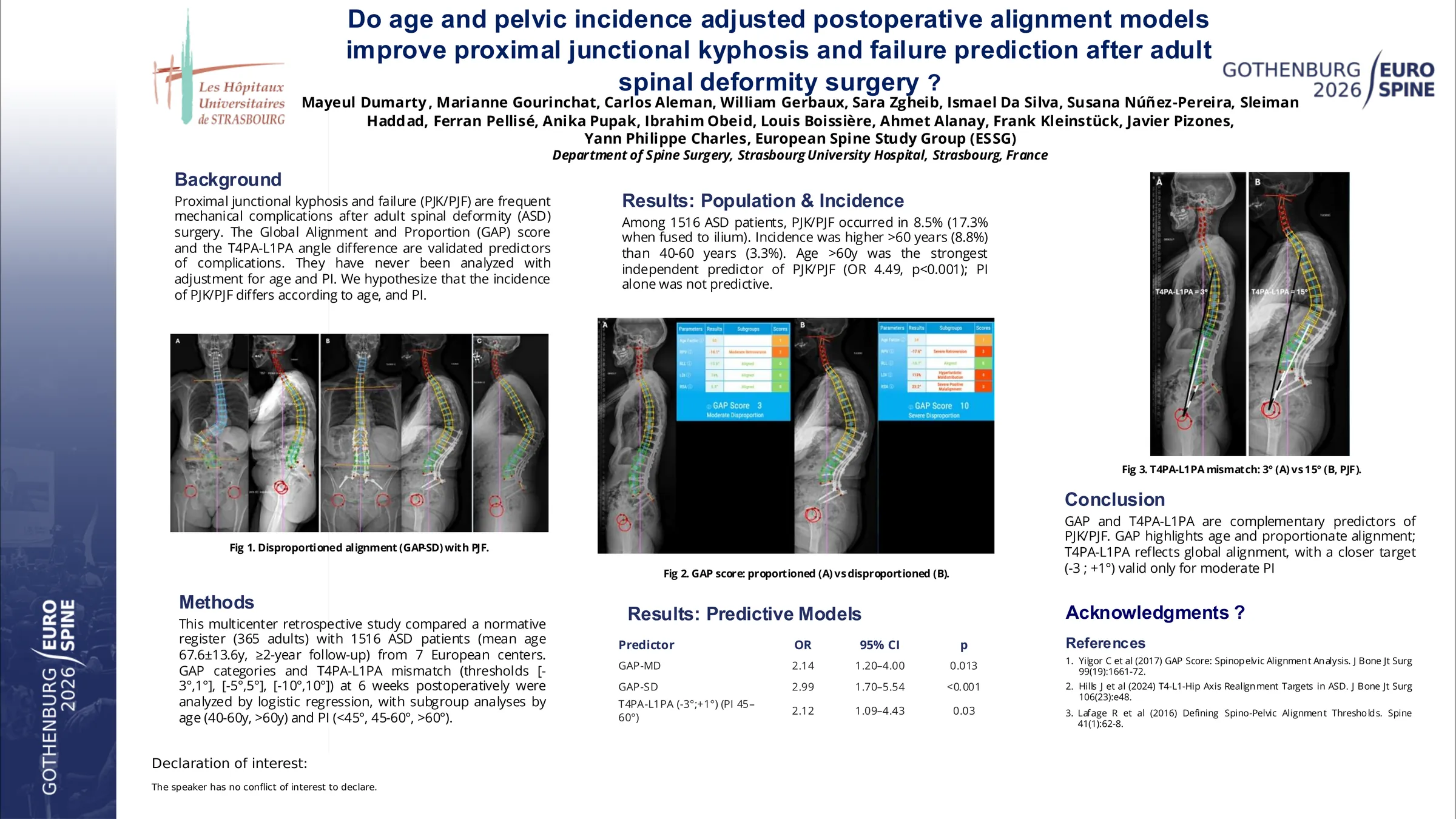
Proximal junctional kyphosis and failure (PJK/PJF) remain frequent complications after adult spinal deformity (ASD) surgery. The Global Alignment and Proportion (GAP) score and the T4 pelvic angle–L1 pelvic angle (T4PA–L1PA) difference represent predictive alignment tools. This study aimed to compare the predictive value of GAP and T4PA–L1PA for PJK/PJF, and to check the influence of normative age- and pelvic incidence (PI)-adjusted values.
This multicenter retrospective registry study assessed 1469 ASD patients >40 years (mean age 58.7 ± 19.9 years; 81% female) preoperatively, at 6 weeks and 2 years postoperatively. GAP categories moderately, severely disproportioned (GAP-MD, GAP-SD) and T4PA–L1PA mismatch were analyzed by logistic regression to identify postoperative risk factors. A normative register including 365 individuals was additionally used to compare age- and PI-matched values for GAP components.
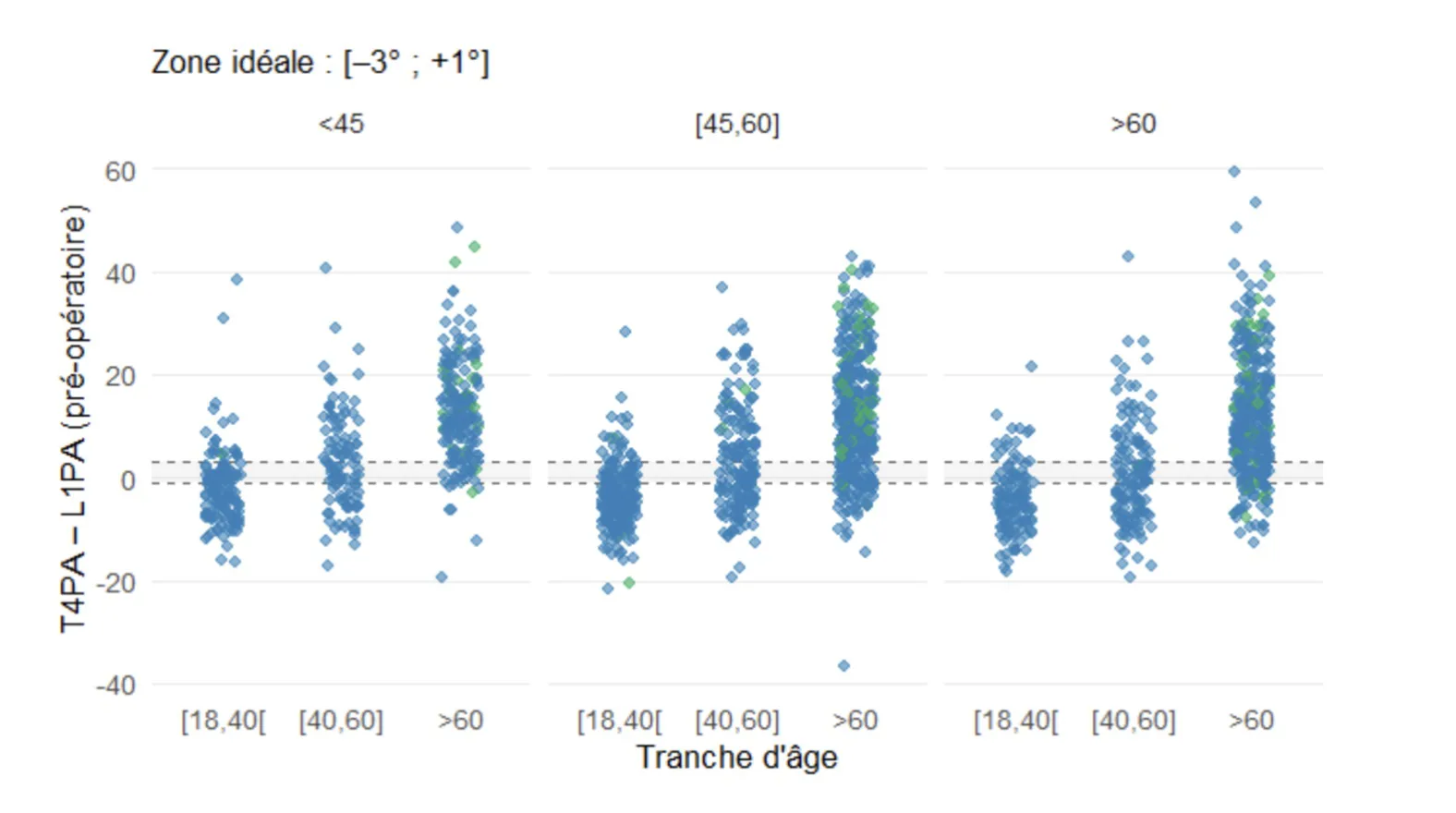
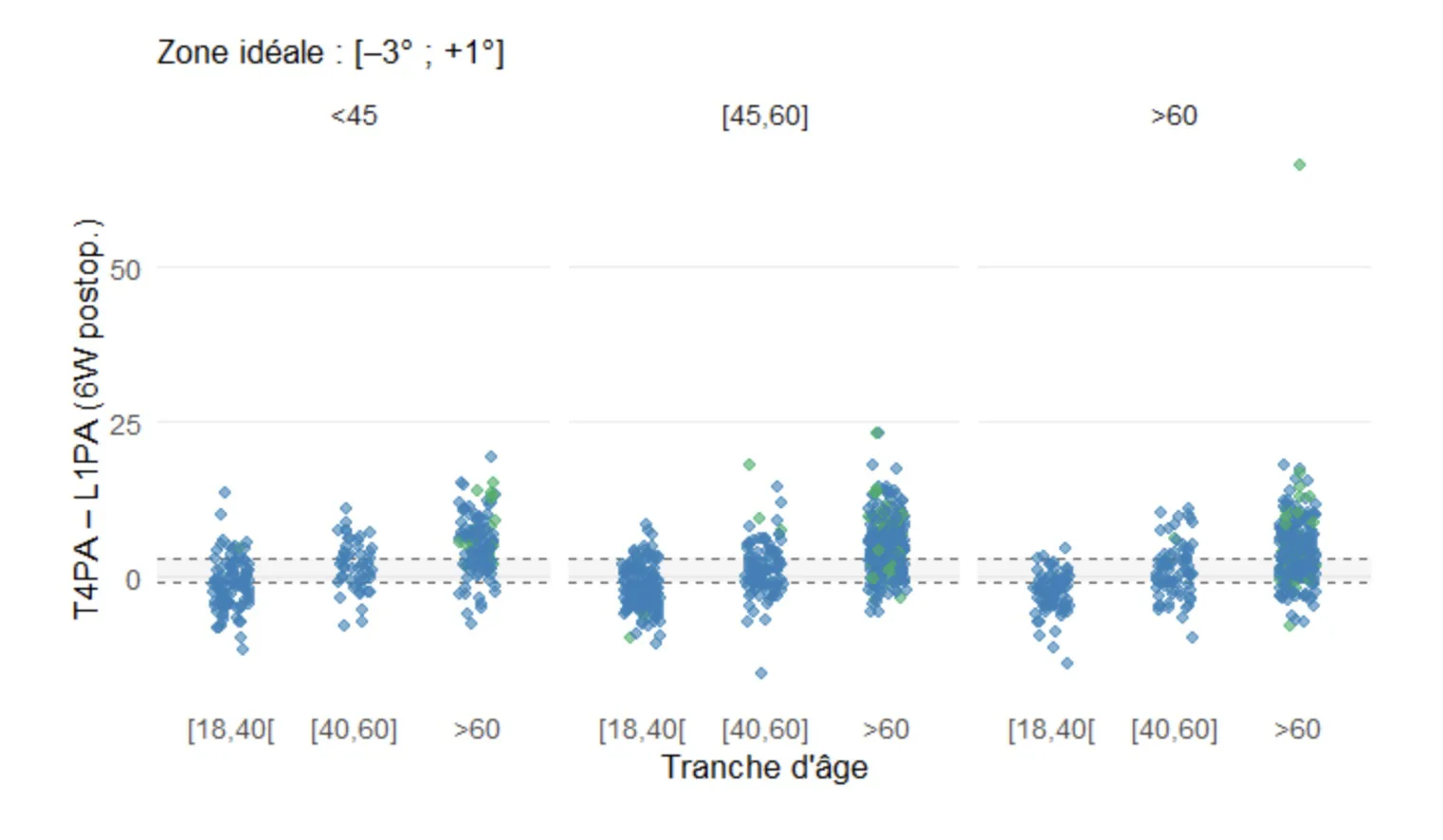
The overall PJK/PJF incidence was 6.9% (fusion to ilium 17%). At 6 weeks, GAP-SD patients had an increased PJK/PJF risk (OR 4.79; p<0.001), as did GAP-MD (OR 2.89; p<0.001). Age >60 years was the strongest independent predictor (OR 5.93; p<0.001), whereas PI was not significantly associated with PJK/PJF risk. Age-adjusted normative values had a small influence: patients >60 Relative Lumbar Lordosis (OR 0.97; p=0.0008), patients 40-60 years Relative Spinopelvic Alignment (OR 0.83; p=0.0072). T4PA–L1PA mismatch outside [−3°; 1°] was associated with increased risk (OR 3.29; p<0.001), mainly for PI 45°-60°. Using a broader range [−5°;5°] predicted PJK-PJF across all PI groups. Age did not significantly influence risk in the T4PA–L1PA model.
GAP and T4PA–L1PA analyses appear complementary and highly predictive tools for PJK/PJF after ASD surgery. The GAP model underscores the major role of age in combination with proportionate alignment, while T4PA–L1PA highlights the importance of global sagittal alignment. Normative age-adjusted assessment may slightly improve risk stratification.
Figures and tables
As submitted with the abstract. Tap a figure to open it at full size.