
Degenerative Thoracolumbar
Differences in outcomes of full endoscopic lumbar discectomy for lumbar disc hernia depending on the operation period
- Matsue City Hospital, Matsue, Japan
- Tottori University, Faculty of Medicine, Yonago, Japan
Abstract
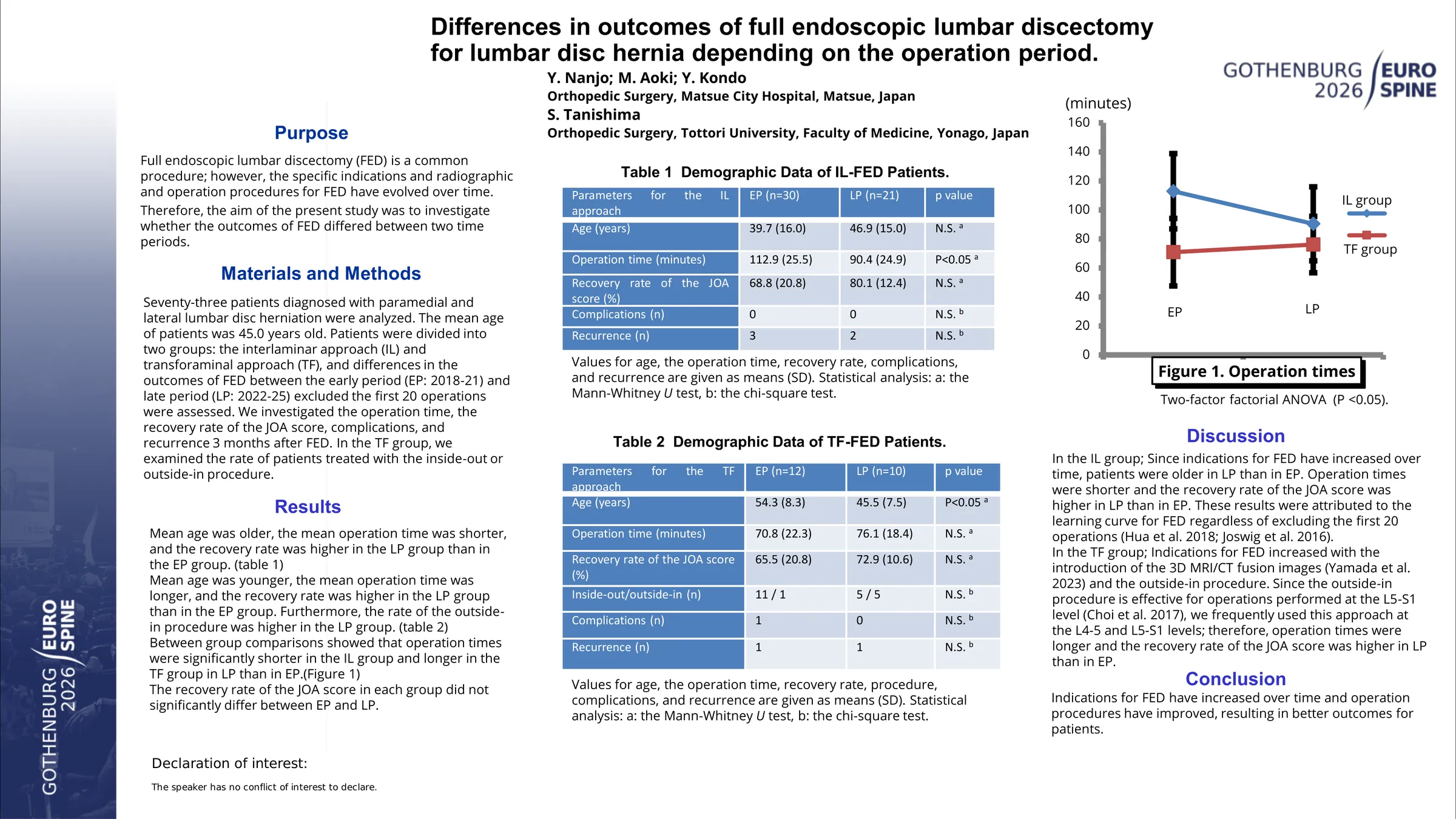
Full endoscopic lumbar discectomy (FED) is a common procedure; however, the specific indications and radiographic and operation methods for FED have evolved over time. Therefore, the present study investigated whether the outcomes of FED differed between two time periods.
Seventy-three patients diagnosed with paramedian and lateral lumbar disc herniation from 2018 to 2025 were analyzed. Average age was 45.0 years old and there were 35 males and 38 females. The exclusion criterion was patients with merged spinal stenosis. Indications for FED were selected by spinal surgery specialists. Patients were divided into two groups: the interlaminar approach (IL: 51 patients) and transforaminal approach (TF: 22 patients), and differences in operative outcomes between the early period (EP: 2018-2021) and late period (LP: 2022-2025) were assessed. We investigated the operation time, the recovery rate of the Japanese Orthopedic Association score for lumbar disease (JOA score), complications, and the rate of recurrence 3 months after FED. In the TF group, we examined the percentage of patients treated with the inside-out and outside-in methods. Statistical analyses were conducted using the Mann-Whitney U test, chi-squared test and two-factor factional ANOVA with significance set at P <0.05.
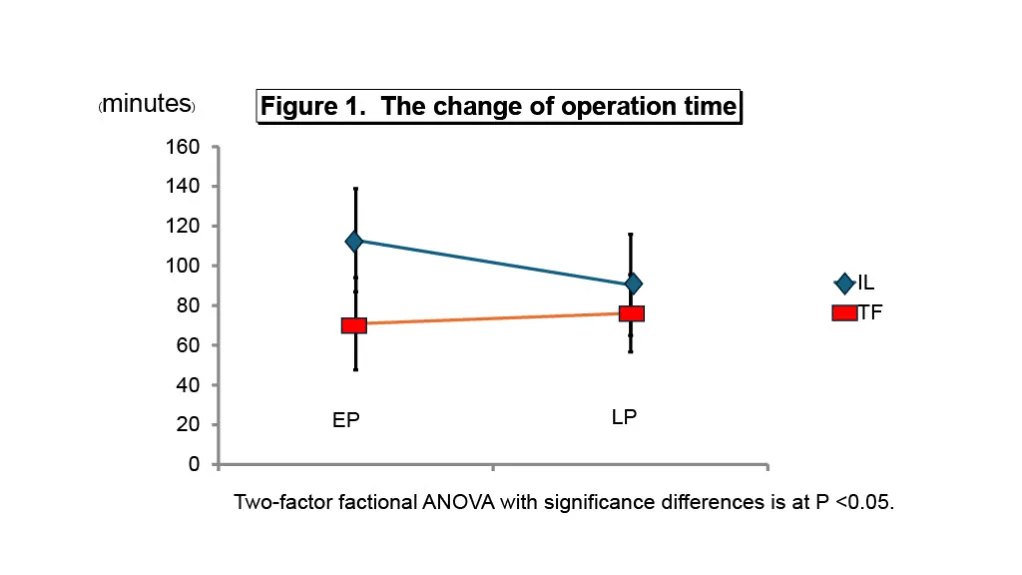
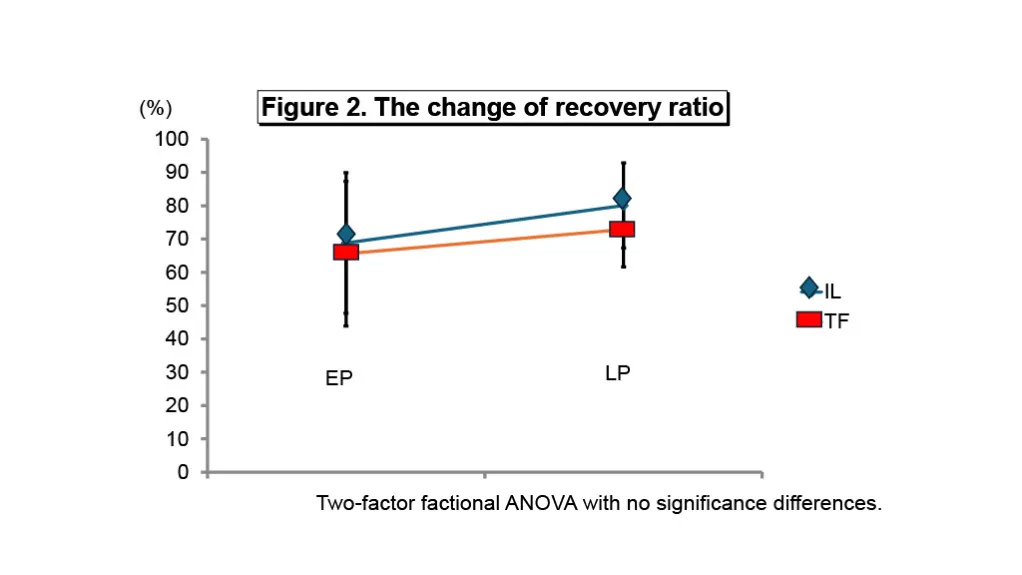
The IL group included 30 patients treated in EP and 21 patients treated in LP. The TF group included 12 patients treated in EP and 10 patients treated in LP. In the IL group, average age was older (46.9 years vs 39.7 years), the average operation time was shorter (90.4 minutes vs 112.9 minutes), and the recovery rate was higher (80.1% vs 68.8%) in LP than in EP. In the TF group, average age was younger (45.5 years vs 54.3 years), the average operation time was longer (76.1 minutes vs 70.8 minutes), and the recovery rate was higher (72.9% vs 65.6%) in LP than in EP, and the ratio of outside-in approach was increased in LP. No significant differences were observed in complications or the rate of recurrence between EP and LP in either group. Between group comparisons showed that average age was older in the IL group and the operation time was longer in the TF group in LP than in EP (figure 1). Furthermore, the recovery rate of JOA scores in each group did not significantly differ between EP and LP (figure 2).
The recovery rates of JOA scores in the IL and TF groups were higher in LP than in EP. Since indications for FED have increased over time, patients were older in LP than in EP. In the TF group, indications for FED increased with the introduction of CT-MRI fusion images, the operation time was longer, and the recovery rate of JOA scores was higher in LP than in EP. Indications for FED have increased and the methods performed have improved, resulting in better outcomes for patients.
Figures and tables
As submitted with the abstract. Tap a figure to open it at full size.