
Tumours & Infection
Development of the AO Spinal Metastasis Staging (SMS) Referral Tool: An International Multidisciplinary Expert Panel and Survey Study
- University Medical Center Utrecht, Utrecht, Netherlands
- AO Foundation, Davos, Switzerland
- Memorial Sloan Kettering Cancer Center, New York, United States of America
- University Hospital Basel, Basel, Switzerland
- Duke University, Durham, United States of America
- Istituto Ortopedico Rizzoli, Bologna, Italy
- University of Britisch Columbia, Vancouver, Canada
- Oxford University Hospitals NHS Foundation Trust, Oxford, United Kingdom
- New York University Langone Health, New York, United States of America
Abstract
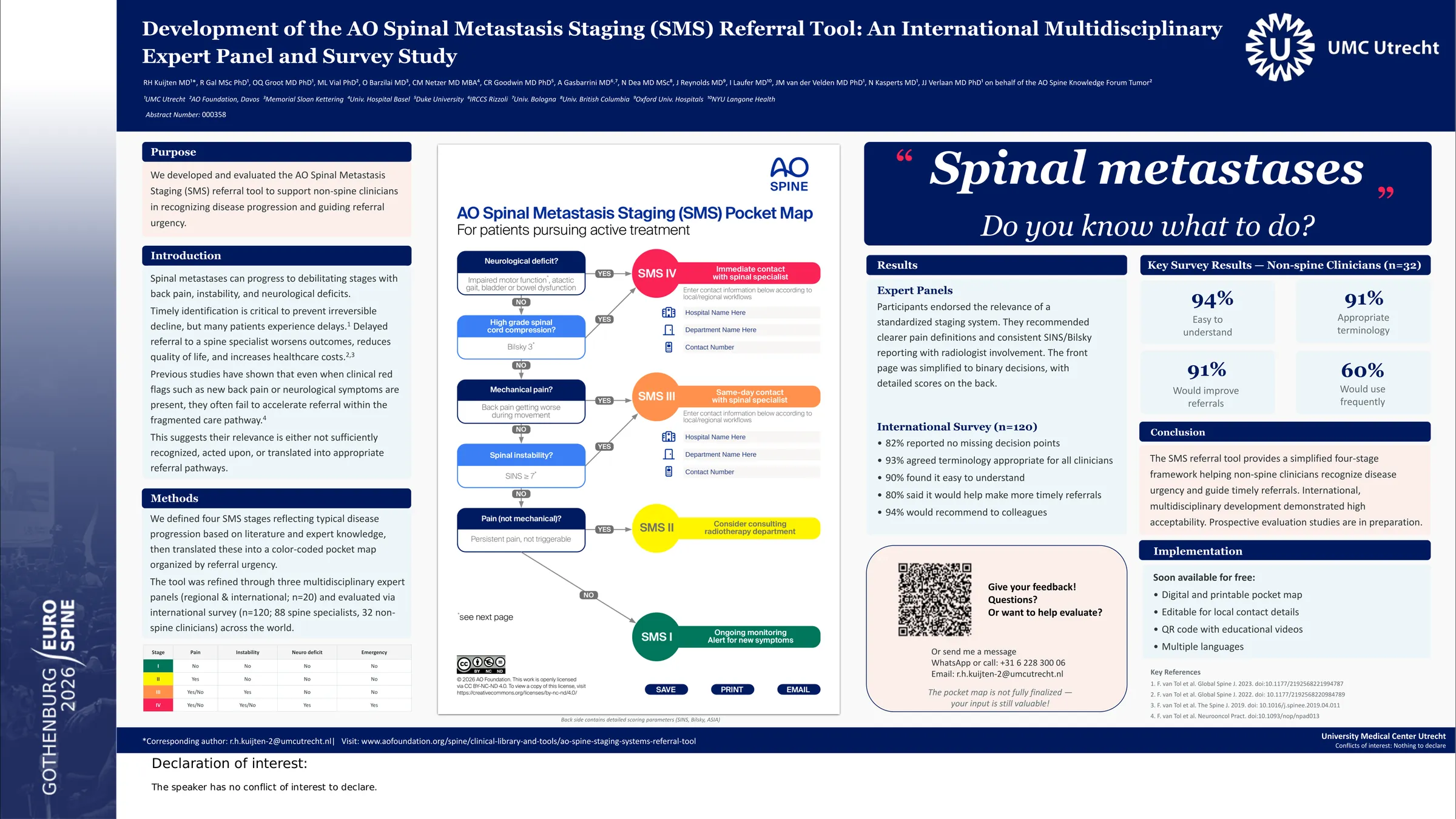
Spinal metastases may progress to advanced stages with debilitating pain, spinal instability, and neurological deficits. Timely recognition and referral are essential, yet delays are common because patients often first present to non-spine clinicians where red flags rarely expedite referral and existing guidelines primarily target spine specialists. We aimed to develop and evaluate a staging-based referral tool to support non-spine clinicians in recognizing progression and guiding referral urgency.
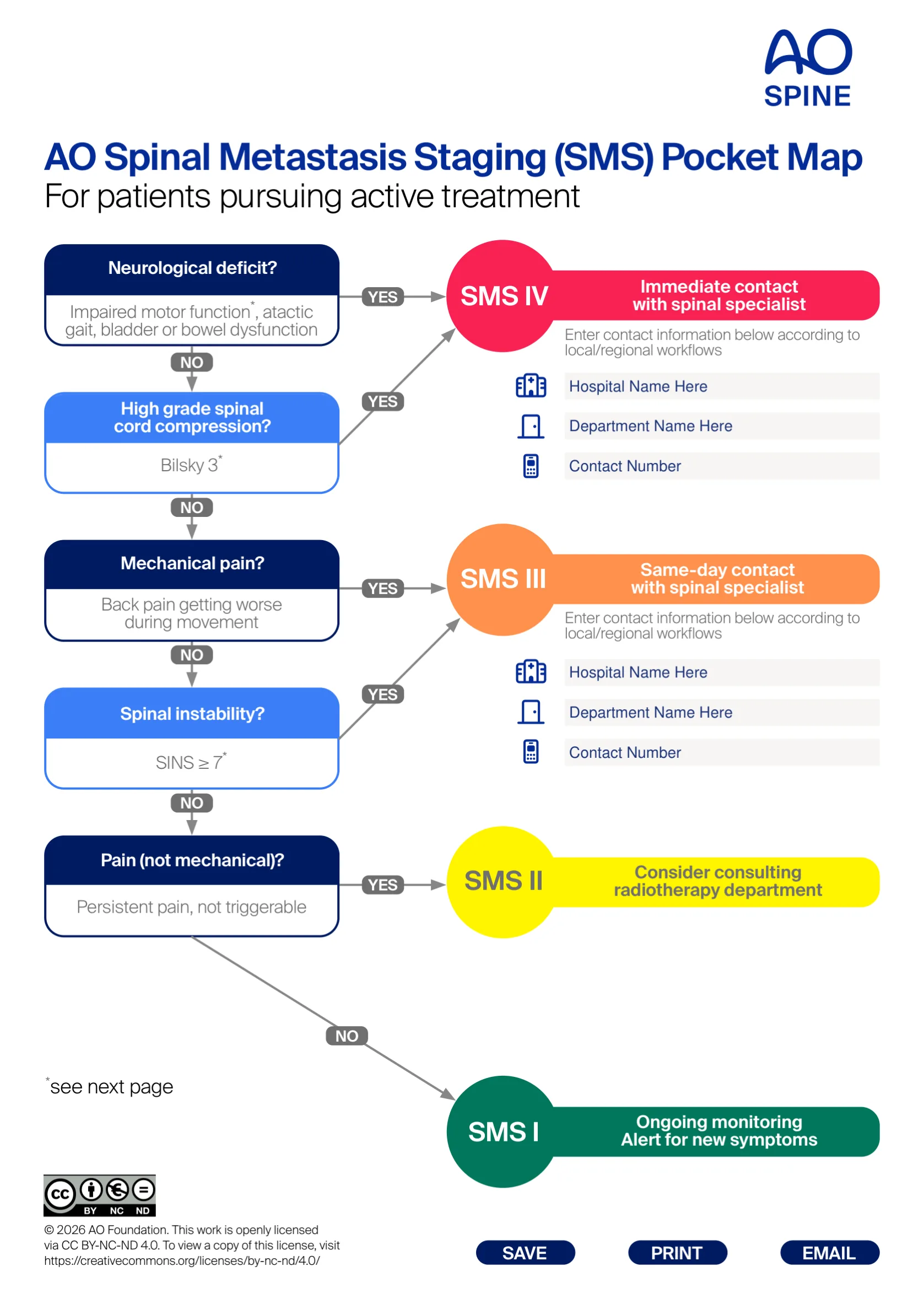
We defined the Spinal Metastases Staging (SMS) system as four stages reflecting typical progression: SMS I, asymptomatic; SMS II, inflammatory pain; SMS III, mechanical pain and/or spinal instability; and SMS IV, neurological deficits and/or high-grade spinal cord compression. These stages were translated into a referral algorithm organized by urgency and presented in the form of a pocket map. The tool was iteratively refined through regional and international multidisciplinary expert panels including spine and non-spine clinicians. Subsequently, usability and perceived clinical utility were evaluated in an international survey.
Panels endorsed the four-stage SMS system and referral algorithm. Among all survey respondents (n=120), high acceptability of the tool was reported. Among non-spine clinicians (n=32), 94% reported the tool easy to understand, 91% considered the format suitable for clinical use, and 91% anticipated improved referrals. Overall, 88% indicated they would use the tool at least occasionally, including 61% who would use the pocket map frequently or always.
Through an international, multidisciplinary development and evaluation process, the SMS staging system and referral tool (link) demonstrated high acceptability and perceived clinical utility among both spine specialists and non-spine clinicians. These findings support feasibility of implementation in non-spine care settings. Prospective studies are ongoing to assess effects on referral delays and patients outcomes.
Figures and tables
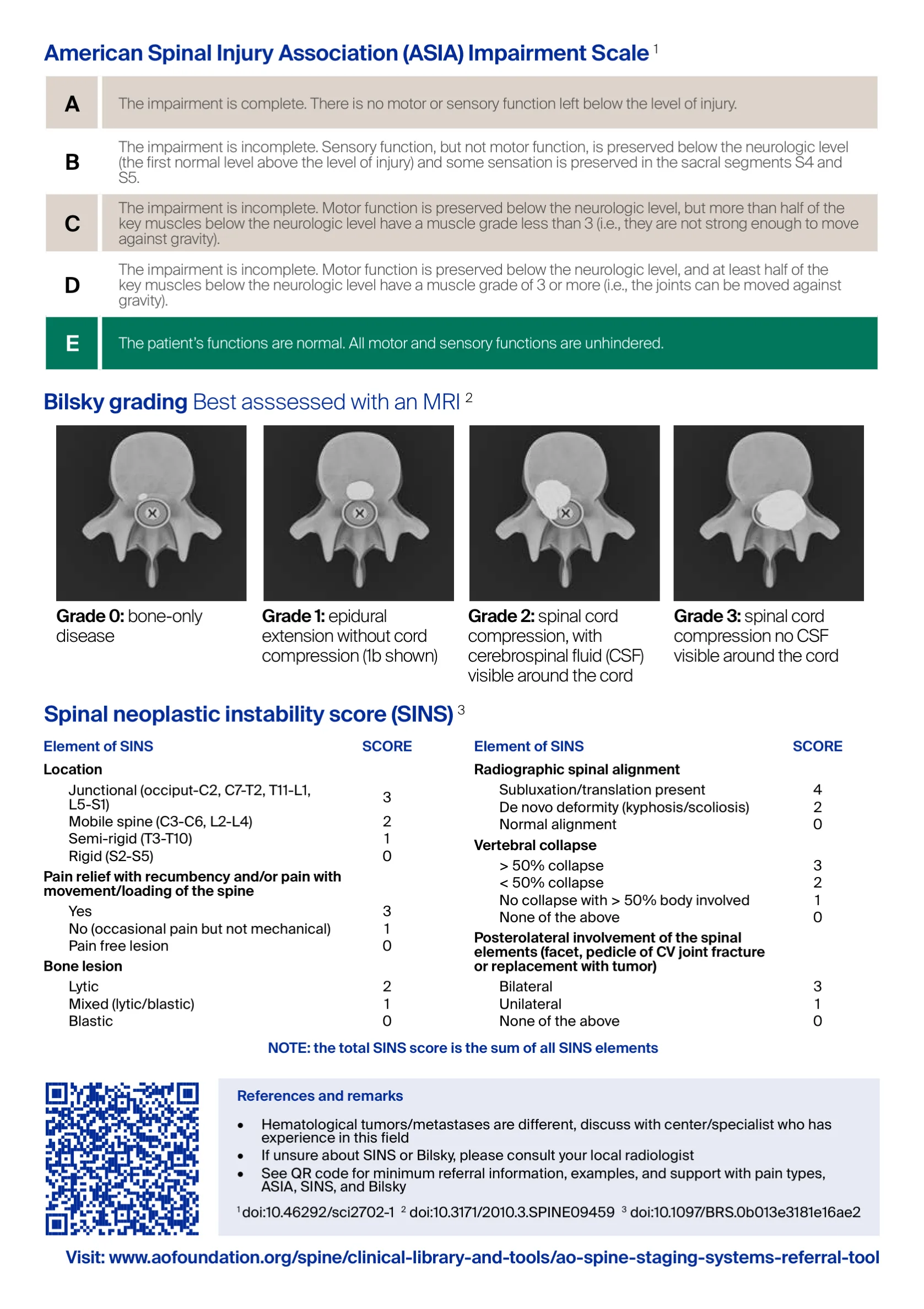
As submitted with the abstract. Tap a figure to open it at full size.