
Degenerative Thoracolumbar
Comparison of Radiographic and Clinical Outcomes between Bone Morphologic Protein-2 and Tricalcium Phosphate plus Iliac Bone Graft in Single level Extreme Lumbar Interbody Fusion Surgery
- Siriraj Hospital, Bangkok, Thailand
Abstract
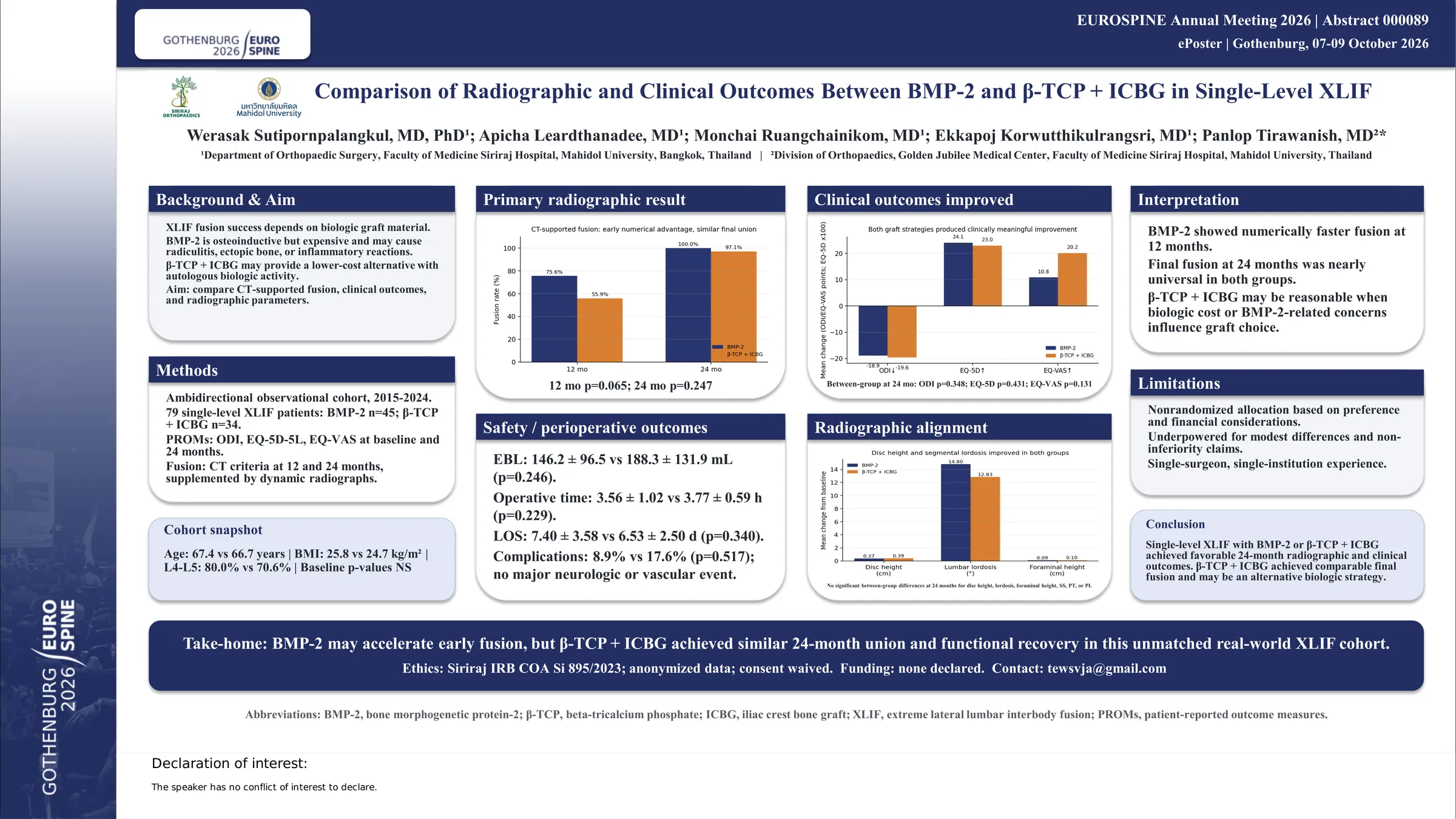
Extreme lateral lumbar interbody fusion (XLIF) has become a preferred minimally invasive option for degenerative lumbar spinal disorders. Fusion success is influenced by a large cage with the grafting materials. Bone morphologic protein 2 (BMP-2)–based graft material promotes reliable osteogenesis but carries substantial expense and possible side effects. A mixture of β-tricalcium phosphate (β-TCP) and iliac bone graft (IBG) harvested from the iliac crest has been proposed as a more economical substitute. This study aimed to compare radiographic and functional outcomes between BMP-2 and β-TCP + IBG in single-level XLIF.
Seventy-nine consecutive cases were analyzed. The study included single-level XLIF procedures performed between 2015 and 2024 (45 patients, BMP-2 and 34 patients, β-TCP + IBG). Patient-reported scores (Oswestry Disability Index [ODI], EQ-5D-5L, and EQ-VAS) and radiographic parameters (disc and foraminal height, lumbar alignment, and fusion grade) were assessed up to 24 months. Fusion was graded using the Bridwell scale. Comparative statistics were conducted with t-tests and either chi-square or Fisher’s exact tests, as appropriate. Repeated-measures ANOVA and kappa statistics were applied to assess interobserver reliability, and statistical significance was accepted at p < 0.05.
Preoperative demographic and clinical data were comparable between cohorts. Fusion at 12 months reached 75.6% for BMP-2 and 55.9% for β-TCP + IBG (p = 0.065). Fusion rate at 24 months were 100% and 97.1%, respectively (p = 0.247). Marked postoperative improvement was observed in both groups for ODI and EQ-5D-5L scores, with no significant differences between them. Radiographic parameters showed stable disc and foraminal heights at two years.
Both BMP-2 and β-TCP + IBG yielded equivalent long-term radiologic and clinical recovery following XLIF procedure. Although BMP-2 may promote earlier consolidation, β-TCP + IBG achieved comparable final results at 24 months while reducing material cost without donor-site morbidity.
Figures and tables
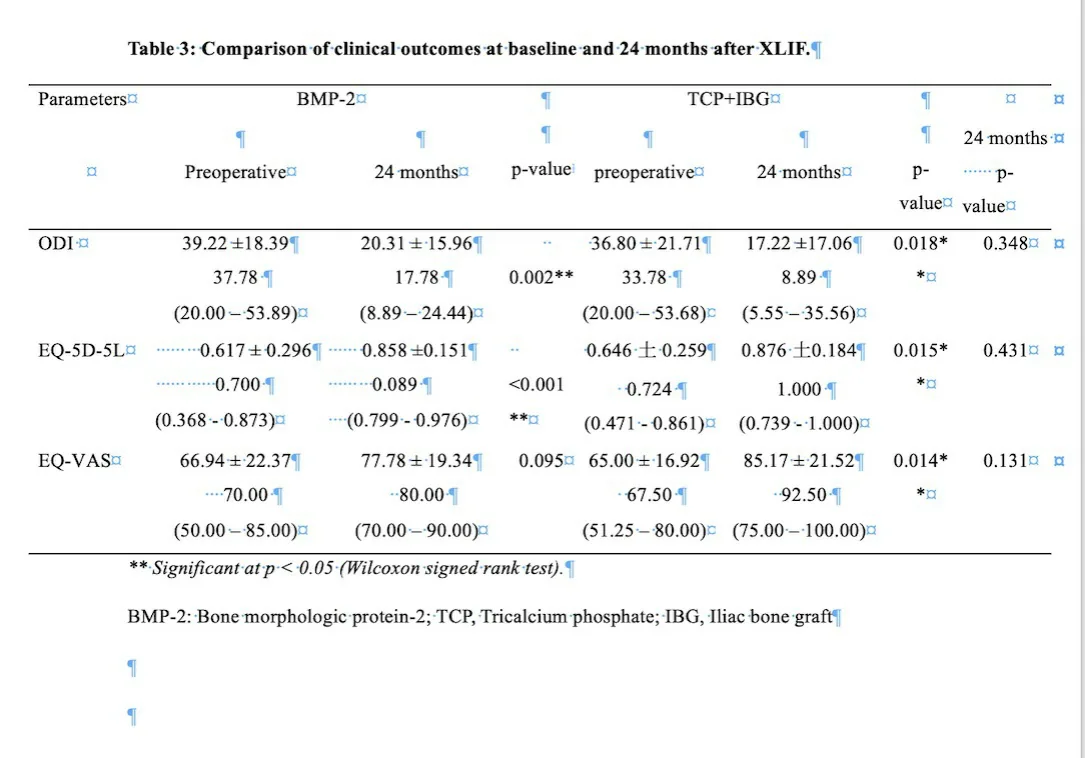
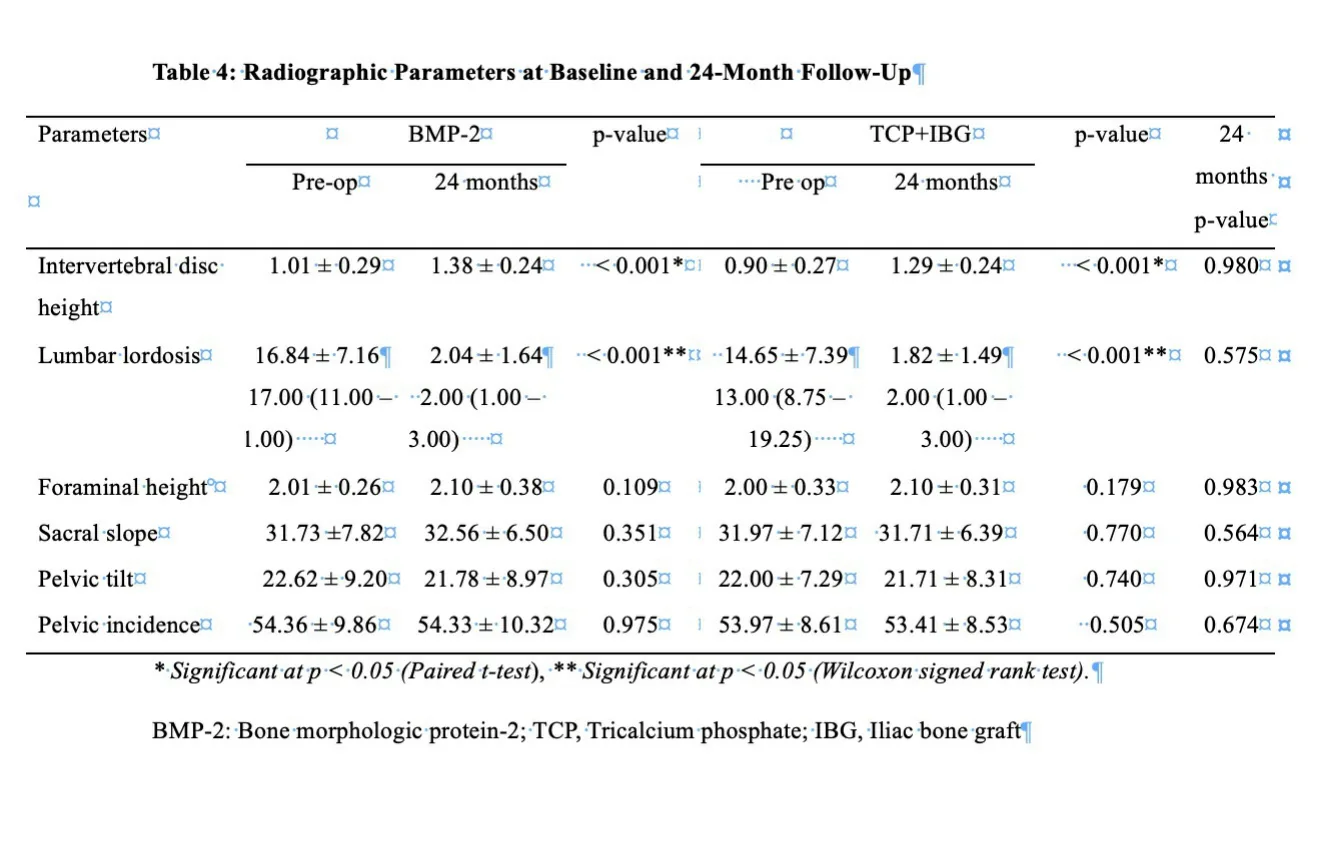
As submitted with the abstract. Tap a figure to open it at full size.