
Complications & Epidemiology
Cement Injection Volume and Intravenous Cement Leakage in Cement-Augmented Pedicle Screw Fixation: A Multicenter Screw-Level Analysis Using Generalized Estimating Equations
- Hyogo Medical University, Nishinomiya, Japan
- Miyoshi Hospital, Nishinomiya, Japan
- Ashiya St.Maria Hospital, Ashiya, Hyogo, Japan, Japan
- Daiwa Central Hospital, Osaka, Osaka, Japan, Japan
Abstract
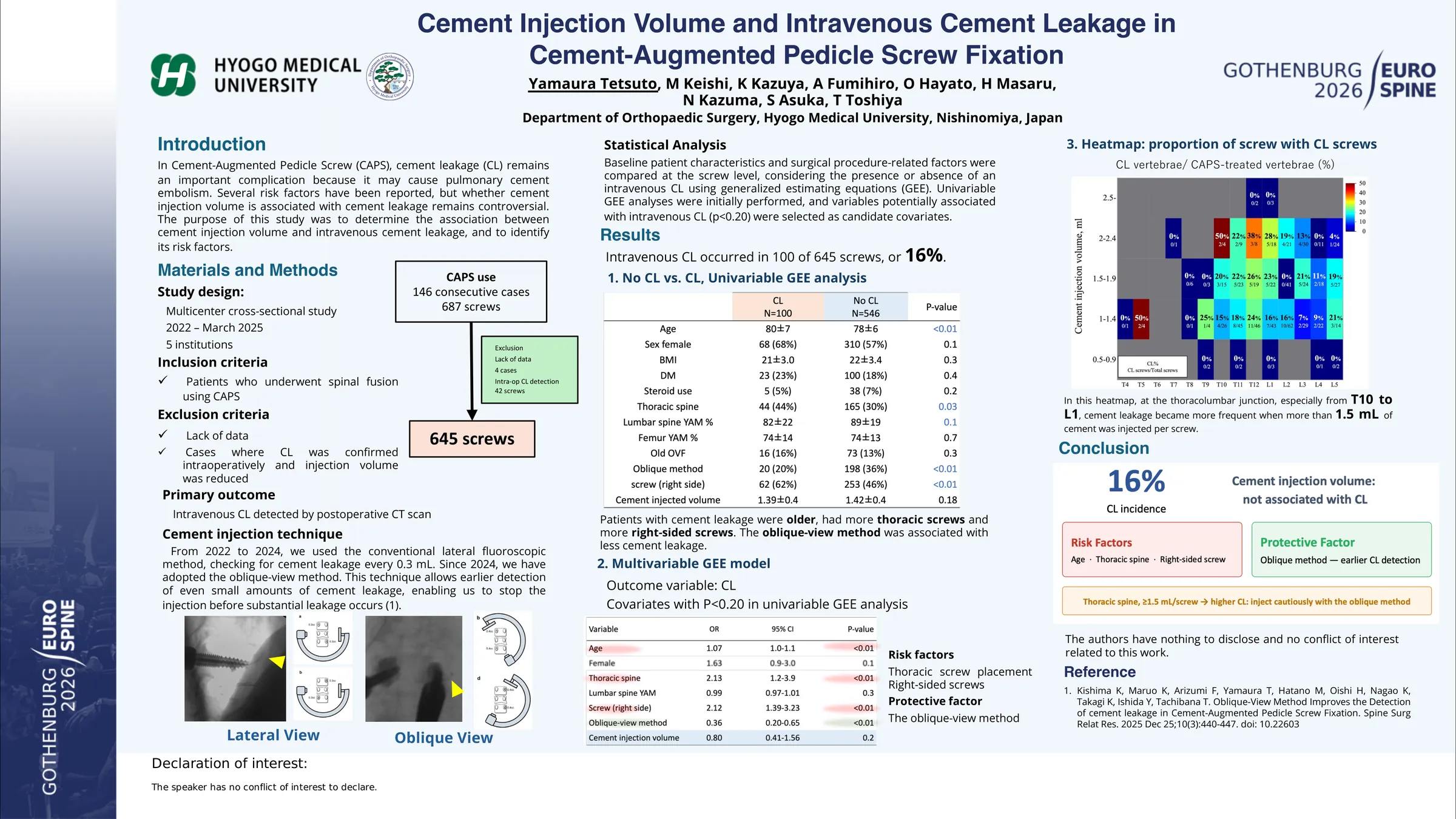
Cement-augmented pedicle screws (CAPS) are widely used to improve fixation strength in osteoporotic spines. However, cement leakage (CL), particularly intravenous CL, remains a clinically relevant concern because of the potential risk of pulmonary cement embolism. Previous studies have reported conflicting results regarding the association between cement injection volume and CL. This study aimed to investigate the association between cement injection volume and intravenous CL at the screw level while accounting for intrapatient correlation. Secondary aims were to identify independent risk factors and explore the distribution of CL across vertebral levels and cement volumes using heatmap-based visualization.
This retrospective multicenter study included consecutive patients aged ≥60 years who underwent spinal surgery using CAPS between 2022 and 2025. Screws in which cement injection was reduced or discontinued due to intraoperatively detected CL were excluded to avoid reverse causality. Cement injection volume was determined at the discretion of the operating surgeon. Beginning in 2024, the oblique-view fluoroscopic (OV) method was introduced to improve intraoperative CL detection. Intravenous CL was evaluated using postoperative computed tomography. Patient-level variables included age, sex, body mass index, bone mineral density expressed as young adult mean percentage, diabetes, steroid use, vertebral level, and surgical procedure. Screw-level variables included cement injection volume, laterality, and OV use. Because multiple screws were placed per patient, generalized estimating equations were applied with patient ID as the clustering variable. Variables with p < 0.20 in univariable analyses were entered into a multivariable model. Heatmap analysis visualized CL frequency according to cement injection volume and vertebral level.
A total of 146 patients with 645 screws were included. Intravenous CL occurred in 100 screws (16%). The mean cement injection volume was 1.4 mL per screw. Cement injection volume was not significantly associated with intravenous CL in univariable or multivariable analyses. Thoracic level instrumentation and right-sided screws were independently associated with increased risk of intravenous CL, whereas older age and OV use were independently associated with lower risk. Heatmap visualization showed higher CL frequency at thoracic levels, particularly when cement injection volume exceeded 1.5 ml.
Cement injection volume was not independently associated with intravenous CL. Anatomical factors, especially thoracic instrumentation, appear to have a greater influence on CL occurrence than cement volume alone. Careful cement volume selection and meticulous intraoperative monitoring using the OV method are warranted when performing CAPS at thoracic levels.
Figures and tables
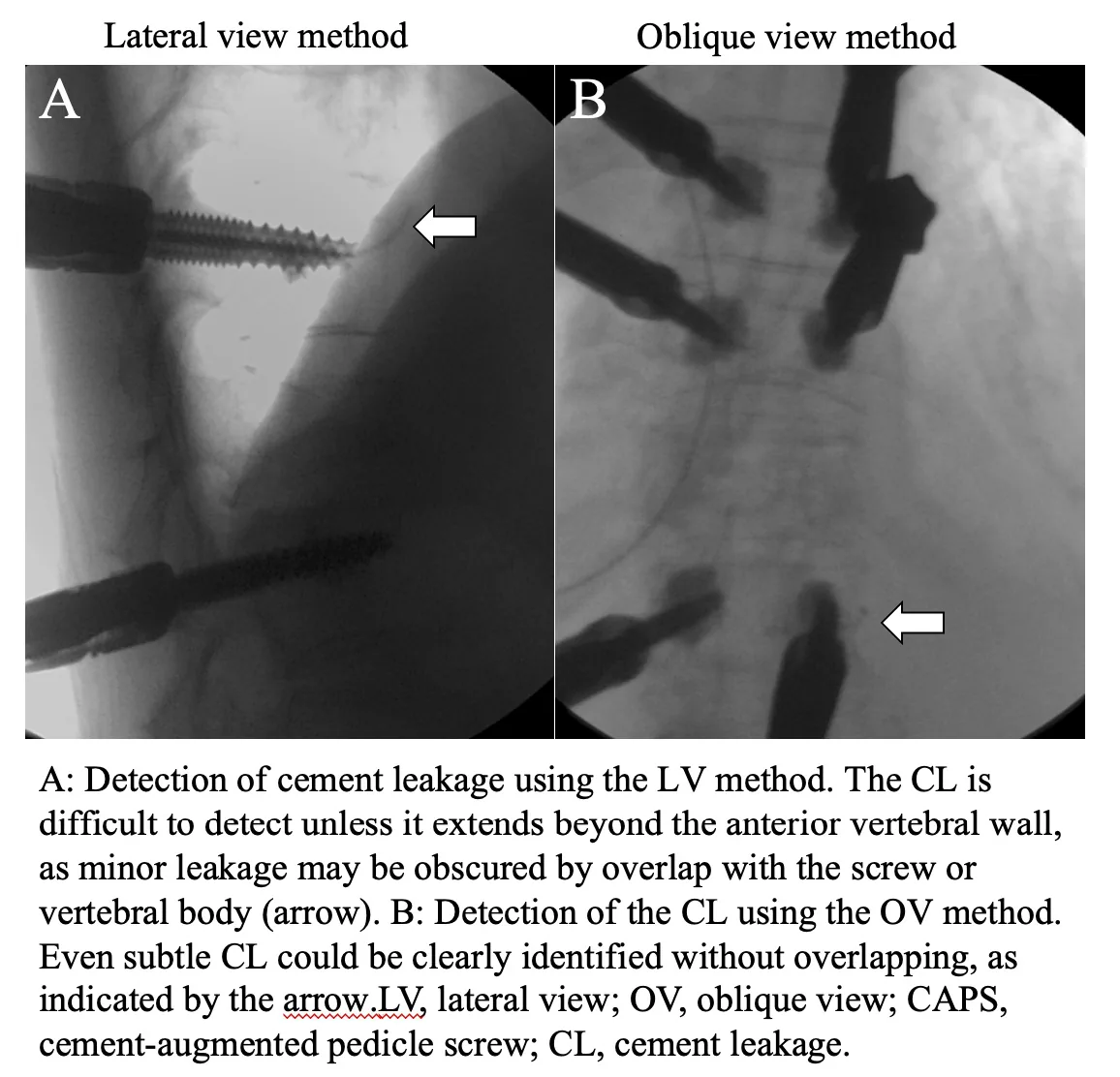
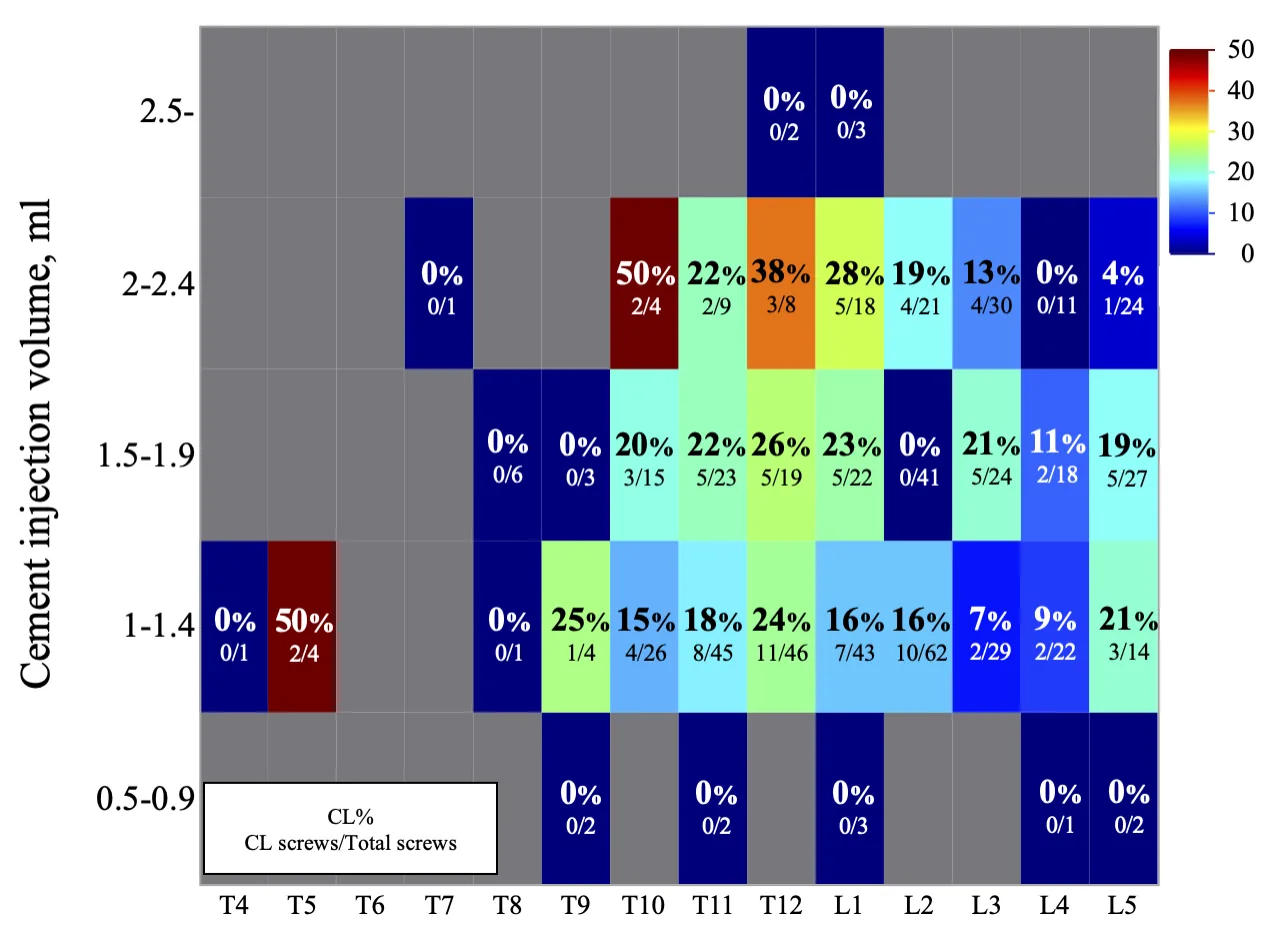
As submitted with the abstract. Tap a figure to open it at full size.