
Tumours & Infection
Cefazolin Versus Broad-Spectrum Perioperative Antibiotic Prophylaxis in Instrumented Cervical Spine Surgery: A Retrospective Cohort Analysis
- The University Of Oklahoma Health Sciences Center, Oklahoma City, United States of America
Abstract
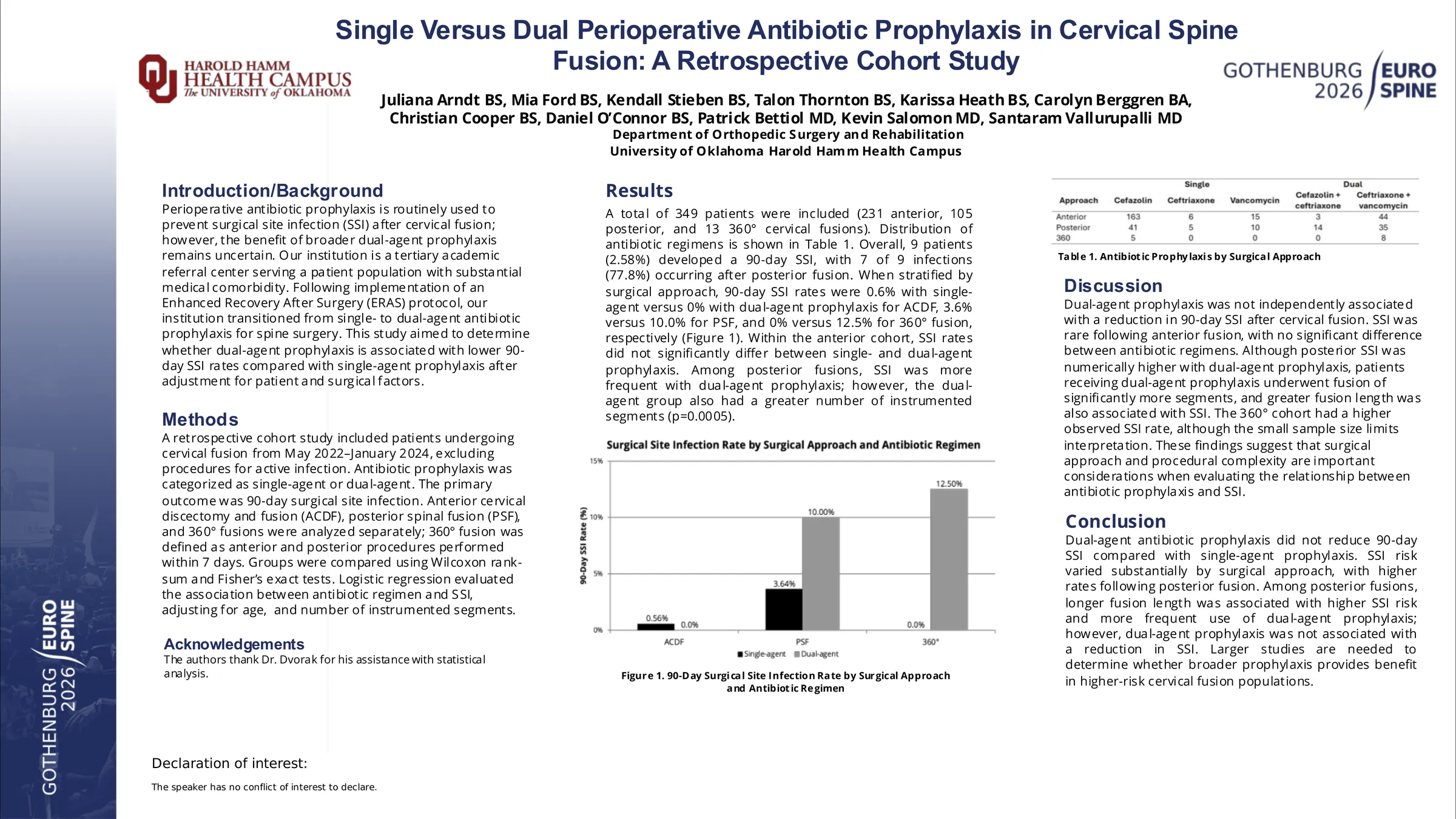
Surgical site infection (SSI) following cervical spine surgery is a serious postoperative complication associated with substantial morbidity. Although broad-spectrum perioperative antibiotic prophylaxis is frequently used in higher-risk cases, evidence supporting escalation beyond single-agent cefazolin remains limited.
Patients undergoing instrumented cervical spine surgery from January 2023 to January 2024 were stratified by perioperative antibiotic regimen: cefazolin monotherapy versus broad-spectrum coverage (vancomycin-based or combination therapy). Baseline characteristics including Charlson Comorbidity Index (CCI) and the number of instrumented segments were compared between groups. Descriptive statistics were performed for the overall cohort and posterior spinal fusion (PSF) subgroup. Multivariable logistic regression was performed adjusting for construct length and comorbidity burden.
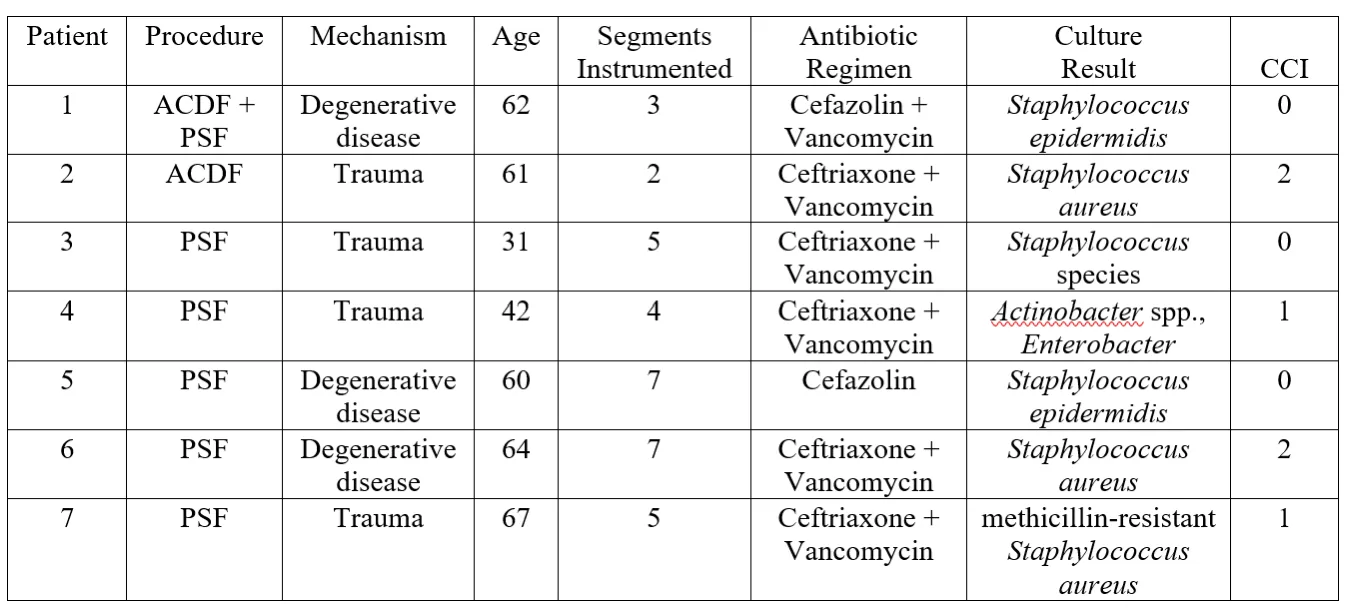
The cohort included 82 males and 49 females. Primary indications for surgery were degenerative disease (n=77), trauma (n=50), and tumor (n=4). Age (55.3 vs 55.8 years) and CCI (2.13±2.64 vs 1.74±1.76) did not differ significantly between cefazolin and broad-spectrum groups (p>0.05). Broad-spectrum prophylaxis was preferentially used in longer constructs (mean 4.0 vs 3.1 segments, p=0.01). Postoperative SSI occurred in 1/62 patients (1.6%) receiving cefazolin versus 6/69 patients (8.7%) receiving broad-spectrum antibiotics. Cultured organisms included Staphylococcus species (n=6) and one polymicrobial gram-negative infection (Acinetobacter and Enterobacter). On multivariable analysis, antibiotic regimen was not independently associated with SSI. In the PSF subgroup, infection occurred in 1/12 patients (8.3%) receiving cefazolin versus 4/31 patients (12.9%) receiving broad-spectrum antibiotics. Subgroup analyses were interpreted cautiously due to low event rates.
Escalation to broad-spectrum perioperative antibiotic prophylaxis did not reduce postoperative SSI despite preferential use in cases with longer constructs. Infection rates were numerically higher in the broad-spectrum group even after adjustment, aligning with growing concerns regarding routine broad-spectrum prophylaxis. These findings support antibiotic stewardship in cervical spine surgery and suggest cefazolin monotherapy may be adequate even in selected PSF cases with longer constructs. The limited number of infection events warrants validation in larger prospective studies.
Figures and tables
As submitted with the abstract. Tap a figure to open it at full size.