
Complications & Epidemiology
Preoperative cervical vertebral Hounsfield units predict titanium mesh cage subsidence after anterior cervical corpectomy and fusion
- Xi'an Honghui Hospital, Xi An Shi, China
Abstract
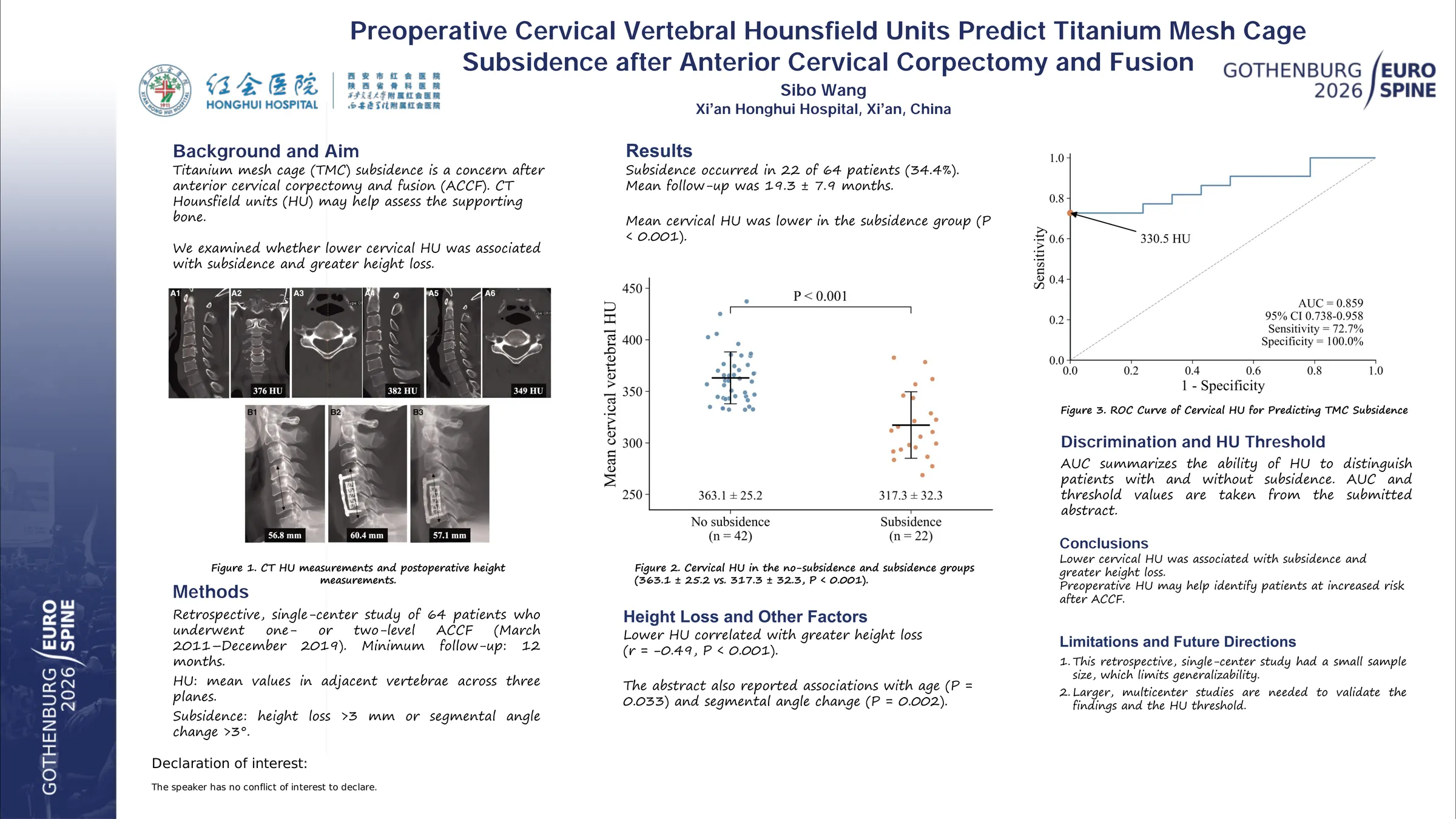
Titanium mesh cage (TMC) subsidence after anterior cervical corpectomy and fusion (ACCF) can result in segmental instability, non-union and kyphosis. Bone mineral density measured by DXA is a known risk factor, but it does not reflect local cervical vertebral bone quality. Hounsfield units (HU) derived from CT provide a simple surrogate for bone density and may be useful for predicting implant-related complications. This study evaluated the association between preoperative cervical vertebral HU values and TMC subsidence after ACCF and determined an HU threshold for risk stratification.
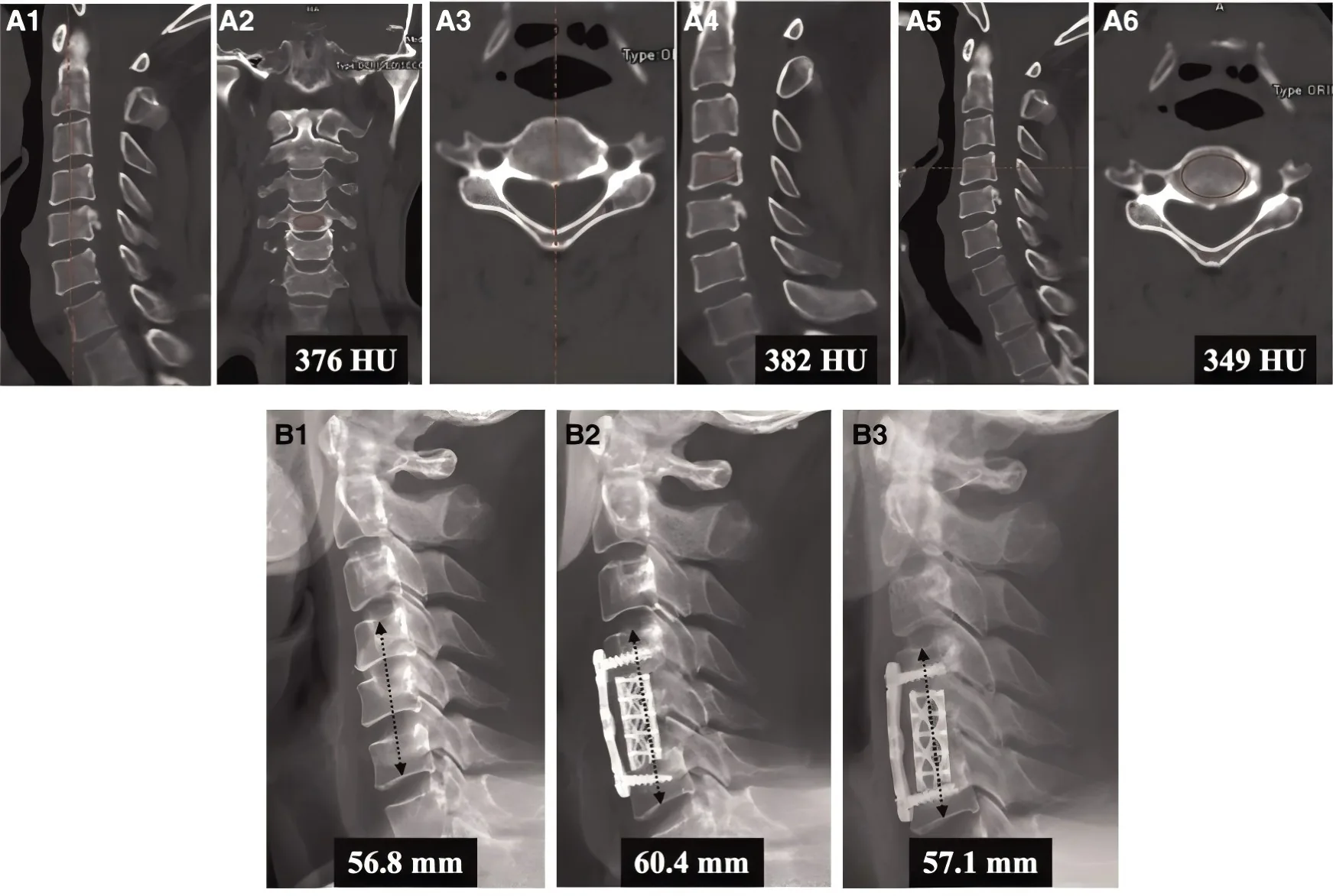
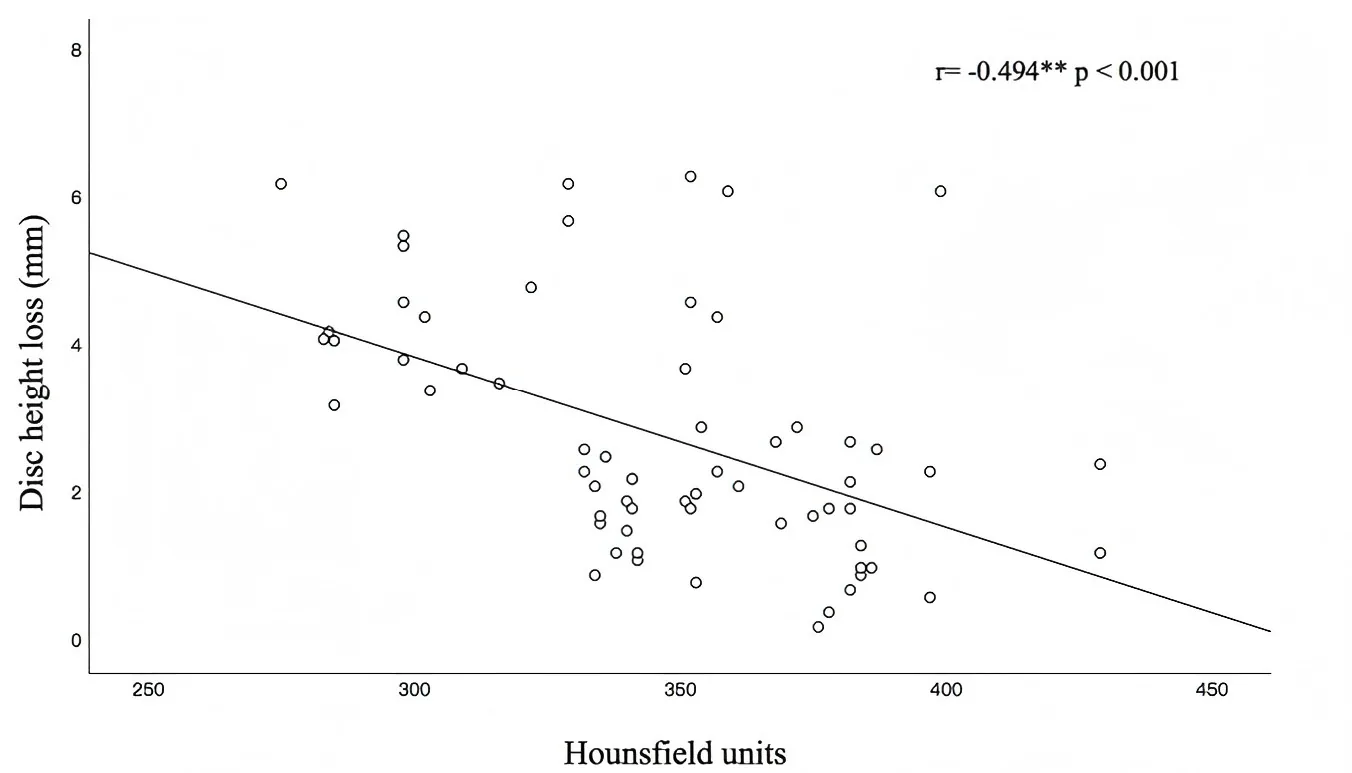
We performed a single-centre retrospective cohort study of patients who underwent one- or two-level ACCF with TMC between March 2011 and December 2019. Sixty-four patients with at least 12 months radiographic follow-up (mean 19.3 ± 7.9 months) were included. HU values of the vertebral bodies adjacent to the TMC were measured on preoperative CT in axial, sagittal and coronal planes using standardized regions of interest; the mean HU per patient was calculated. TMC subsidence was defined as segmental height loss > 3 mm or segmental angle change > 3°. Disc height loss, segmental angle and fusion status were assessed on follow-up radiographs/CT. Group comparisons were made between patients with and without subsidence. Pearson correlation tested the relationship between HU and disc height loss. ROC analysis identified an optimal HU cut-off, and multivariate logistic regression was used to determine independent predictors of subsidence.
TMC subsidence occurred in 22/64 patients (34.4%). The subsidence group had significantly lower mean HU values than the non-subsidence group (317.3 ± 32.3 vs 363.1 ± 25.2, p < 0.001). HU showed a moderate negative correlation with disc height loss (r = –0.49, p < 0.001). ROC analysis yielded an optimal HU threshold of 330.5 for predicting subsidence (AUC 0.859; sensitivity 100%; specificity 72.7%). In multivariate analysis, older age (p = 0.033), lower HU (p < 0.001) and greater segmental angle change (p = 0.002) were independent risk factors for subsidence, whereas fusion rates were comparable between groups.
Lower preoperative cervical vertebral HU values are strongly associated with TMC subsidence after ACCF. An HU threshold of approximately 330 provides good discriminative ability to identify patients at increased risk. Incorporating HU measurements into routine preoperative assessment, alongside DXA, may improve evaluation of local bone quality and inform cage selection and surgical planning in ACCF.
Figures and tables
As submitted with the abstract. Tap a figure to open it at full size.