
Degenerative Thoracolumbar
Postoperative Slip Reduction is Associated with Improved Two-Year Patient-Reported Outcomes after Fusion Surgery in Low-Grade Degenerative Spondylolisthesis
- Hospital for Special Surgery Main Hospital, New York, United States of America
- Charité – Universitätsmedizin Berlin, Berlin, Germany
Abstract
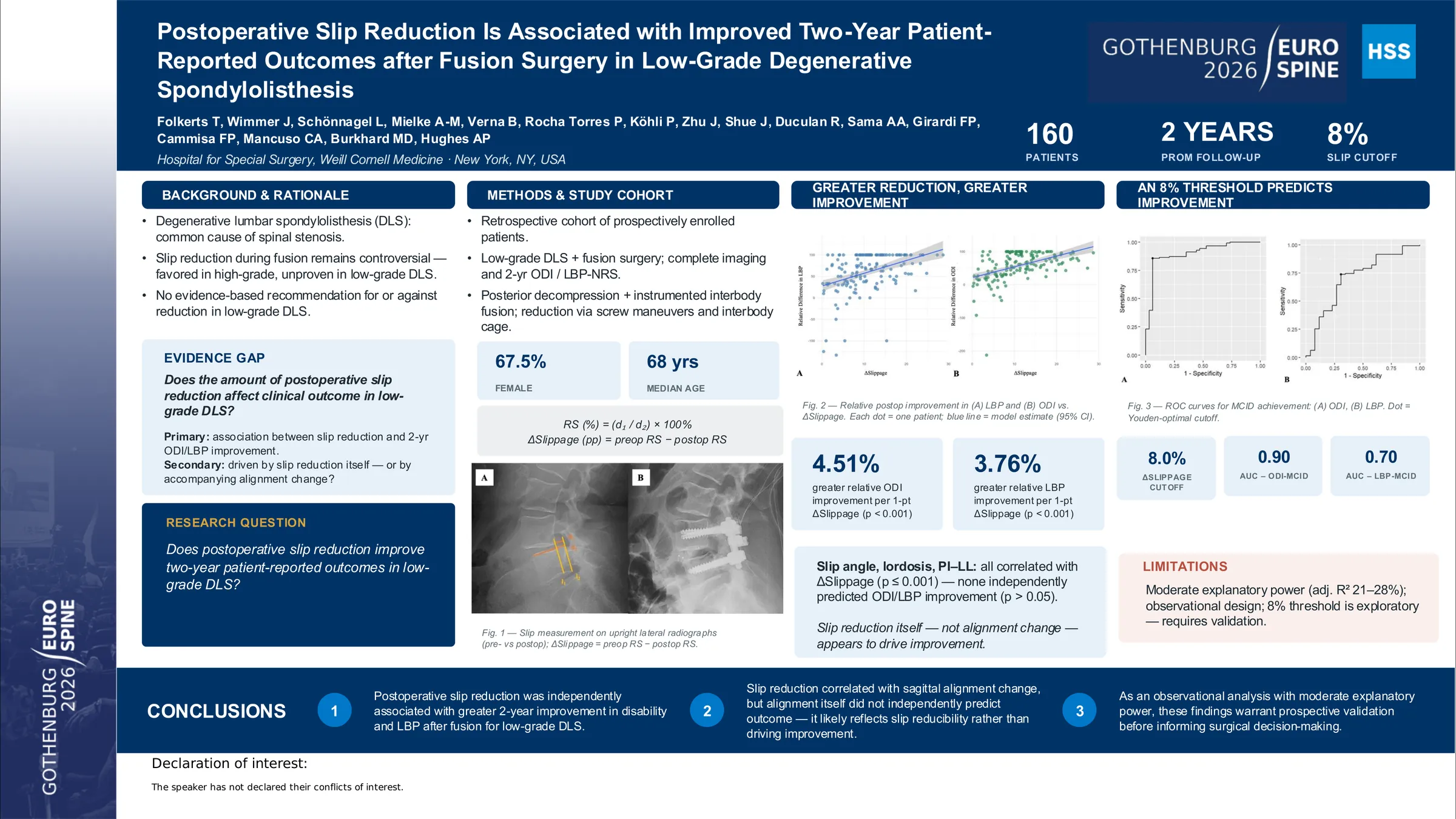
Lumbar fusion represents a common treatment for low-grade degenerative spondylolisthesis (DLS). Despite its widespread use, the optimal surgical strategy, particularly whether to reduce vertebral slippage or perform fusion in situ remains debated, with prior investigations reporting conflicting associations between slip reduction and clinical outcomes. This study aimed to evaluate the association between the extent of postoperative slip reduction and improvement in disability and low back pain (LBP) after lumbar fusion for low-grade DLS, and to determine whether clinical outcomes are independently related to slip reduction or driven by associated changes in sagittal alignment parameters.
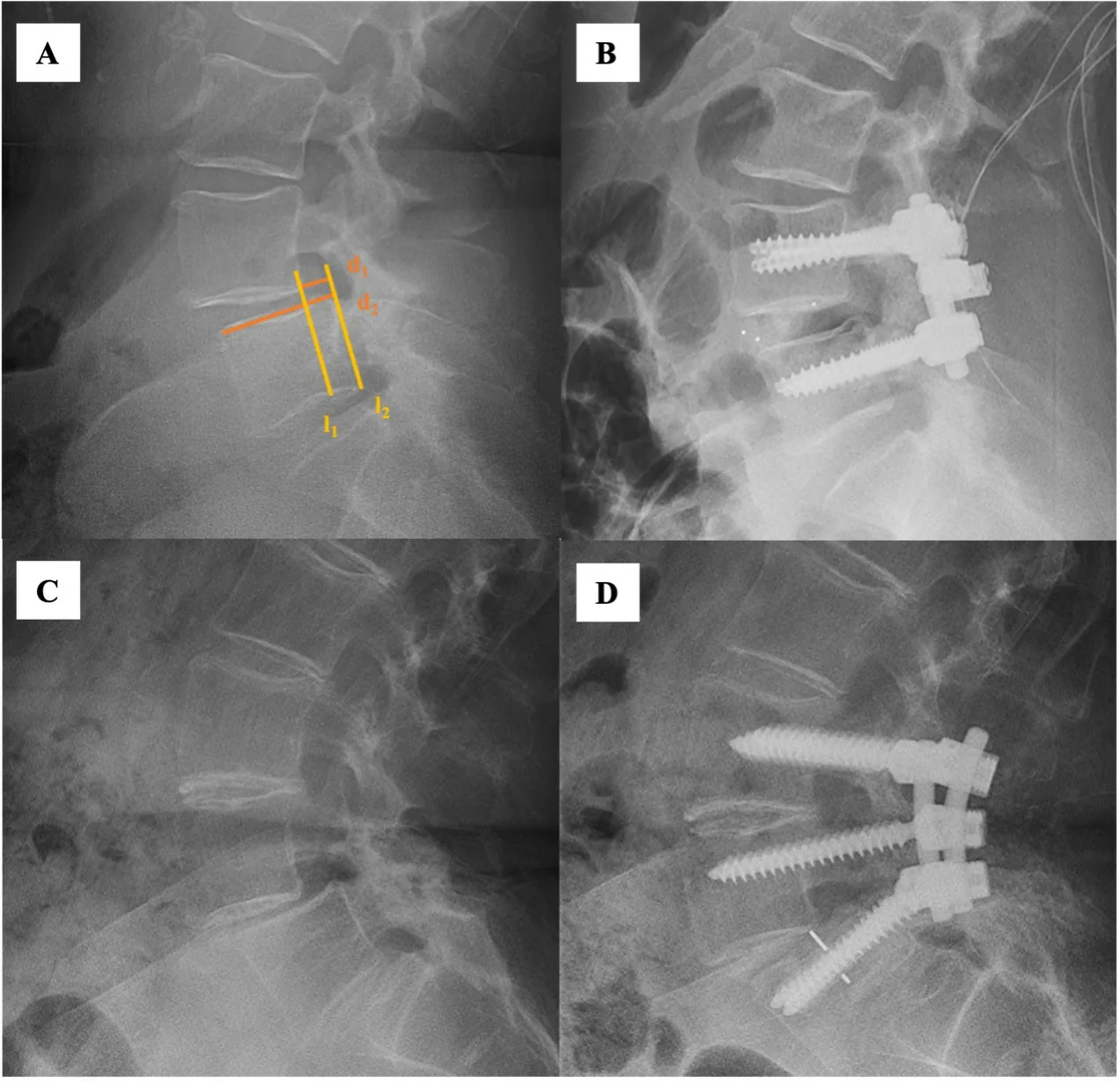
In this retrospective cohort study, 160 patients undergoing lumbar fusion for low-grade DLS were analyzed. Postoperative slip reduction was quantified on upright standing lateral radiographs as the absolute change in relative slippage (RS) normalized to vertebral body dimensions (Fig. 1). Associations between postoperative slip reduction and relative improvement in the Oswestry Disability Index (ODI) and LBP after 2 years were analyzed using multivariable linear regression models adjusted for demographic factors, baseline symptom severity, fusion length and preoperative slippage. Relationships between slip reduction and changes in sagittal alignment parameters were assessed in separate regression models. Receiver operating characteristic (ROC) analyses were performed to identify slip reduction thresholds associated with achievement of the minimal clinically important difference (MCID).
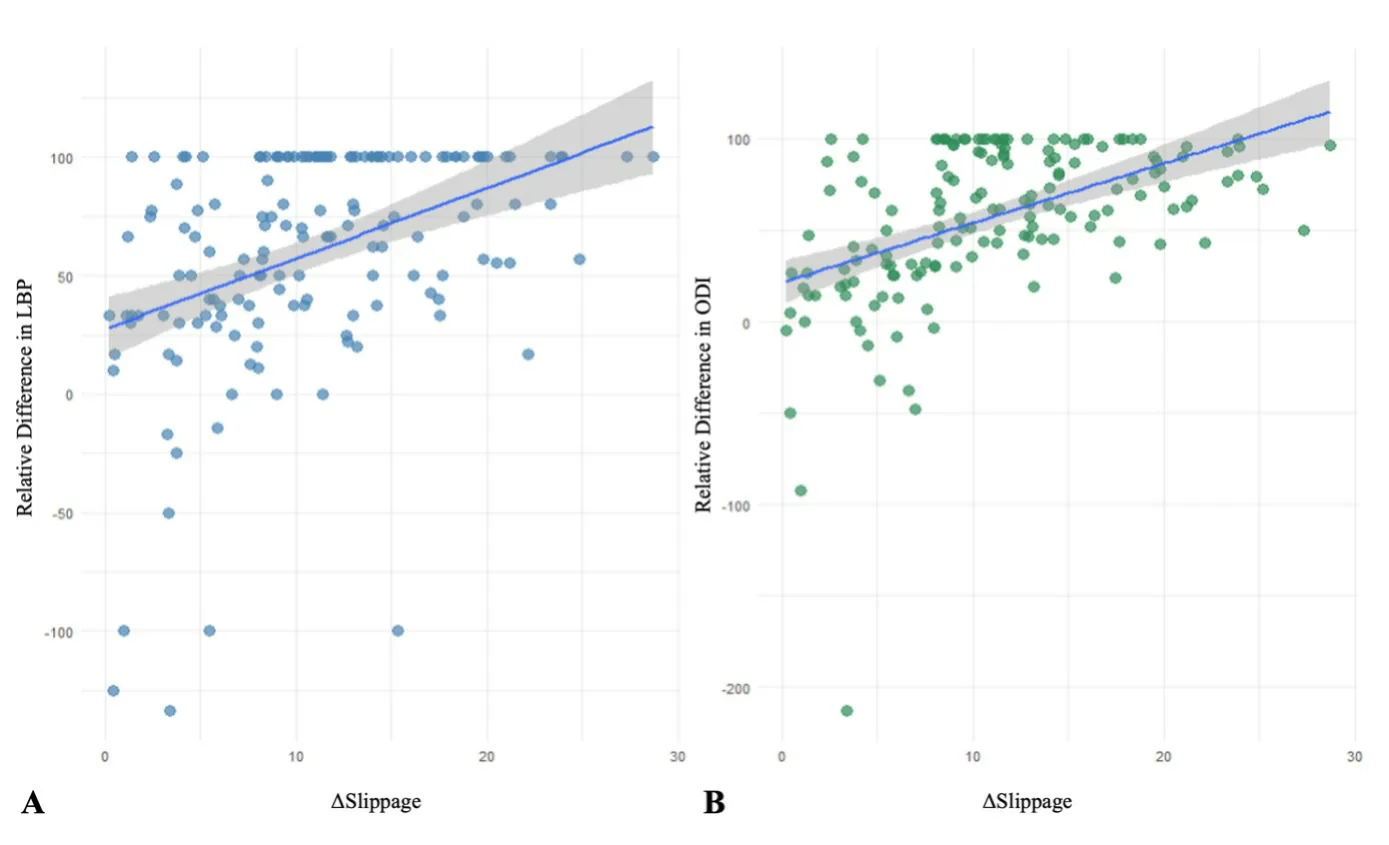
Postoperative slip reduction was associated with greater improvement in both ODI and LBP (both p < 0.001; Fig. 2) two years after surgery, independent of baseline characteristics and postoperative alignment changes. ROC analysis identified an optimal threshold of 8% slip reduction for predicting MCID achievement, with an AUC of 0.90 for ODI and 0.70 for LBP. Slip reduction was significantly associated with changes in segmental slip angle (p < 0.001), lumbar lordosis (p < 0.001), and PI–LL difference (p = 0.001). However, none of these sagittal alignment parameters independently predicted clinical outcomes in multivariable models (all p > 0.05).
In patients undergoing fusion for low-grade DLS, postoperative slip reduction is independently associated with clinically meaningful improvement in disability and LBP. An 8% reduction threshold effectively predicts MCID achievement. Although slip reduction is associated with changes in sagittal alignment, these parameters do not independently predict outcomes, indicating that slip reduction itself is the primary driver of postoperative improvement.
Figures and tables
As submitted with the abstract. Tap a figure to open it at full size.