
Degenerative Thoracolumbar
Intraoperative Ropivacaine Versus Placebo for Early Analgesic Control After Full-Endoscopic Lumbar Discectomy: A Prospective Double-Blind Study
- Military Hospital of Tunis, Tunis, Tunisia
Abstract
Full-endoscopic lumbar discectomy enables rapid recovery and short hospital stay. However, early postoperative pain remains a relevant concern and may increase opioid consumption and delay discharge. Local anesthetic infiltration at wound closure has shown opioid-sparing effects in various spine procedures, yet evidence specific to full-endoscopic discectomy remains limited.
This prospective, randomized, double-blind, placebo-controlled study was conducted from June 2025 to December 2025. Fifty patients undergoing single-level full-endoscopic lumbar discectomy for symptomatic lumbar disc herniation were randomized 1:1 to receive either ropivacaine (n=25) or placebo (normal saline, n=25).
The study solution was injected intraoperatively before skin closure along the endoscopic working-channel tract, periportal soft tissues, and paraspinal musculature according to a standardized protocol. Patients, surgeons, anesthesiologists, and outcome assessors were blinded to allocation.
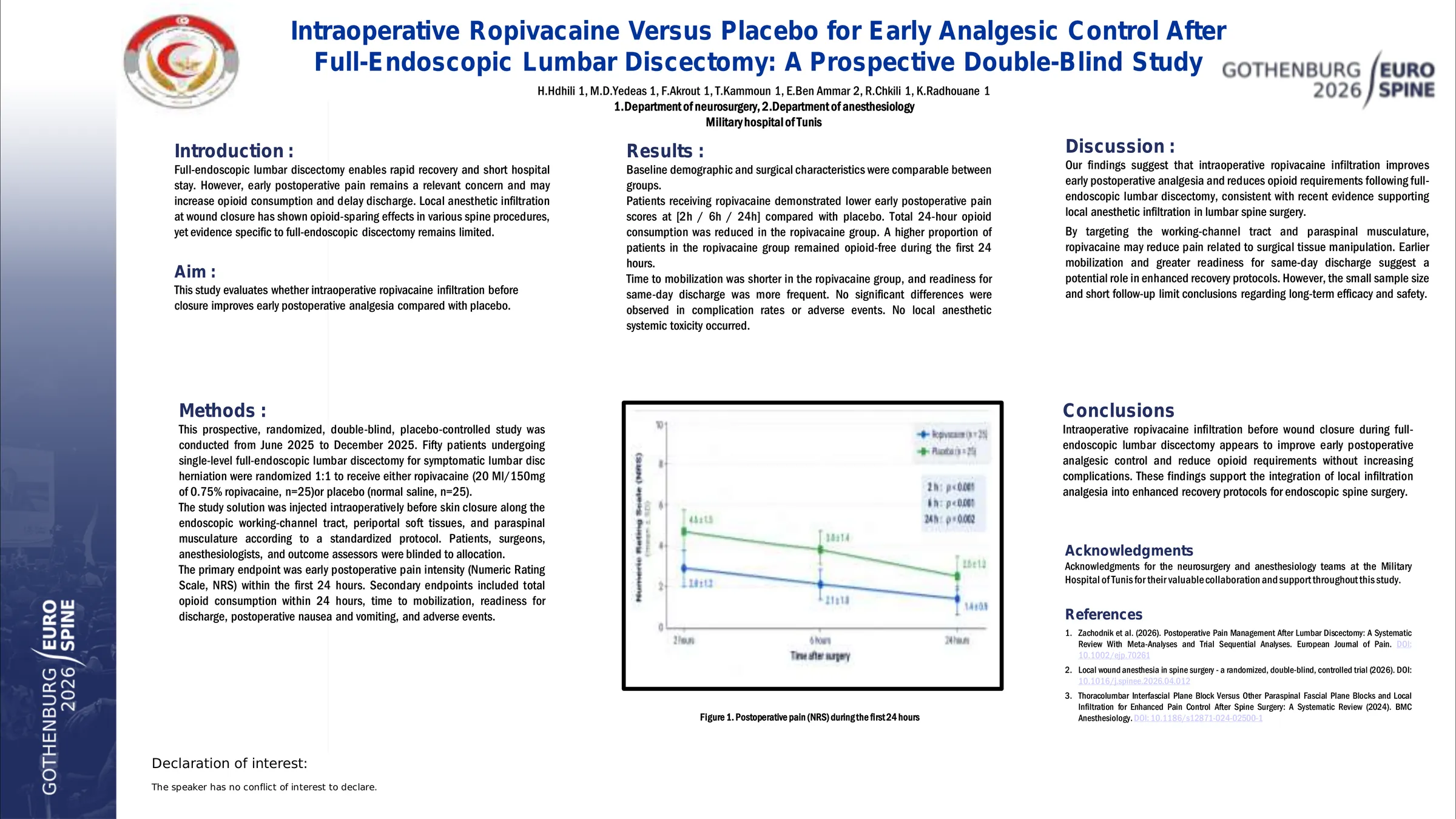
The primary endpoint was early postoperative pain intensity (Numeric Rating Scale, NRS) within the first 24 hours. Secondary endpoints included total opioid consumption within 24 hours, time to mobilization, readiness for discharge, postoperative nausea and vomiting, and adverse events.
Baseline demographic and surgical characteristics were comparable between groups.
Patients receiving ropivacaine demonstrated lower early postoperative pain scores at [2h / 6h / 24h] compared with placebo. Total 24-hour opioid consumption was reduced in the ropivacaine group. A higher proportion of patients in the ropivacaine group remained opioid-free during the first 24 hours.
Time to mobilization was shorter in the ropivacaine group, and readiness for same-day discharge was more frequent. No significant differences were observed in complication rates or adverse events. No local anesthetic systemic toxicity occurred.
Intraoperative ropivacaine infiltration before wound closure during full-endoscopic lumbar discectomy appears to improve early postoperative analgesic control and reduce opioid requirements without increasing complications. These findings support the integration of local infiltration analgesia into enhanced recovery protocols for endoscopic spine surgery.