
Complications & Epidemiology
Incidence and Risk Factors for Postoperative Radiculitis after ALIF: An Analysis of Spinopelvic Parameters and the GAP Score
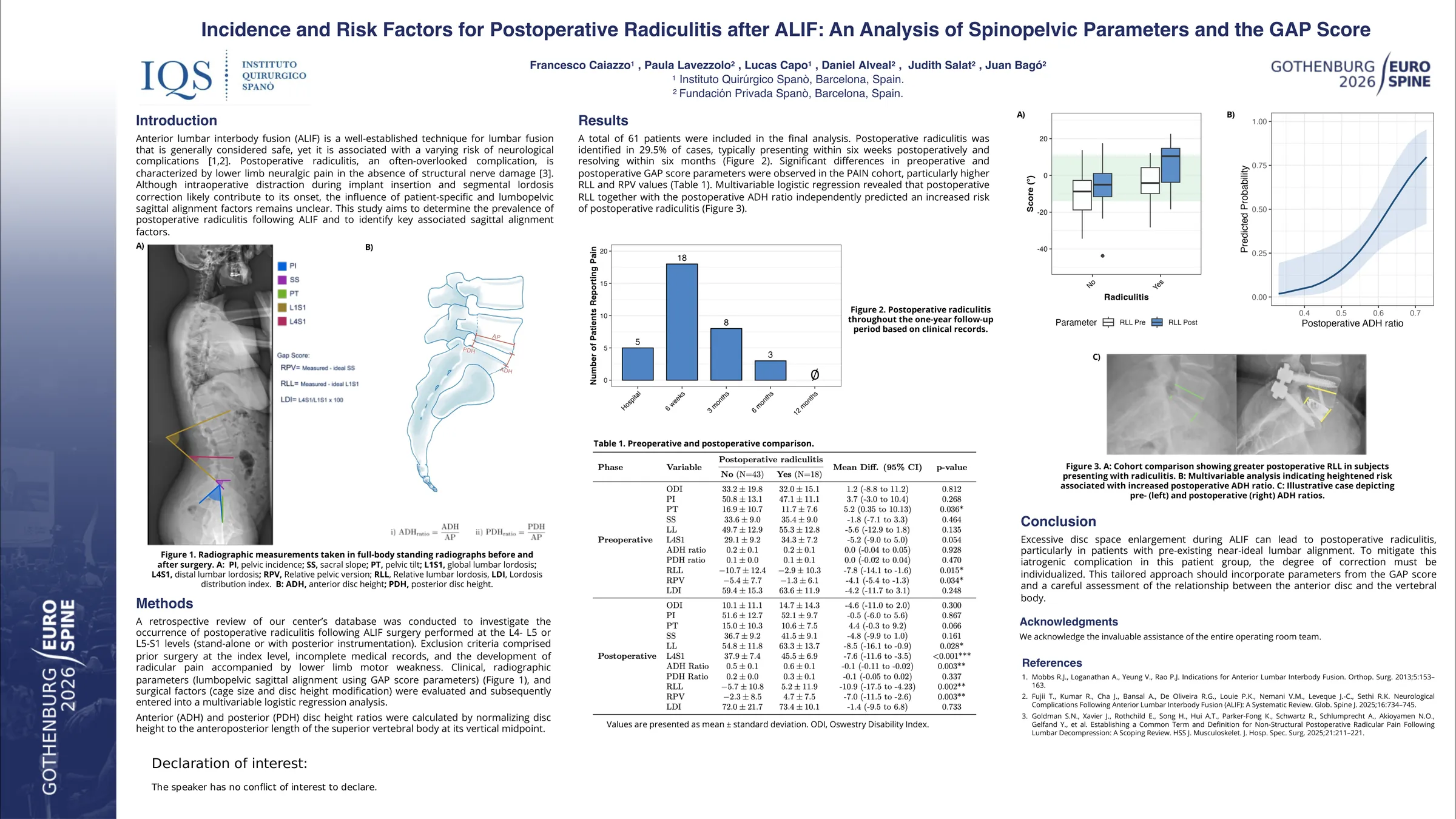
- IQS Institut Quirúrgic Spanò -- Dr. Caiazzo, Barcelona, Spain
Abstract
Anterior lumbar interbody fusion (ALIF) is an increasingly popular technique for lumbar fusion, generally considered safe but associated with a varying risk of neurological complications. Postoperative radiculitis, often overlooked, is a specific complication characterized by lower limb neuralgic pain without evidence of structural nerve damage. Although mechanical stretching during implant insertion and segmental lordosis correction are likely contributing factors, patient-specific lumbopelvic sagittal alignment variables that may influence its occurrence remain unclear. This study's primary goal is to determine the prevalence of postoperative radiculitis after ALIF and identify related patient-specific lumbopelvic sagittal alignment factors influencing its occurrence.
A retrospective review of our center’s database was conducted to investigate the occurrence of postoperative radiculitis following ALIF surgery performed at the L4-L5 or L5-S1 levels (stand-alone or with posterior instrumentation). 61 adult patients were included in the analysis. Exclusion criteria comprised prior surgery at the index level, incomplete medical records, and the development of radicular pain accompanied by lower limb motor weakness. Clinical parameters (Oswestry Disability Index), radiographic parameters (lumbopelvic sagittal alignment using GAP score parameters), and surgical factors (cage size and disc height modification) were evaluated and subsequently entered into a multivariable logistic regression analysis.
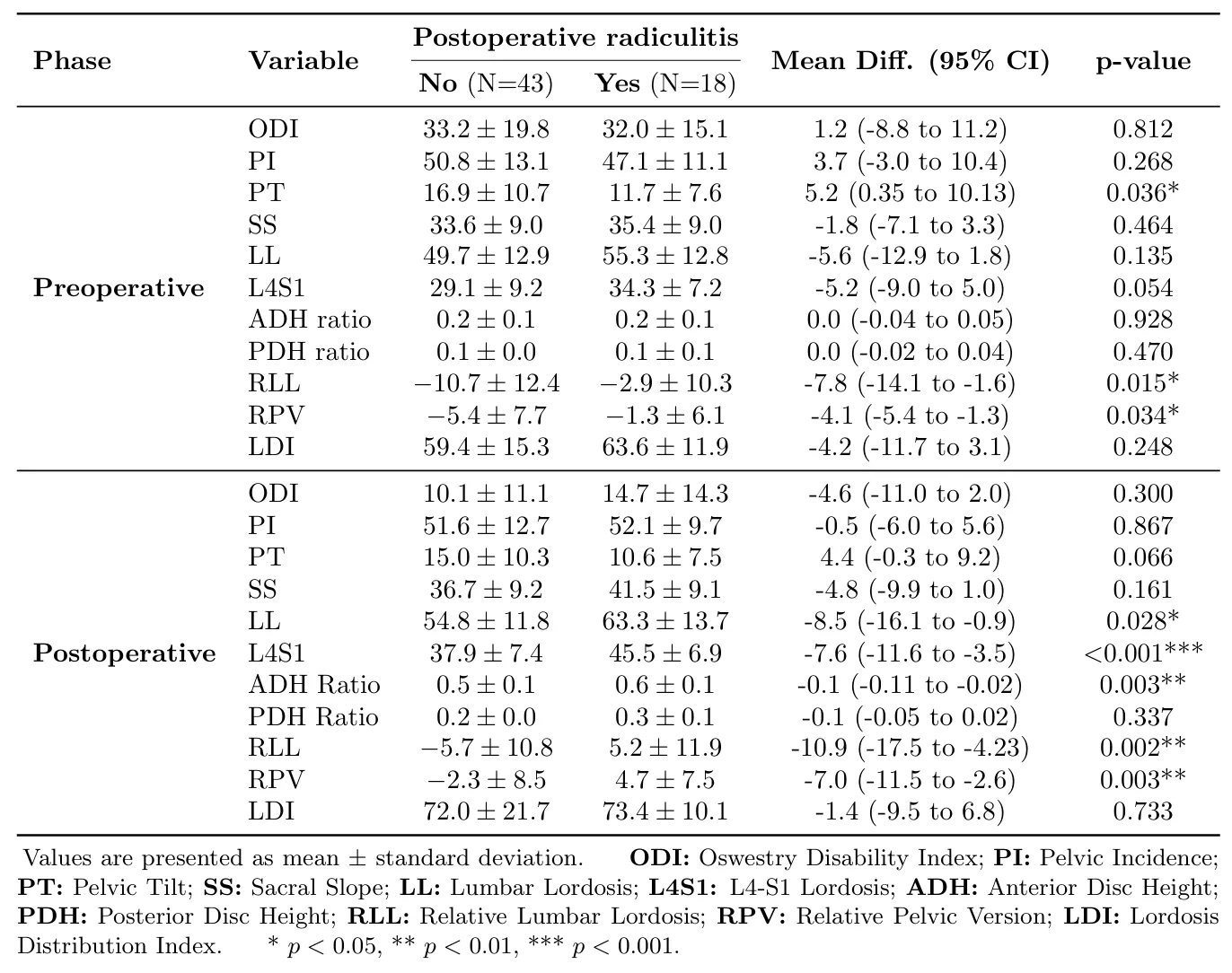
Postoperative radiculitis occurred in 29.5% of patients, with symptoms primarily manifesting within the first six weeks following surgery and lasting up to six months. Patients in the PAIN group showed notable differences in pre- and postoperative GAP score parameters, specifically higher values for relative lumbar lordosis (RLL) and relative pelvic version (RPV). Furthermore, multivariable logistic regression identified postoperative RLL and the anterior disc height (ADH) ratio as the strongest predictors for the risk of developing radiculitis.
Excessive disk space enlargement during ALIF can lead to postoperative radiculitis, particularly in patients with pre-existing near-ideal lumbar alignment. To mitigate this iatrogenic complication in this patient group, the degree of correction must be individualized. This tailored approach should incorporate parameters from the GAP score and a careful assessment of the relationship between the anterior disk and the vertebral body.
Figures and tables
As submitted with the abstract. Tap a figure to open it at full size.