
Trauma
Epidemiology and examinations for osteoporotic vertebral fracture in the elderly patients (J-BOLD study): cross-sectional study using large-scale claim database
- Hiroshima University, Hiroshima, Japan
- Chugoku Rousai Hospital, Kure, Japan
- Hiroshima Univ., Hiroshima, Japan
- School of Medicine, University of Occupational and Environmental Health, Kitakushu, Japan
- Faculty of Pharmacy, Yasuda Women’s University, Hiroshima, Japan
- Hiroshima Univ., Hiroshiam, Japan
- Okimoto Clinic, Kure, Japan
Abstract
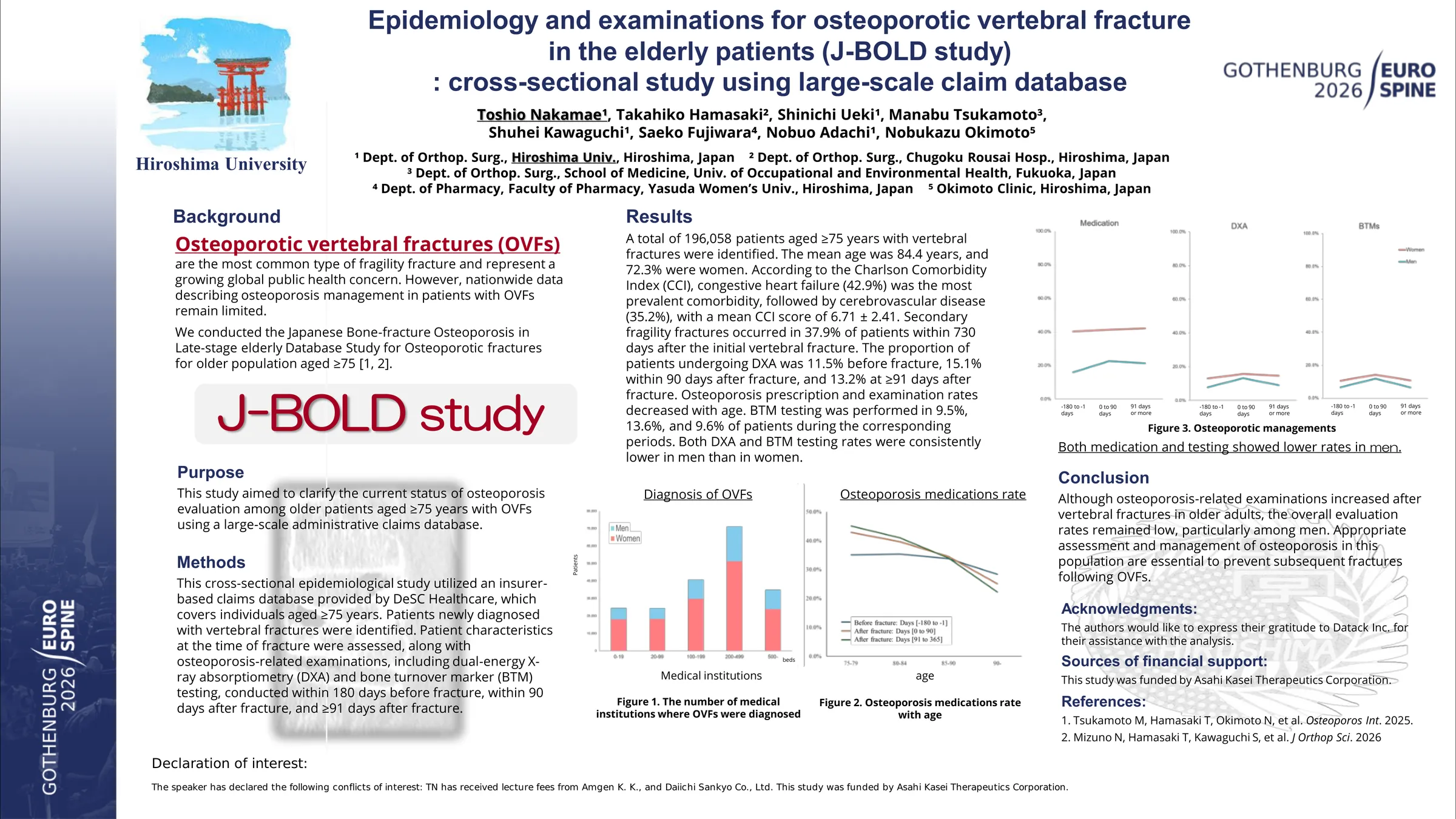
Osteoporotic vertebral fractures (OVFs) are the most common type of fragility fracture and represent a growing global public health concern. However, nationwide data describing osteoporosis management in patients with OVFs remain limited. This study aimed to clarify the current status of osteoporosis evaluation among older patients aged ≥75 years with OVFs using a large-scale administrative claims database.
This cross-sectional epidemiological study utilized an insurer-based claims database provided by DeSC Healthcare, which covers individuals aged ≥75 years. Patients newly diagnosed with vertebral fractures were identified. Patient characteristics at the time of fracture were assessed, along with osteoporosis-related examinations, including dual-energy X-ray absorptiometry (DXA) and bone turnover marker testing, conducted within 180 days before fracture, within 90 days after fracture, and ≥91 days after fracture.
A total of 196,058 patients aged ≥75 years with vertebral fractures were identified. The mean age was 84.4 years, and 72.3% were women. According to the Charlson Comorbidity Index (CCI), congestive heart failure (42.9%) was the most prevalent comorbidity, followed by cerebrovascular disease (35.2%), with a mean CCI score of 6.71 ± 2.41. Secondary fragility fractures occurred in 37.9% of patients within 730 days after the initial vertebral fracture. The proportion of patients undergoing DXA was 11.5% before fracture, 15.1% within 90 days after fracture, and 13.2% at ≥91 days after fracture. Bone turnover marker testing was performed in 9.5%, 13.6%, and 9.6% of patients during the corresponding periods. Both DXA and bone turnover marker testing rates were consistently lower in men than in women.
Although osteoporosis-related examinations increased after vertebral fractures in older adults, the overall evaluation rates remained low, particularly among men. Appropriate assessment and management of osteoporosis in this population are essential to prevent subsequent fractures following OVFs.